Fly Identification Chart
I never thought I’d become someone who pays attention to flies, until one summer when tiny insects kept appearing in my kitchen.
Some were slow and fuzzy, others zipped around fruit bowls like they owned the place. Searching online only confused me more… Was it a fruit fly? A drain fly? Something worse?
That little pest problem pushed me to learn the differences, and once I understood what to look for, body shape, behavior, and where they show up, identifying flies became surprisingly interesting.
With a bit of knowledge, you can quickly tell which flies are harmless garden helpers and which ones might need to be dealt with.
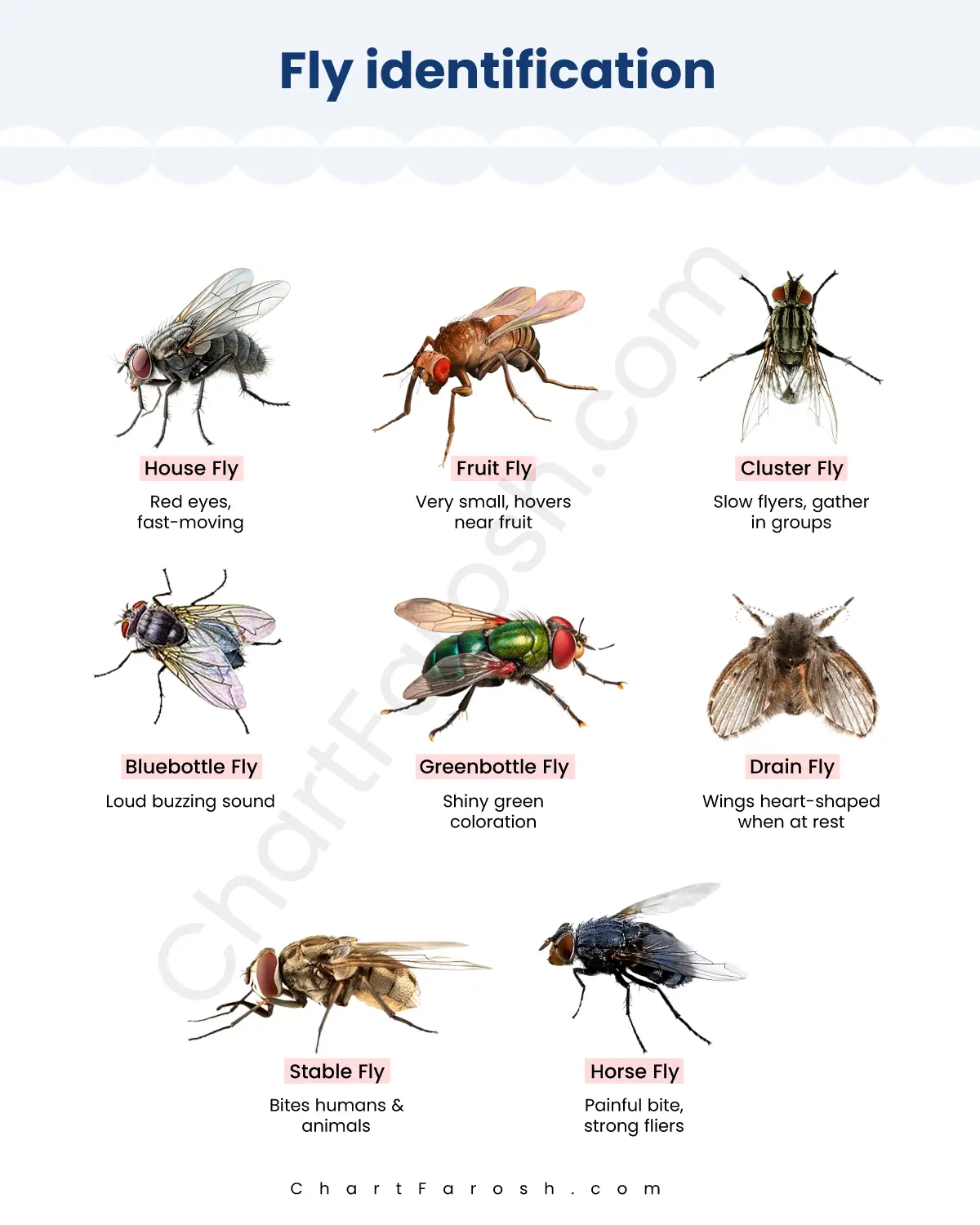
Table of Contents
Fly Identification Chart With Names and Pictures
Flies are one of the most widespread insect groups on Earth, found in homes, gardens, farms, and anywhere food or organic material exists.
A fly identification chart with names and pictures can make it much easier to distinguish between common household pests and harmless beneficial species.
Every type of fly has unique physical features, such as wing shape, body length, eye size, or behavior, that can help you correctly identify what you’re seeing.
| Common Name | Size (mm) | Color & Markings | Habitat | Distinguishing Features |
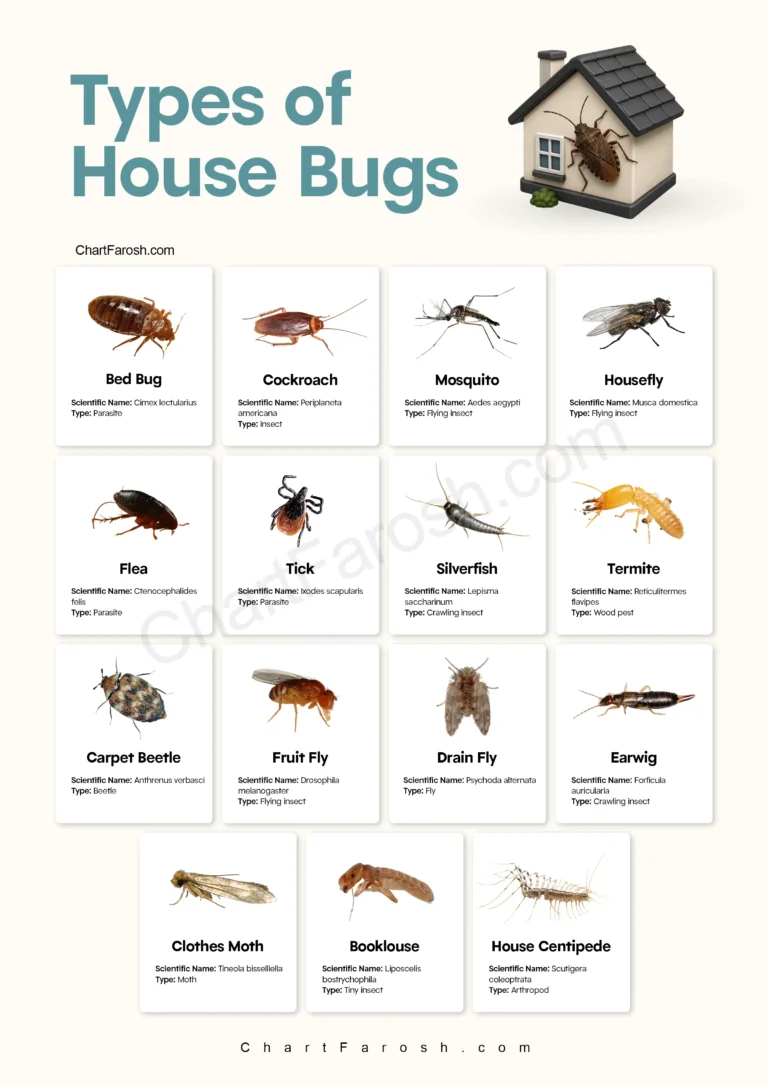
| House Fly | 6–7 mm | Gray body, 4 dark stripes on thorax | Indoors, garbage, food areas | Red eyes, fast-moving |
| Fruit Fly | 2–4 mm | Tan/yellow-brown with red eyes | Overripe fruits, drains | Very small, hovers near fruit |
| Cluster Fly | 6–10 mm | Dark gray with golden hairs | Lofts, attics, windows | Slow flyers, gather in groups |
| Bluebottle Fly | 10–14 mm | Metallic blue body | Dead animals, garbage | Loud buzzing sound |
| Greenbottle Fly | 10–12 mm | Metallic green body | Garbage bins, decaying matter | Shiny green coloration |
| Drain Fly | 2–3 mm | Fuzzy, moth-like gray body | Bathrooms, drains | Wings heart-shaped when at rest |
| Stable Fly | 6–8 mm | Gray with checkerboard abdomen | Farms, livestock | Bites humans & animals |
| Horse Fly | 10–25 mm | Brown, large eyes | Fields, near water | Painful bite, strong fliers |
Tips on How to Identify Flies
Identifying flies requires a close look at several features including body patterns, flight behavior, and habitat. Most flies have only one pair of wings, which helps separate them from bees or wasps.
Their eyes are usually large and round, often taking up most of the head. Coloration may range from shiny metallic greens and blues to dull gray or brown tones.
Where a fly is found can provide important clues, for example, flies gathering around drains often point to moisture-loving species, while tiny ones hovering near fruit indicate fermentation-feeding types.
Observing how a fly moves or reacts when disturbed is also helpful; some species rush in straight lines while others hover or swarm slowly much like a dragonfly
House Fly Identification Chart
House flies are the most familiar and globally distributed type of fly, often entering homes in search of food scraps or warmth. They usually have grayish bodies with distinct dark stripes on the thorax and slightly translucent wings.
House flies are strong fliers and are commonly seen landing on food, walls, and windows. A chart with images can help you tell house flies apart from similar pest species like blow flies or cluster flies.
| Feature | Description |
| Scientific Name | Musca domestica |
| Size | 6–7 mm long |
| Color | Gray with 4 dark thorax stripes |
| Eyes | Red compound eyes |
| Wings | Transparent with distinct veins |
| Habitat | Homes, kitchens, animal shelters |
| Behavior | Active in daylight, attracted to food & waste |
| Lifespan | 15–25 days |
| Risk | Spreads bacteria like E. coli and Salmonella |
Small Fly Identification
Many homeowners notice tiny flies indoors and assume they are baby house flies, but most of the time, they are completely different species with different habits.
Small flies may include fungus gnats, fruit flies, and drain flies, each linked to a specific breeding source such as plants, sinks, or overripe produce.
Their recognition can prevent ineffective pest control attempts, since the key to eliminating them is removing their preferred food or moisture source.
| Type | Size | Common Habitat | Identifying Features |
| Fruit Fly | 2–4 mm | Fruits, drains, compost | Red eyes, tan color |
| Drain Fly | 2–3 mm | Bathrooms, drains | Hairy wings, moth-like |
| Phorid Fly | 3–4 mm | Garbage, decaying matter | Hump-backed shape |
| Fungus Gnat | 2–4 mm | Houseplants, moist soil | Long legs, slow fliers |
| Eye Gnat | 2 mm | Outdoor areas | Attracted to eyes and sweat |
| Black Fly | 2–5 mm | Near rivers and streams | Small, bites humans and animals |
Cluster Fly Identification
Cluster flies are often confused with house flies, but they behave differently and are generally less of a hygiene risk. They are slightly larger and more sluggish in flight.
Cluster flies commonly gather in groups near windows, especially in autumn and winter, as they seek shelter in cozy indoor spaces.
Their bodies typically appear darker with a golden shimmer when viewed up close. Learning to identify cluster flies can help homeowners avoid panic and unnecessary treatments since they don’t breed indoors like house flies do.
| Feature | Description |
| Scientific Name | Pollenia rudis |
| Size | 6–10 mm |
| Color | Dark gray with golden hairs on thorax |
| Wings | Overlap slightly when at rest |
| Habitat | Attics, wall voids, windows in fall/winter |
| Behavior | Slow flyers, cluster in warm areas |
| Season | Autumn and winter |
| Control | Seal entry points, vacuum clusters, insect screens |
Fruit Fly Identification
Fruit flies are tiny, fast-moving insects that are strongly attracted to ripening fruit, sugary spills, and fermenting liquids.
They often appear in kitchens, grocery stores, and anywhere food is left uncovered. With reddish eyes and tan to brown bodies, fruit flies are very recognizable once you know what to look for.
Proper identification allows for quick intervention, removing the breeding source is the easiest and most effective way to control them.
| Feature | Description |
| Scientific Name | Drosophila melanogaster |
| Size | 2–4 mm |
| Color | Tan/yellow body, red eyes |
| Wings | Transparent with few veins |
| Habitat | Ripened fruits, drains, garbage disposals |
| Behavior | Hovers near food and trash |
| Lifespan | 8–15 days |
| Prevention | Clean drains, refrigerate produce, discard overripe fruit |
Drain Fly Identification
Drain flies, also called moth flies, are small and fuzzy-looking, with wings that resemble tiny leaves or moth wings. They tend to buzz slowly around bathrooms, sinks, and shower drains where moisture and organic buildup exist.
They are harmless but can multiply quickly if their breeding source isn’t cleaned.
| Feature | Description |
| Size | 1.5–5 mm (very small) |
| Body Appearance | Fuzzy, moth-like, heart-shaped wings |
| Color | Gray, dark brown, or black |
| Flight Pattern | Slow, fluttering, stays close to walls or drains |
| Habitat | Bathrooms, shower drains, sink pipes, wet mop buckets |
| Main Attraction | Moisture + decaying organic matter |
UK Garden Fly Identification
Across the UK, many recognizable fly species visit gardens searching for nectar, decaying matter, or other food sources.
Some are pollinators like hoverflies, which mimic wasps for protection but are harmless and beneficial. Others, such as biting midges or stable flies, may trouble pets and humans. cosystems.
| Feature | Description |
| Common Species | Hoverflies, Bluebottle flies, Crane flies |
| Role in Garden | Pollinators, pest eaters, decomposers |
| Colors | Yellow/black stripes, metallic blue/green, brown |
| Where Found | Flowers, compost heaps, garden walls, lawns |
| Behavior | Hovering flight, often lands on flowers |
| Threat Level | Harmless or beneficial |
Tips on How to Identify Flies
Identifying flies may seem frustrating at first, especially when they zip around too fast to get a good look but each type of fly has its own unique signature. The key is to observe three main things: appearance, behavior, and location.
Start by studying the body structure, some flies are slender and have long legs, while others are round and fuzzy like tiny moths. Wing placement can be a giveaway too; houseflies hold their wings flat when resting, but drain flies hold theirs like a roof-shaped tent.
Behavior matters just as much. Fruit flies hover near countertops and food bowls, while cluster flies usually move slowly and gather near windows. And then there’s a flight pattern, some flies dart and loop quickly, others flutter lazily. Even the time of day they appear can be a clue.
Finally, consider where you find them. Bathroom flies are likely tied to moisture or plumbing, while pantry and kitchen flies are usually after overripe fruit or trash.
So before you reach for spray or swatters, take one moment to watch. That quick observation can tell you exactly what kind of fly you’re dealing with, and most importantly, how to get rid of it properly.
FAQs
What is the easiest way to identify a fly species?
Focus on size, wing shape, body color, and where you found it, location and behavior are big clues.
Are all flies considered pests?
No. Many species, like hoverflies, are important pollinators and help control pests naturally.
Why do flies come into houses?
They are attracted to food, warmth, moisture, and sometimes shelter during colder months.
Are fruit flies and drain flies the same?
No. Fruit flies seek fermented foods, while drain flies breed in damp organic buildup near pipes.
How can I reduce flies indoors?
Keep surfaces clean, remove food waste quickly, and fix moisture or drainage issues.