
Aphid Identification Chart
One day I saw my rose bushes covered in what looked like tiny green specks. At first, I thought it was dust, until the dust started moving. That was my first encounter with aphids.
Like many new gardeners, I panicked, grabbed the hose, and tried blasting them off (which, by the way, sort of works, temporarily). It was only later that I learned how common these little pests are and how crucial proper identification is.
This aphid identification guide is here to help you do exactly that, learn how to recognize different aphid species, understand their life cycle, and distinguish them from other small insects. You’ll also find information on behavior, habitat, and color variations, everything you need to use your own aphid identification key effectively.
If you’ve ever downloaded or printed an Aphid Identification Chart PDF, you know how helpful it can be when combined with field observations and pictures of different types of aphids.
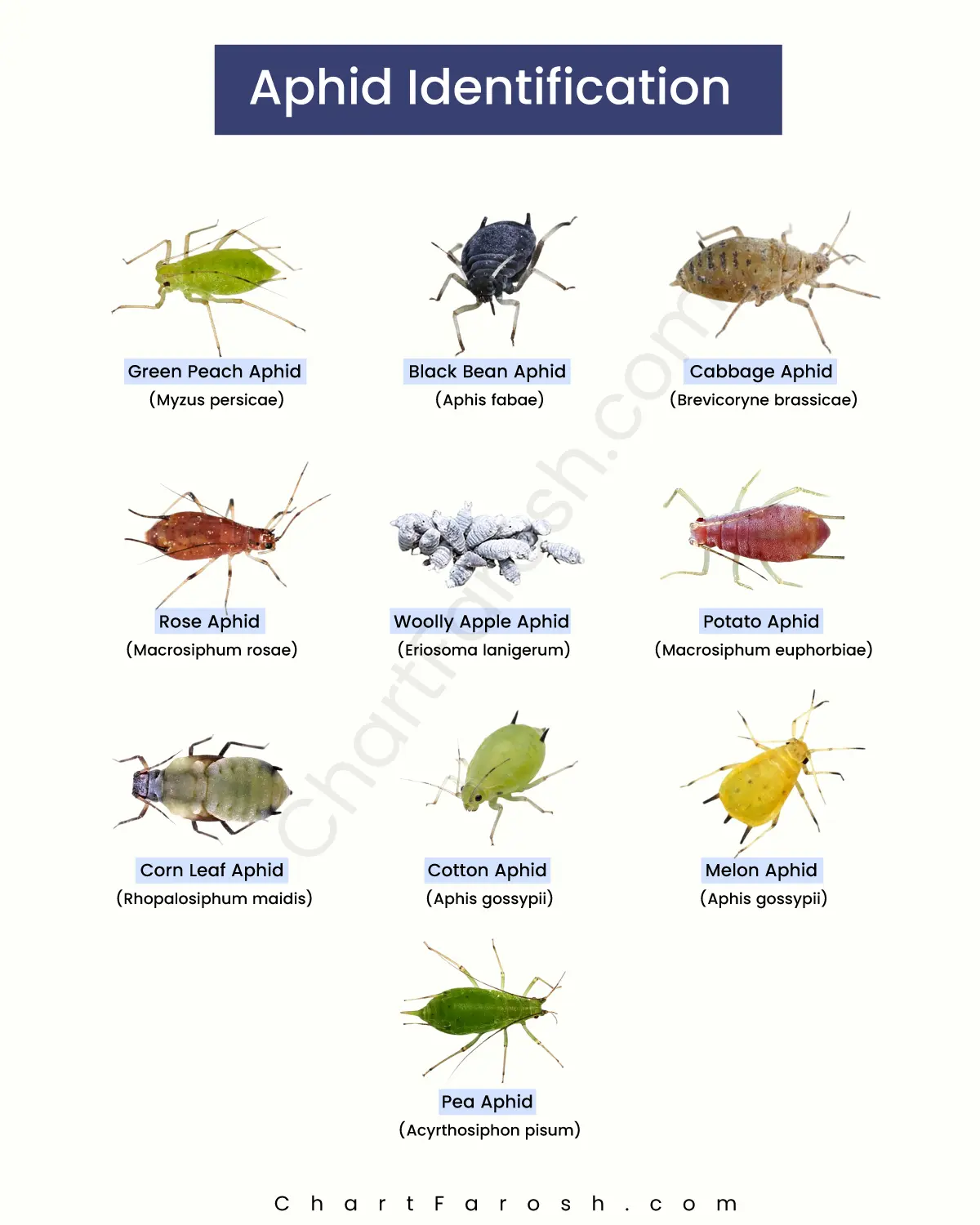
Table of Contents
Aphid Identification Chart
A detailed aphid identification chart is the gardener’s first defense against infestation. These visual charts show each aphid species in color, along with its typical host plants, size, and distinctive traits.
They can also include natural predators, one of the most important being the wasp, particularly parasitic species that lay their eggs inside aphids.
Seeing how wasps interact with aphids in nature can actually help you identify infestations faster. If you notice wasps hovering persistently around certain leaves, they might be targeting aphid colonies.
While it might seem intimidating, these wasps are beneficial allies that help reduce aphid populations naturally.
So, while you’re checking your plants with your aphid identification chart PDF, take a moment to observe the ecosystem around it. Sometimes, nature is already working on pest control for you.
| Aphid Species | Color | Host Plants | Key Identification Features | Region Found |
| Green Peach Aphid (Myzus persicae) | Light green to yellow | Peaches, potatoes, peppers, tomatoes | Pear-shaped body, long antennae, slow-moving | Worldwide |
| Black Bean Aphid (Aphis fabae) | Black or dark brown | Beans, sugar beet, spinach | Shiny black body, clusters on stems and leaves | Europe, North America |
| Cabbage Aphid (Brevicoryne brassicae) | Grey-green with waxy coating | Cabbage, broccoli, kale | Powdery grey coating, found on undersides of leaves | Global (especially UK, USA) |
| Woolly Apple Aphid (Eriosoma lanigerum) | White, wax-covered | Apple trees, elm | Cottony or wool-like wax filaments on body | Europe, North America, Australia |
| Rose Aphid (Macrosiphum rosae) | Green, pink, or red | Roses, ornamental plants | Long legs and antennae, usually at rosebud tips | Worldwide |
| Potato Aphid (Macrosiphum euphorbiae) | Green or pink | Potato, tomato, lettuce | Large aphid with long legs, found on undersides of leaves | North America, Europe |
| Corn Leaf Aphid (Rhopalosiphum maidis) | Blue-green | Corn, barley, wheat | Small oval body, feeds on tassels and leaves | Worldwide |
| Cotton Aphid (Aphis gossypii) | Yellow-green to black | Cotton, citrus, cucurbits | Very small (1–2 mm), variable color | Tropical and temperate regions |
| Melon Aphid (Aphis gossypii) | Light green to black | Melons, cucumbers, squash | Soft-bodied, winged and wingless forms | Global (especially warm regions) |
| Pea Aphid (Acyrthosiphon pisum) | Light green | Peas, alfalfa, clover | Long slender body, slow movement | Worldwide |
How to Identify Aphids
You might not expect it, but understanding the connection between aphids and their environment, including things like a nearby wasp nest, can give you deeper insight into pest management.
Aphids are slow-moving, sap-sucking insects, typically found on the underside of leaves or near soft stems. They’re about 1–4 mm long, with a pear-shaped body and long antennae.
Their most defining feature is the pair of small tubes, called cornicles, that extend from their back. They use these to secrete defensive fluids, making them easy to identify if you know what to look for.
Interestingly, in gardens where wasp nests are present, aphid populations are often lower because wasps prey on them.
This relationship can be an essential clue when using your aphid identification key to evaluate infestations, especially in environments with multiple insect species interacting. Key identification features:
- Small, pear-shaped bodies (1–4 mm long)
- Usually green, but can be black, yellow, brown, or pink
- Often found in clusters
- Produce sticky honeydew that attracts ants
- Cause leaf curling, yellowing, and stunted growth.
Aphid Identification by Color
Color is a helpful clue in differentiating species. Below is a color-based identification chart for common aphids found in gardens and agricultural environments.
| Aphid Color | Common Name | Typical Host Plant | Size | Distinctive Traits | Region |
| Green | Green Peach Aphid | Peaches, roses, tomatoes | 2–3 mm | Translucent green body | Worldwide |
| Black | Black Bean Aphid | Beans, spinach, beets | 2 mm | Dark black body, yellow legs | Europe, N. America |
| Yellow | Cabbage Aphid | Cabbage, broccoli, kale | 2.5 mm | Gray-yellow with powdery coating | Global |
| Red/Pink | Rose Aphid | Roses, flowering shrubs | 2–3 mm | Pinkish hue, found on buds | Temperate regions |
| Brown | Potato Aphid | Potatoes, tomatoes | 3 mm | Brown-green mix, long legs | North America |
Types of Aphids
There are over 4,000 aphid species, but only a few are considered major pests. Here’s a look at some of the most notable types:
| Aphid Type | Host Plant | Color | Size | Damage Type | Region |
| Green Peach Aphid | Peaches, plums | Light green | 2–3 mm | Curling leaves, virus transmission | Global |
| Cabbage Aphid | Brassicas | Gray-yellow | 2.5 mm | Wilting leaves, sticky residue | Europe, Asia |
| Black Bean Aphid | Legumes | Black | 2 mm | Sap sucking, mold growth | Global |
| Cotton Aphid | Cotton, cucumbers | Green/black | 2 mm | Reduced yield, curled leaves | Subtropical |
| Rose Aphid | Roses | Red/pink | 2–3 mm | Bud deformation, sticky residue | Global |
Root Aphid Identification
Root aphids are often mistaken for mealybugs due to their waxy coating, but they feed underground, attacking plant roots. Their presence often leads to yellowing leaves, stunted growth, or sudden plant death.
| Aphid Type | Location | Color | Size | Damage Symptoms | Control Tips |
| Root Aphid | Soil near roots | White or light yellow | 1–2 mm | Wilting, poor growth | Neem oil, beneficial nematodes |
| Lettuce Root Aphid | Lettuce roots | Pale green | 1.5 mm | Root decay | Soil rotation, insecticidal soap |
| Grape Root Aphid | Grape roots | Brown-yellow | 2 mm | Root knots | Soil treatment |
| Carrot Root Aphid | Carrot roots | White | 1.5 mm | Weak tops | Remove infested plants |
| Broad Root Aphid | Houseplants | Cream-colored | 2 mm | Soil fungus attraction | Replace infested soil |
Potato Aphid Identification
The Potato Aphid is one of the most common agricultural aphids, feeding on plants like potatoes, tomatoes, and eggplants. They’re known for transmitting plant viruses and causing leaf curling or distortion.
| Aphid Type | Color | Size | Host Plants | Visible Signs | Region |
| Potato Aphid | Brown-green | 3 mm | Potatoes, tomatoes | Curled leaves | North America |
| Tomato Aphid | Pale green | 2.5 mm | Tomatoes | Sticky honeydew | Global |
| Nightshade Aphid | Dark green | 3 mm | Peppers, eggplants | Wilting, spots | Tropical regions |
| Field Aphid | Yellow-brown | 2 mm | Crops, weeds | Distorted growth | Global |
| Greenhouse Potato Aphid | Light yellow | 2.5 mm | Indoor crops | Mold and droop | Greenhouses |
Distinguish an Aphid from a Psyllid
While both insects are small and feed on plant sap, there are some distinct differences. Aphids are soft-bodied and often wingless, with visible cornicles, while psyllids have harder, more structured bodies and resemble tiny cicadas.
Aphids move slowly, while psyllids are more active and jump when disturbed. Aphids tend to produce honeydew and form dense colonies, whereas psyllids cause plant leaf curling and sometimes waxy deposits. Under magnification, aphids’ long antennae and rounded shape easily give them away.
FAQs
How can I get rid of aphids naturally?
Use neem oil, insecticidal soap, or ladybugs (natural predators). Regularly spray leaves with water to dislodge colonies.
What attracts aphids to my garden?
They love soft new growth, overfertilized plants, and warm, humid conditions.
Do wasps eat aphids?
Yes! Many species of wasp are beneficial predators that help reduce aphid numbers naturally.
Can aphids harm indoor plants?
Absolutely. They thrive in warm, sheltered environments, keep an eye on houseplants and remove infested leaves early.
Are all aphids green?
No. Aphids come in a wide range of colors including black, yellow, red, and even white, depending on their species and host plant.
One Comment