Leafy Greens Chart
Ever wonder how to make the most of your leafy greens? A leafy greens chart can be your best friend in the kitchen, guiding you on what and how much to eat.
Leafy greens are nutritional powerhouses packed with vitamins, minerals, and antioxidants. They’re essential for a healthy diet and can help boost your overall well-being.
Leafy greens come in various types, each offering unique health benefits. From spinach to kale, these greens are versatile and can be easily incorporated into your meals.
The leafy greens chart can help you understand portion sizes and nutritional content, ensuring you get the most out of your greens.
So, let’s get on a journey to plan healthy meals using leafy greens.
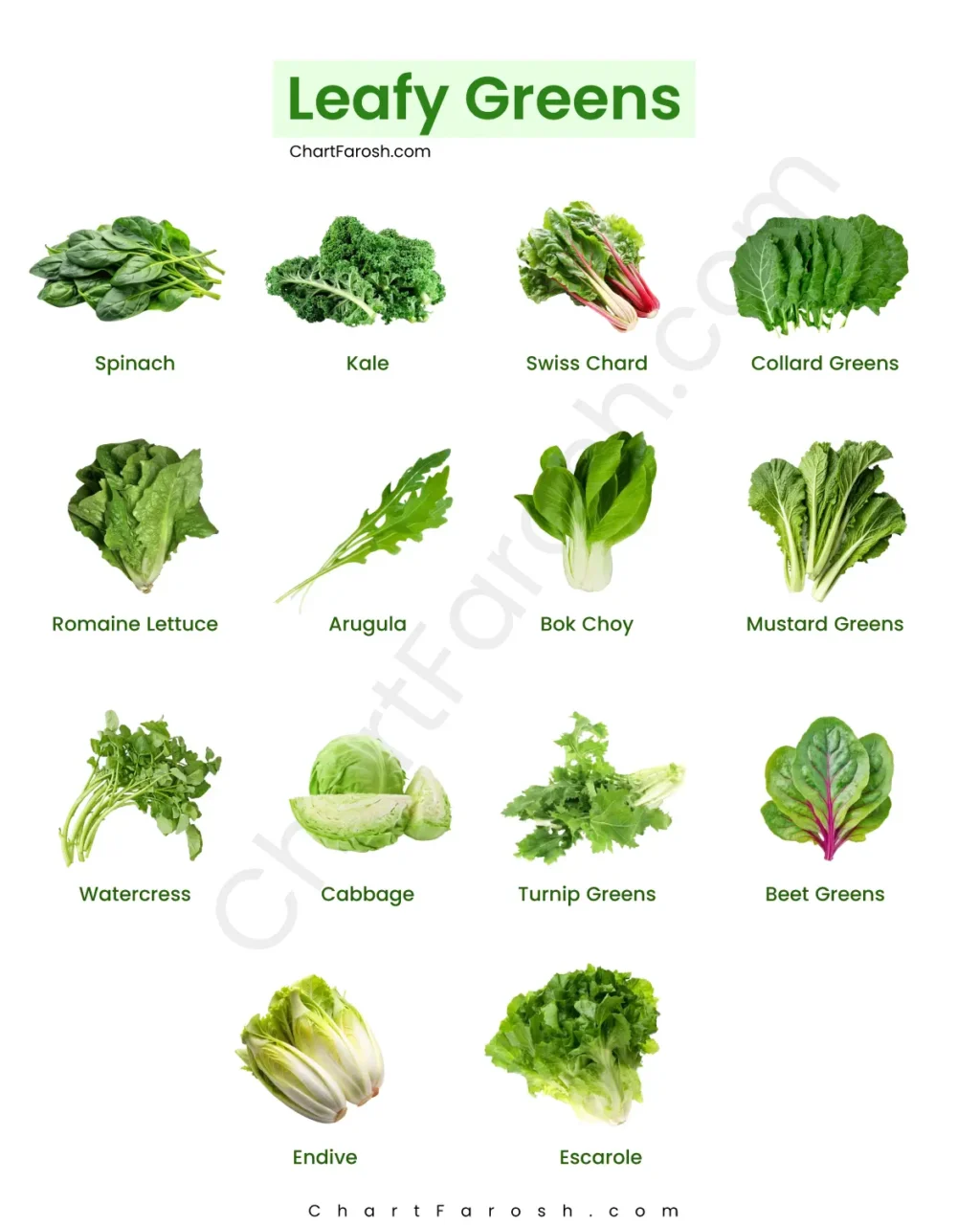
Table of Contents
Leafy Greens Chart
Using a leafy greens chart can help you plan your meals effectively. Knowing the right portions can avoid food waste and ensure you’re eating balanced meals.
Leafy greens are incredibly versatile and can be used in various dishes. From fresh salads to hearty soups, there’s no limit to what you can create.
For example, collard greens are perfect for wraps, providing a nutritious alternative to tortillas. Swiss chard can be sautéed with garlic and olive oil for a quick and tasty side dish. With its peppery flavor, Arugula adds a delightful kick to any salad or sandwich.
Whether you’re making a salad, smoothie, or a cooked dish, knowing the right serving size and nutritional value can make a big difference. For instance, one cup of raw spinach provides about 7 calories.
It is rich in vitamins A and K. Kale, another superstar, offers a similar nutrient profile but with more fiber and protein.
In addition to their versatility, leafy greens are low in calories, making them an excellent choice for those looking to maintain or lose weight.
They are high in fiber, which promotes healthy digestion and helps you feel full longer. Moreover, leafy greens are rich in antioxidants, which can help protect your body from harmful free radicals.
So, the next time you plan your grocery list or prepare meals for the week, keep the chart handy. It’s a simple tool that can make a big difference in your diet and overall health.
| Vegetable | Description | Nutritional Benefits | Common Uses |
| Spinach | Tender, dark green leaves | High in iron, calcium, vitamins A, C, K, and folate | Salads, smoothies, sautés, soups |
| Kale | Curly or flat leaves, tough texture | Rich in vitamins A, C, K, calcium, and antioxidants | Salads, smoothies, chips, sautés |
| Swiss Chard | Colorful stalks, large green leaves | High in vitamins A, C, K, magnesium, and potassium | Sautés, soups, salads, stews |
| Collard Greens | Large, thick, dark green leaves | Excellent source of vitamins A, C, K, calcium, and fiber | Sautés, stews, wraps, braised dishes |
| Romaine Lettuce | Long, crisp leaves | Good source of vitamins A, C, K, and folate | Salads, wraps, sandwiches |
| Arugula | Small, tender leaves with a peppery flavor | Rich in vitamins A, C, K, calcium, and potassium | Salads, sandwiches, pizzas, pestos |
| Bok Choy | Crunchy white stems, dark green leaves | High in vitamins A, C, K, calcium, and antioxidants | Stir-fries, soups, steamed dishes |
| Mustard Greens | Spicy, dark green leaves | Rich in vitamins A, C, K, calcium, and fiber | Sautés, salads, soups |
| Watercress | Small, delicate leaves with a peppery taste | High in vitamins A, C, K, calcium, and antioxidants | Salads, sandwiches, garnishes |
| Cabbage | Dense, leafy heads (green or purple) | High in vitamins C, K, fiber, and folate | Salads, coleslaw, stir-fries, soups |
| Turnip Greens | Tender, slightly bitter leaves | Rich in vitamins A, C, K, calcium, and fiber | Sautés, stews, soups |
| Beet Greens | Tender leaves from beetroot plants | High in vitamins A, C, K, iron, and calcium | Salads, sautés, smoothies |
| Endive | Curly, slightly bitter leaves | Good source of vitamins A, C, K, and folate | Salads, garnishes, soups |
| Escarole | Broad, slightly bitter leaves | High in vitamins A, C, K, folate, and fiber | Salads, soups, s |
What Are the 7 Most Nutritious Greens?
When it comes to nutrition, not all greens are created equal. Here are the seven most nutritious leafy greens you should consider adding to your diet:
- Kale: Often called a superfood, kale is rich in vitamins A, C, and K. It’s also packed with antioxidants and fiber, making it great for digestion and overall health.
- Spinach: Spinach is a versatile green that can be eaten raw or cooked. It’s high in iron, calcium, and magnesium, supporting bone health and muscle function.
- Swiss Chard: This green is packed with vitamins A, C, and K, as well as magnesium and potassium. Swiss chard helps regulate blood sugar levels and supports heart health.
- Collard Greens: Collards are high in fiber and vitamins A, C, and K. They are excellent for bone health and help lower cholesterol levels.
- Arugula: Known for its peppery taste, arugula is rich in calcium, potassium, and folate. It’s also a good source of antioxidants.
- Romaine Lettuce: Romaine is a crunchy green high in vitamins A and K. It’s also low in calories, making it a great addition to any diet.
- Bok Choy: This Asian green is rich in vitamins C and K, calcium, and magnesium. Bok choy supports bone health and boosts the immune system.
Adding these seven greens into your diet can provide many health benefits, from improved digestion to stronger bones. These nutrients are crucial for maintaining healthy skin, bones, and eyes, as well as supporting your cardiovascular system.
10 Leafy Greens to Eat More Often
Leafy greens are a crucial part of a healthy diet. Here are ten leafy greens you should eat more often to reap their numerous health benefits:
1. Spinach: A nutrient-dense green that can be added to salads, smoothies, or cooked dishes. It’s versatile and easy to incorporate into various recipes.
2. Kale: A versatile green used in salads, soups, and smoothies. Kale chips are a popular, healthy snack option.
3. Swiss Chard: Great for sautéing or adding to soups and stews. Swiss chard adds a vibrant color and a slight bitterness to dishes.
4. Collard Greens: Ideal for steaming or using as a wrap instead of tortillas. They’re a staple in Southern cuisine.
5. Arugula: Perfect for salads and sandwiches, adding a peppery flavor. Arugula can also be used as a pizza topping.
6. Romaine Lettuce: Excellent for salads and crunchy addition to sandwiches. It’s a key ingredient in classic Caesar salads.
7. Bok Choy: Delicious in stir-fries and soups. Bok choy is commonly used in Asian cuisine and adds a nice crunch.
8. Mustard Greens: Adds a spicy kick to salads and cooked dishes. They can be sautéed with garlic for a simple side dish.
9. Beet Greens: Don’t toss them out! They’re great sautéed or added to soups. Beet greens are packed with nutrients and have a slightly sweet flavor.
10. Watercress: A peppery green that works well in salads and sandwiches. Watercress is also an excellent garnish for various dishes.
By incorporating these greens into your diet, you can enjoy a variety of flavors and textures while boosting your intake of essential nutrients. Aim to include at least one of these greens in your meals each day for optimal health benefits.
Conclusion
Adding a variety of leafy greens into your diet is one of the best ways to ensure you get a wide range of essential nutrients.
The leafy greens chart can be a handy guide, helping you make informed choices about what and how much to eat. Leafy greens support overall health and offer specific benefits like improved digestion, enhanced immunity, and better weight management.
Next time at the grocery store, refer to the leafy greens chart and pick up various nutrient-dense greens.
It will guide you in making healthier choices and getting the proper nutrients from your diet. The key to a balanced diet is variety, and leafy greens are a great place to start.
Don’t forget to experiment with different recipes and preparation methods to keep your meals exciting and flavorful.
Enjoy the journey to better health and happy eating!