Caterpillar Identification Chart
“Not all caterpillars are created equal.” This saying perfectly captures the diversity and intrigue of these fascinating creatures.
While some caterpillars are admired for their bright colors and striking patterns, others blend seamlessly into their surroundings or display impressive defenses like toxic spines.
Identifying these unique characteristics not only helps you understand which caterpillars you’re observing but also reveals their role in the ecosystem.
The charts below will help you discover the many types of caterpillars, their behaviors, and how they fit into nature’s intricate web.
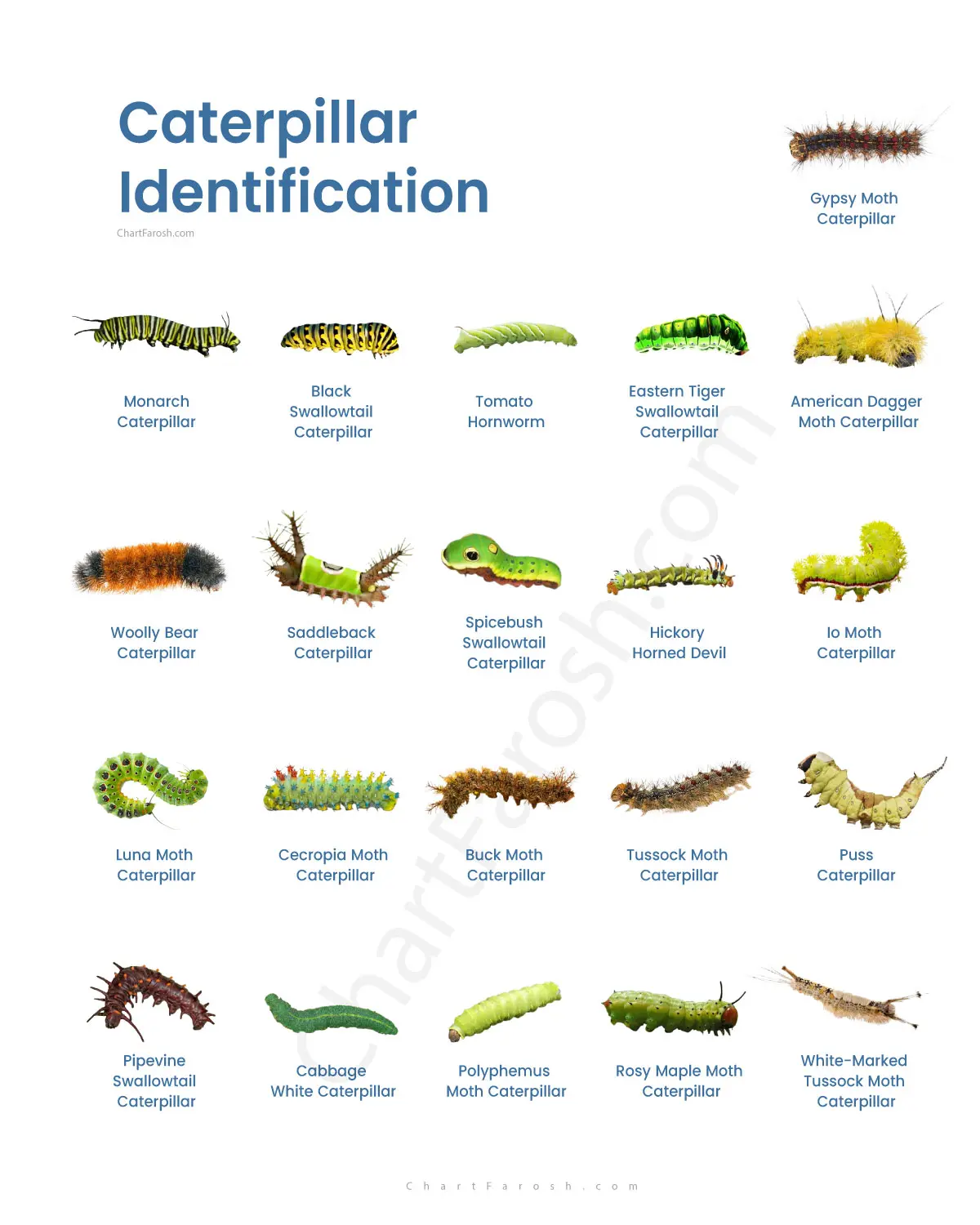
Table of Contents
Caterpillar Identification Chart
Caterpillars are more than just the larval stage of butterflies and moths; they play a crucial role in the ecosystem as both consumers and prey.
While many caterpillars are known for their vibrant colors and unique patterns, some have developed fascinating defense mechanisms, such as mimicking snakes or possessing toxic spines.
These adaptations help them survive in the wild, where they face numerous threats from predators. Understanding these characteristics can not only aid in identification but also provide insight into their behavior and ecological significance.
These unique traits are detailed further in the identification chart below.
| Caterpillar Species | Appearance | Size | Host Plants | Region | Behavior |
| Monarch Caterpillar | Black, white, and yellow stripes | 5 – 8 cm (2 – 3 inch) | Milkweed | North America | Non-aggressive, toxic due to milkweed diet |
| Black Swallowtail Caterpillar | Green with black bands and yellow spots | 3.5 – 5.5 cm (1.4 – 2.2 inch) | Parsley, dill, fennel, carrots | North America | Emits a foul odor when disturbed |
| Tomato Hornworm | It has a green body with white diagonal stripes and a horn on its back end | Up to 10 cm (4 inch) | Tomato, pepper, eggplant, tobacco | North America | It eats voraciously and can significantly damage crops |
| Eastern Tiger Swallowtail Caterpillar | Green with large false eyespots and a yellow stripe | 4.5 – 6.5 cm (1.8 – 2.5 inch) | Wild cherry, tulip tree, ash | Eastern U.S., Canada | Mimics a snake to deter predators |
| Gypsy Moth Caterpillar | Dark, hairy with red and blue spots | 5 – 6 cm (2 – 2.5 inch) | Oak, birch, willow, maple | North America, Europe | Can defoliate trees, causing significant ecological damage |
| Woolly Bear Caterpillar | Black and brown bands, fuzzy | 3 – 5 cm (1.2 – 2 inch) | Various plants, grasses | North America | Believed to predict winter severity based on band width |
| Saddleback Caterpillar | Green with a brown “saddle” mark and spiny projections | 2.5 – 3 cm (1 – 1.2 inch) | Oak, elm, chestnut, various shrubs | Eastern U.S., Midwest | Venomous spines can cause painful stings |
| Spicebush Swallowtail Caterpillar | Green with large false eyespots, turning orange before pupation | 4 – 5 cm (1.5 – 2 inch) | Spicebush, sassafras, camphor | Eastern U.S., Canada | Mimics a snake to deter predators |
| Hickory Horned Devil | Large, green with spiny orange horns | Up to 15 cm (6 inch) | Hickory, walnut, persimmon | Eastern U.S. | Largest caterpillar in North America, harmless despite intimidating appearance |
| Io Moth Caterpillar | Green with red and white stripes, covered in spines | 5 – 7 cm (2 – 2.8 inch) | Willow, maple, oak, elm | Eastern U.S., Midwest | Spines can cause painful stings |
| Luna Moth Caterpillar | Bright green with yellow lines and reddish spots | 6 – 9 cm (2.5 – 3.5 inch) | Hickory, walnut, sumac, sweetgum | Eastern U.S., Canada | Feeds at night, relatively uncommon |
| Cecropia Moth Caterpillar | Large, green with colorful tubercles (red, yellow, blue) | 10 – 12 cm (4 – 5 inch) | Maple, birch, cherry, willow | Eastern U.S., Canada | One of the largest moths in North America is produced by this species |
| Buck Moth Caterpillar | Black with white spots, covered in spines | 5 – 7 cm (2 – 2.8 inch) | Oak, willow, cherry, plum | Eastern U.S., Gulf Coast | Spines can cause painful stings, commonly seen in fall |
| Tussock Moth Caterpillar | White, black, and yellow, with tufts of hair and red head | 3 – 4 cm (1.2 – 1.6 inch) | Oak, birch, maple, elm | North America, Europe | Larvae have irritating hairs, can cause rash |
| Puss Caterpillar | Covered in dense, silky fur, resembles a small tuft of cotton | 2.5 – 3.5 cm (1 – 1.4 inch) | Oak, elm, citrus, garden plants | Southern U.S. | Venomous spines beneath fur can cause severe pain |
| Pipevine Swallowtail Caterpillar | Black with bright orange spots | 4 – 5 cm (1.5 – 2 inch) | Pipevine | Eastern U.S., Southern Canada | Toxic to predators, aposematic coloration (warning colors) |
| Cabbage White Caterpillar | Green with faint yellow stripes and short hairs | 2.5 – 3.5 cm (1 – 1.4 inch) | Cabbage, kale, broccoli | North America, Europe | Common garden pest, damages brassica crops |
| Polyphemus Moth Caterpillar | Bright green with yellow lines and reddish spots | 7 – 10 cm (3 – 4 inch) | Oak, maple, birch, hickory | North America | Large, harmless, feeds on various trees and shrubs |
| Rosy Maple Moth Caterpillar | Yellow-green with red bands | 3 – 4 cm (1.2 – 1.6 inch) | Maple, oak | Eastern U.S. | Non-aggressive, feeds on tree leaves |
| White-Marked Tussock Moth Caterpillar | White with red head, black tufts, and yellow stripes | 3 – 4 cm (1.2 – 1.6 inch) | Various deciduous trees | North America | Spiny, can cause skin irritation |
| American Dagger Moth Caterpillar | Yellow-green with black tufts and a dark stripe down the back | 5 – 6 cm (2 – 2.5 inch) | Oak, maple, birch, elm | Eastern U.S., Canada | Spines can cause skin irritation and rashes |
Types of Caterpillar
Caterpillars are incredibly diverse, with each type adapted to its unique environment and lifestyle. Caterpillars are categorized by more than just their color and shape; their feeding habits, life cycles, and plant preferences also play a role. For instance, while most caterpillars feed on numerous plants, some are highly specialized and rely solely on one plant species.
Additionally, their behavior during the day versus night can vary significantly, with some types being nocturnal to avoid predators. Understanding these differences can greatly aid in identifying and appreciating the role each type plays in the ecosystem.
| Type of Caterpillar | Visual Characteristics | Common Examples | Habitat | Feeding Habits |
| Butterfly Caterpillars | Generally smooth, bright colors or patterns | Monarch, Swallowtail | Meadows, gardens, forests | Feed on specific host plants, often milkweed for Monarchs |
| Moth Caterpillars | Hairy or spiny, often drab colors | Woolly Bear, Gypsy Moth | Forests, gardens, grasslands | Typically feed on a variety of plants, some are pests to trees |
| Tent Caterpillars | Social, create silk tents in trees | Eastern Tent Caterpillar | Deciduous forests, orchards | Defoliate trees by feeding in large groups |
| Leaf Miners | Tiny, burrow inside leaves | Birch Leafminer | Various trees and shrubs | Feed within leaves, causing visible trails or blisters |
| Armyworms | Striped or plain, move in large groups | Fall Armyworm, True Armyworm | Fields, gardens, turfgrass | They target grasses and crops, causing major damage to agricultural operations |
| Looper Caterpillars | Inch along by arching their bodies, often green | Cabbage Looper, Geometrid Moth | Gardens, forests | Feed on foliage, some are considered pests to crops |
| Cutworms | Thick, smooth, usually brown or gray | Black Cutworm, Variegated Cutworm | Gardens, fields, under soil surface | Nocturnal feeders, cut down young plants at the base |
| Leafrollers | Roll leaves into tubes with silk for shelter | Omnivorous Leafroller, Red-banded Leafroller | Orchards, gardens | Feed on leaves from within their rolled shelters |
| Borers | Bore into stems or trunks of plants | Corn Borer, Peach Tree Borer | Crops, trees, woody plants | Feeding internally on stems, they can cause serious structural damage to plants |
| Bagworms | Carry a bag-like structure made from plant material | Evergreen Bagworm | Coniferous and deciduous trees | Feed on foliage, using it to construct protective bags around themselves |
| Webworms | Spin large webs in trees | Fall Webworm, Forest Tent Caterpillar | Forests, gardens, orchards | Feed on leaves within their protective webs |
How to Identify Caterpillar
Identifying caterpillars goes beyond simply recognizing their color or size. Often, subtle details such as the arrangement of bristles or the presence of specific markings like eyespots can be key indicators of a caterpillar’s species. Observing their behavior, such as how they move or react to threats, can also provide valuable clues.
Additionally, the plants they are feeding on often narrow down the possibilities since many caterpillars have specific host plants. Combining these observations with tools like field guides or identification apps can make the process more accurate and informative.
You can also identify a caterpillar by picture by closely comparing these traits with reference images in field guides or online databases.
The chart below breaks down these key identification features for easy reference.
| Identification Feature | Description | Example Species | Notes |
| Color Patterns | Look for unique color combinations, stripes, spots, or bands that are characteristic of certain species. | Monarch Caterpillar | Black, white, and yellow stripes are distinctive. |
| Body Shape and Size | Pay attention to the overall body shape (e.g., cylindrical, flattened) and the size range, which can help distinguish between species. | Tomato Hornworm | Large size and horn on the rear are distinctive. |
| Hairiness or Spines | Hairs or spines on some caterpillars can function as a defense mechanism. These features are often key to identification. | Woolly Bear Caterpillar | Fuzzy with black and brown bands. |
| Markings and Eyespots | Many caterpillars have false eyespots or other distinctive markings that can confuse predators and aid in identification. | Eastern Tiger Swallowtail Caterpillar | Large eyespots mimic a snake’s eyes. |
| Behavior | Observing how the caterpillar moves or responds to touch can give clues about its species. Some may mimic other creatures or curl up defensively. | Spicebush Swallowtail Caterpillar | Mimics a snake by curling up. |
| Host Plants | The type of plant the caterpillar is feeding on is often specific to certain species, making it a valuable identification tool. | Cabbage White Caterpillar | Typically found on cabbage, kale, or broccoli. |
| Seasonality | The time of year when the caterpillar is observed can also help in identification, as some species are only present in certain seasons. | Gypsy Moth Caterpillar | Commonly found in late spring to early summer. |
| Geographic Location | Identifying where the caterpillar was found can narrow down the species, as many caterpillars are region-specific. | Luna Moth Caterpillar | Typically found in Eastern U.S. and Canada. |
Green Caterpillar Identification
While many caterpillars are green to blend in with their surroundings, not all green caterpillars are alike. Some may have subtle markings or textures that help them avoid predators, while others might have specific adaptations like a horn or false eyespots.
Green caterpillars are often found on particular host plants, which can be a significant clue in identifying them.
Additionally, their size and behavior, such as whether they curl up when touched or remain still, can help distinguish one species from another. However, using tools like a caterpillar id chart can make it easier to compare these characteristics.
The table below highlights the key features of various green caterpillars for easy identification.
| Caterpillar Species | Key Features | Host Plants | Region |
| Tomato Hornworm | Green with white diagonal stripes, rear horn | Tomato, pepper, eggplant | North America |
| Luna Moth Caterpillar | Bright green, yellow lines, reddish spots | Hickory, walnut, sweetgum | Eastern U.S., Canada |
| Polyphemus Moth Caterpillar | Bright green, large with yellow lines, reddish spots | Oak, maple, birch, hickory | North America |
| Spicebush Swallowtail Caterpillar | Green with large false eyespots, turns orange before pupation | Spicebush, sassafras | Eastern U.S., Canada |
| Cabbage White Caterpillar | Green with faint yellow stripes and short hairs | Cabbage, kale, broccoli | North America, Europe |
| Io Moth Caterpillar | Green with red and white stripes, covered in spines | Willow, maple, oak, elm | Eastern U.S., Midwest |
Brown Caterpillar Identification
Brown caterpillars often use their color as camouflage, blending in with tree bark, soil, or leaves. While their coloration may seem uniform, many brown caterpillars have unique features such as subtle striping, spines, or hairs that help distinguish them from other species.
Their behavior, such as whether they are active during the day or night, and their preferred habitat, can also provide important identification clues. Referring to a detailed list of caterpillars with pictures can help in comparing these traits accurately.
Below is a chart detailing the key features of various brown caterpillars.
| Caterpillar Species | Key Features | Host Plants | Region |
| Gypsy Moth Caterpillar | Dark, hairy with red and blue spots | Oak, birch, willow, maple | North America, Europe |
| Buck Moth Caterpillar | Black with white spots, covered in spines | Oak, willow, cherry, plum | Eastern U.S., Gulf Coast |
| Saddleback Caterpillar | Green with brown “saddle” mark and spiny projections | Oak, elm, chestnut, various shrubs | Eastern U.S., Midwest |
| American Dagger Moth Caterpillar | Yellow-green with black tufts and a dark stripe down the back | Oak, maple, birch, elm | Eastern U.S., Canada |
| Woolly Bear Caterpillar | Black and brown bands, fuzzy | Various plants, grasses | North America |
| Spotted Tussock Moth Caterpillar | Black, white, and yellow with tufts of hair and a red head | Oak, birch, maple, elm | North America, Europe |
Black and Yellow Caterpillar Identification
Black and yellow caterpillars are not just visually striking but also serve as a clear signal to potential predators. This distinctive coloration, known as aposematism, is nature’s way of warning that these caterpillars might be toxic or unpalatable.
Many of these caterpillars possess chemical defenses, making them less appealing to birds and other predators. While the bright colors are a defense mechanism, not all black and yellow caterpillars are dangerous, but it’s wise to approach them with caution.
The table above highlights specific species of black, yellow, and black-and-yellow caterpillars, emphasizing their features, habitats, and defensive mechanisms.
| Caterpillar Species | Coloration | Distinctive Features | Habitat | Toxicity | Defensive Mechanism |
| Black Swallowtail Caterpillar | Solid black | Smooth body with occasional spines. | Gardens, meadows. | Non-toxic. | Camouflages well in dark environments; rears back to mimic a snake when threatened. |
| Giant Leopard Moth Caterpillar | Solid black, spiny body | Covered in stiff black bristles that are non-venomous but can be irritating. | Woodlands, gardens. | Non-toxic. | Rolls into a ball exposing spines when disturbed, which can be a deterrent to predators. |
| Sulphur Butterfly Caterpillar | Solid yellow | Smooth body with a slightly elongated shape. | Fields, gardens. | Non-toxic. | Blends in with yellow flowers and leaves, reducing visibility to predators. |
| Common Evening Brown Caterpillar | Solid pale yellow | Slightly rough texture with fine hair-like structures. | Forests, gardens. | Non-toxic. | Mimics dried leaves, aiding in camouflage. |
| Monarch Caterpillar | Black and yellow stripes | Alternating black, white, and yellow bands along its body; smooth texture. | Milkweed plants, gardens. | Toxic (contains cardenolides). | Bright coloration deters predators; releases toxic chemicals when threatened. |
| Cinnabar Moth Caterpillar | Black and yellow stripes | Black and yellow stripes, slightly hairy. | Ragwort plants, open fields. | Toxic (contains alkaloids). | Bright stripes warn predators of its toxicity; can excrete a bitter substance when disturbed. |
Gray Caterpillar Identification
Gray caterpillars are masters of camouflage, using their muted coloration to blend seamlessly into their surroundings. This natural disguise helps them avoid predators while they feed on various host plants.
These caterpillars are often found in regions where the foliage or bark matches their gray tones, making them difficult to spot.
Their habitats range from forests to gardens, where they feed on a variety of plants, often going unnoticed due to their ability to merge with their environment.
The table above details specific species of gray caterpillars, highlighting their features, common host plants, and regions.
| Caterpillar Species | Coloration | Distinctive Features | Common Host Plants | Regions Found |
| Peppered Moth Caterpillar | Gray with a slight mottled pattern. | Slim body with a rough texture that mimics tree bark. | Birch, oak, willow. | Europe, North America. |
| Fall Armyworm Caterpillar | Dark gray to nearly black, with lighter stripes along the sides. | Smooth body with a faint, inverted Y-shaped marking on the head. | Corn, rice, cotton. | North and South America. |
| Cutworm Caterpillar | Gray with a shiny, smooth appearance. | Plump body, often curled up when disturbed. | Various vegetables, grasses. | Worldwide. |
| American Dagger Moth Caterpillar | Pale gray with long, black bristles. | Hairy appearance with tufts of long black setae, giving it a distinct look. | Maple, oak, birch. | North America. |
Orange Caterpillar Identification
Orange caterpillars are often among the most eye-catching due to their vibrant coloration, which serves both as a warning and a disguise. The bright orange hue is frequently associated with toxicity or a bad taste, deterring predators from making a meal of them.
This coloration can also help them blend into their environment, especially among flowers or autumn leaves. Orange caterpillars are commonly found in various regions, feeding on a wide range of host plants, and their striking appearance is often an adaptation to their specific habitats.
The table highlights key orange caterpillar species, their features, host plants, and regions.
| Caterpillar Species | Coloration | Distinctive Features | Common Host Plants | Regions Found |
| Gulf Fritillary Caterpillar | Bright orange with black spines. | Long, slender body covered in sharp, black spines. | Passionflower vines. | Southern U.S., Central America. |
| Milkweed Tussock Moth Caterpillar | This creature is orange, highlighted by tufts of black and white hair. | Fuzzy appearance with dense tufts of black and white hair mixed with orange. | Milkweed plants. | North America. |
| Orange-striped Oakworm | Orange with black stripes. | Stout body with bold black stripes running along its sides. | Oak trees. | Eastern North America. |
| Spiny Oak-Slug Caterpillar | Bright orange with green markings. | Flat, slug-like body with branched spines; often displays green markings alongside the orange. | Oak, cherry, hickory trees. | Eastern U.S. |
White Caterpillar Identification
White caterpillars are often overlooked, but they play crucial roles in various ecosystems. Their pale coloration can make them stand out or blend in, depending on the environment.
Some white caterpillars are known for their dense hair or spines, which can be an indication of potential irritation if touched.
These caterpillars can be found in gardens and wooded areas, and they often resemble other species, making identification tricky.
Understanding the subtle differences between these species can help in correctly identifying them and managing their presence in specific habitats.
The table outlines notable white caterpillar species, their traits, preferred plants, and typical regions.
| Caterpillar Species | Coloration | Distinctive Features | Common Host Plants | Regions Found |
| Hickory Tussock Moth Caterpillar | White with black tufts of hair. | Covered in dense white hairs with black tufts along the sides. | Hickory, walnut, pecan trees. | Eastern North America. |
| American Dagger Moth Caterpillar | Pale white with long black bristles. | Long black bristles along its back, giving it a distinct, hairy appearance. | Maple, oak, birch. | North America. |
| White-Marked Tussock Moth Caterpillar | White with a red head and yellow tufts. | Tufts of yellow hair on the sides and a bright red head, contrasting with the white body. | Fruit trees, shrubs. | North America. |
| Sycamore Tussock Moth Caterpillar | Solid white, occasionally with a yellow tint. | Soft, hairy appearance with no distinct markings except for occasional yellowish tint. | Sycamore trees. | North America. |
Fuzzy Caterpillar Identification
Fuzzy caterpillars are often admired for their soft, hairy appearance, but some species can cause skin irritation or allergic reactions due to their spines or hairs.
These caterpillars are commonly found in gardens, forests, and even backyards, making encounters with them likely for parents, pet owners, and hikers.
It’s important to recognize these caterpillars, as their hairs can sometimes break off and embed in the skin, causing discomfort. Knowing how to identify them and what to do if you or your pets come into contact with them can help avoid unnecessary irritation.
This table lists key fuzzy caterpillar species, noting their features, host plants, and regions.
| Caterpillar Species | Coloration | Distinctive Features | Common Host Plants | Regions Found |
| Woolly Bear Caterpillar | Black and orange bands. | Covered in dense, bristly hairs, often with alternating black and orange bands. | Various low-growing plants. | North America. |
| Hickory Tussock Moth Caterpillar | White with black tufts of hair. | Fuzzy appearance with tufts of black hair along the sides and white hairs on the body. | Hickory, walnut, pecan trees. | Eastern North America. |
| Puss Caterpillar (Asp) | Pale gray to brown. | Small, furry body resembling a tuft of cotton or fur, with venomous spines beneath the soft hair. | Oak, elm, citrus trees. | Southeastern U.S. |
| Sycamore Tussock Moth Caterpillar | White, occasionally yellow-tinted. | Soft, hairy appearance with long, white hairs covering the body. | Sycamore trees. | North America. |
Hairy Caterpillar Identification
Hairy caterpillars are easily recognizable by their long, often thick setae, which can vary in color and pattern. While their appearance can be fascinating, some species pose health risks due to irritating or venomous hairs.
These caterpillars are frequently encountered by outdoor enthusiasts and can be found on a variety of plants. It’s important to observe them with caution, as contact with their hairs can cause skin reactions or other discomfort.
Below is a summary of key hairy caterpillar species, including their unique features and where they are commonly found.
| Caterpillar Species | Coloration | Distinctive Features | Common Host Plants | Regions Found |
| American Dagger Moth Caterpillar | Pale yellow to white. | Long black bristles along its back, giving it a distinct, hairy appearance; can cause skin irritation. | Maple, oak, birch. | North America. |
| Gypsy Moth Caterpillar | Dark with blue and red spots. | Hairy body with distinctive blue and red spots, known for defoliating trees. | Oak, birch, willow trees. | North America, Europe. |
| Hickory Tussock Moth Caterpillar | White with black tufts of hair. | Covered in long, white hairs with black tufts along the sides, known for causing allergic reactions in some people. | Hickory, walnut, pecan trees. | Eastern North America. |
| Puss Caterpillar (Asp) | Pale gray to brown. | Furry body resembling a tuft of cotton, with venomous spines beneath the soft hair that can cause severe reactions. | Oak, elm, citrus trees. | Southeastern U.S. |
Butterfly Caterpillar Identification
Butterfly caterpillars are vital to the life cycle of butterflies and play a significant role in garden ecosystems. These caterpillars are often found in butterfly gardens where they feed on specific host plants, each species having its preferences.
Recognizing these caterpillars is crucial for gardeners and conservationists who aim to support butterfly populations. Beyond their transformation into butterflies, these caterpillars contribute to pollination and the overall health of the garden environment.
The table summarizes key butterfly caterpillars, their features, host plants, and regions.
| Caterpillar Species | Coloration | Distinctive Features | Common Host Plants | Regions Found |
| Monarch Caterpillar | Black, white, and yellow stripes. | Smooth body with alternating black, white, and yellow bands; known for feeding on milkweed. | Milkweed plants. | North and Central America. |
| Black Swallowtail Caterpillar | Green with black bands and yellow spots. | Plump body with distinctive black bands and yellow spots; often found on parsley and dill. | Parsley, dill, fennel. | North America. |
| Painted Lady Caterpillar | Dark with spiny hairs and yellow stripes. | Spiny body with yellow stripes running along the sides; known for its widespread range. | Thistle, mallow, hollyhock. | Worldwide. |
| Gulf Fritillary Caterpillar | Bright orange with black spines. | Long, slender body covered in sharp, black spines; feeds on passionflower vines. | Passionflower vines. | Southern U.S., Central America. |
Conclusion
Now that you’ve learned how to identify various caterpillars, think about how this knowledge can enhance your experience. Next time you’re outdoors, take a closer look at the caterpillars around you.
With what you’ve learned, identifying them becomes more straightforward and meaningful. This knowledge not only helps you recognize different species but also deepens your understanding of their place in the environment.