Grub Identification Chart
What if the secret to saving your lawn from unsightly patches lies just beneath the surface? Grubs, known for quietly feeding on grass and plant roots, can vary in their impact depending on their type.
Some are more active in specific climates or soil types, making them harder to detect until significant damage has occurred.
By exploring the different types of grubs and their unique characteristics, you’ll gain the knowledge needed to identify and manage these pests effectively, keeping your landscape healthy and vibrant.
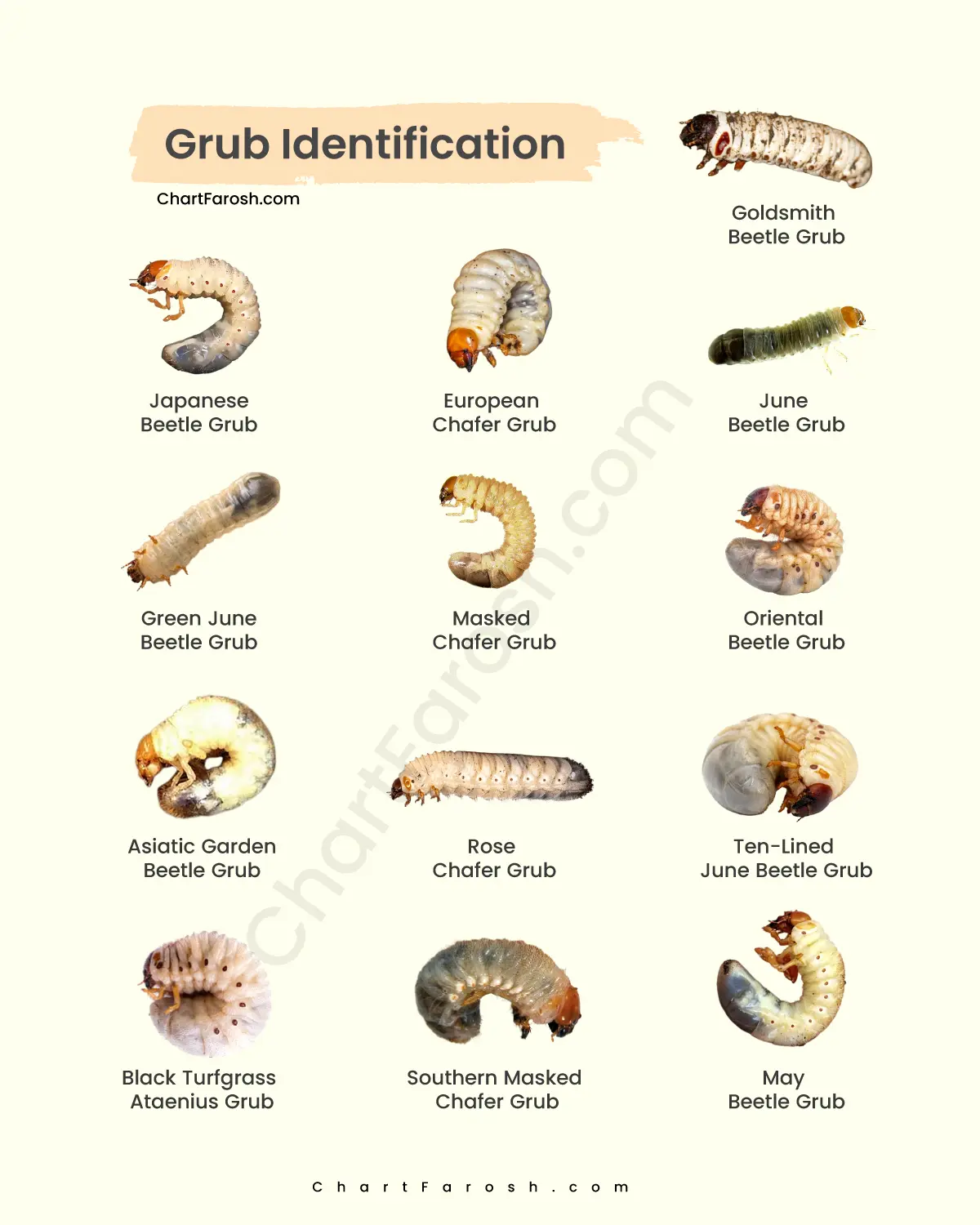
Table of Contents
Grub Identification Chart
While grubs are often recognized as a common threat to lawns, their impact extends beyond just the visible brown patches many are familiar with.
The type of grub can significantly influence the severity and nature of the damage they cause. For instance, certain grubs are more active in specific climates or soil types, making them harder to detect until the damage is extensive.
Additionally, some species of grubs are more attracted to particular plants or grass types, meaning your garden’s composition could inadvertently invite these pests. Understanding these nuances can help you take more targeted actions to protect your landscape.
The chart below will help you identify and differentiate these grubs.
| Grub Type | Appearance | Adult Insect | Habitat | Potential Damage |
| Japanese Beetle Grub | C-shaped, white with a brown head, three pairs of legs | Japanese Beetle | Lawns, garden soil, under turf | Severe damage to grass roots, causing brown patches |
| European Chafer Grub | C-shaped, white with a reddish-brown head, slightly larger than Japanese Beetle grubs | European Chafer | Lawns, golf courses, turf | Damages turf by feeding on grass roots, leading to wilting and yellowing |
| June Beetle Grub | Large, C-shaped, white with a reddish-brown head | June Beetle | Lawns, garden soil, under turf | Can cause extensive damage to grass roots, leading to dead patches |
| Green June Beetle Grub | Large, creamy white with a brown head, moves on its back | Green June Beetle | Lawns, gardens, compost piles | Feeds on decaying organic matter, but can damage turf when in high numbers |
| Masked Chafer Grub | C-shaped, creamy white with a darker head, no distinct pattern on the back | Masked Chafer | Lawns, turfgrass, especially in dry areas | Feeds on roots of turfgrass, causing brown patches and wilting |
| Oriental Beetle Grub | Smaller than Japanese Beetle grubs, these are C-shaped with a white body and brown head | Oriental Beetle | Lawns, gardens, under turf | Can cause damage to grass roots, similar to Japanese Beetles |
| Asiatic Garden Beetle Grub | Small, C-shaped, white with a brown head | Asiatic Garden Beetle | Gardens, under mulch, in flower beds | Damages roots of various garden plants, leading to wilting and plant death |
| Rose Chafer Grub | Small to medium, C-shaped, white with a tan head | Rose Chafer | Sandy soils, lawns, gardens | Can damage grass roots and young plants, especially in sandy soils |
| Ten-Lined June Beetle Grub | Large, C-shaped, creamy white with a brown head | Ten-Lined June Beetle | Western U.S., lawns, gardens | Can cause significant damage in orchards by feeding on the roots of trees and shrubs |
| Black Turfgrass Ataenius Grub | Small, white with a brown head, often found in groups | Black Turfgrass Ataenius | Golf courses, turfgrass | This organism consumes turfgrass roots, which may result in noticeable thinning when its population increases |
| Southern Masked Chafer Grub | C-shaped, creamy white with a reddish-brown head | Southern Masked Chafer | Lawns, turf, especially in warmer climates | Damages turfgrass roots, leading to dead patches, especially in warm regions |
| May Beetle Grub | Large, C-shaped, creamy white with a reddish-brown head | May Beetle | Lawns, gardens, agricultural fields | Causes damage to roots of grasses, crops, and garden plants, leading to plant stress |
| Goldsmith Beetle Grub | Large, C-shaped, creamy white with a reddish-brown head | Goldsmith Beetle | Forest edges, wooded areas, gardens | Less common, but can feed on roots of various plants, causing localized damage |
Types of Grub with Pictures
Curious about why some parts of your lawn or garden seem to suffer more from grub damage? The answer often lies in the specific habitats these pests prefer.
By knowing where different types of grubs are most likely to thrive, you can pinpoint the areas of your landscape that are most at risk. This understanding is key for effective grub worm identification and targeted treatment.
Here’s a breakdown of grub types based on where they’re commonly found:
| Habitat | Grub Type | Characteristics | Potential Damage |
| Lawns and Turfgrass | Japanese Beetle Grub | White, C-shaped, with a brown head | Severe damage to grass roots, causing brown patches |
| European Chafer Grub | White, C-shaped, with a reddish-brown head | Feeds on grass roots, leading to wilting and yellowing | |
| June Beetle Grub | Large, white, C-shaped with a reddish-brown head | Can cause extensive damage to grass roots, resulting in dead patches | |
| Masked Chafer Grub | Creamy white, C-shaped, with a darker head | Causes brown patches and wilting in dry areas | |
| Southern Masked Chafer Grub | Creamy white, C-shaped, with a reddish-brown head | Damages turfgrass roots, especially in warm regions | |
| Oriental Beetle Grub | Smaller white, C-shaped, with a brown head | Similar damage to Japanese Beetles | |
| Black Turfgrass Ataenius Grub | Small, white, often found in groups | Causes thinning of grass on golf courses and lawns | |
| Gardens and Flower Beds | Asiatic Garden Beetle Grub | Small, white, C-shaped, with a brown head | Damages roots of various garden plants |
| Green June Beetle Grub | Large, creamy white, moves on its back | Feeds on decaying organic matter, but can harm turf | |
| Sandy Soils and Dry Areas | Rose Chafer Grub | White, C-shaped, with a tan head | Can damage grass roots and young plants, especially in sandy soils |
| Forest Edges and Wooded Areas | Ten-Lined June Beetle Grub | Large, creamy white, C-shaped, with a brown head | Feeds on roots of trees and shrubs, causing significant damage in orchards |
| Goldsmith Beetle Grub | Featuring a reddish-brown head, this sizable grub has a C-shaped, creamy white body | Less common, but can feed on roots of various plants, causing localized damage | |
| Compost Piles and Decaying Matter | Green June Beetle Grub | Large, creamy white, moves on its back | Primarily feeds on decaying organic matter |
White Grub Identification
White grubs are often recognized as the larvae of various beetles, but what many people might not realize is how varied they can be in size and the extent of damage they cause.
These grubs are typically found curled up in a C-shape, just below the surface of the soil. Here, they feed on plant roots.
While they all share a similar pale color, identifying the specific type of white grub is crucial. This is especially important when dealing with large infestations.
Accurate huge white grub identification is essential because these larger grubs can cause significant harm to your lawn or garden. If not properly managed, they can lead to widespread damage.
The chart below provides details on some of the most common large white grubs you might encounter. It helps you better understand their characteristics and the risks they pose.
| Grub Type | Size | Appearance | Habitat | Damage Potential |
| June Beetle Grub | Large (up to 1.5 inches) | White, C-shaped, with a reddish-brown head | Lawns, garden soil, under turf | Can cause extensive root damage leading to dead patches |
| Green June Beetle Grub | Large (up to 2 inches) | Creamy white, C-shaped, moves on its back | Gardens, compost piles | Feeds on organic matter but can harm turf when numerous |
| Ten-Lined June Beetle Grub | Large (up to 1.5 inches) | Creamy white, C-shaped, with a brown head | Western U.S., lawns, gardens | Feeds on roots of trees and shrubs, significant in orchards |
| Goldsmith Beetle Grub | Large (up to 1.5 inches) | Creamy white, C-shaped, with a reddish-brown head | Forest edges, wooded areas, gardens | Less common but can cause localized damage to plant roots |
| Masked Chafer Grub | Medium to Large (up to 1 inch) | Creamy white, C-shaped, with a darker head | Lawns, especially in dry areas | Causes brown patches and wilting in turfgrass |
Yellow Grub Identification
Yellow grubs, though less commonly discussed, can be just as damaging as their white counterparts. These grubs are often found in sandy or well-drained soils, where they feed on the roots of various plants.
Unlike white grubs, yellow grubs can sometimes be mistaken for other soil-dwelling insects due to their slightly different coloring.
Identifying these grubs correctly is important because they tend to target specific types of vegetation, causing damage that might not be immediately obvious.
The table below outlines key details about common yellow grubs to assist in proper identification and control.
| Grub Type | Size | Appearance | Habitat | Damage Potential |
| Rose Chafer Grub | Medium (up to 1 inch) | Yellowish-white, C-shaped, with a tan head | Sandy soils, lawns, gardens | Can damage grass roots and young plants, especially in sandy soils |
| Masked Chafer Grub | Medium (up to 1 inch) | Creamy yellow, C-shaped, with a darker head | Lawns, turfgrass, especially in dry areas | Causes brown patches and wilting in turfgrass |
| Southern Masked Chafer Grub | Medium (up to 1 inch) | Creamy yellow, C-shaped, with a reddish-brown head | Lawns, especially in warmer climates | Damages turfgrass roots, leading to dead patches, especially in warm regions |
| Ten-Lined June Beetle Grub | Large (up to 1.5 inches) | Creamy yellow, C-shaped, with a brown head | Western U.S., lawns, gardens | By feeding on the roots of trees and shrubs, it inflicts severe harm on orchards |
| Goldsmith Beetle Grub | Large (up to 1.5 inches) | Yellowish-white, C-shaped, with a reddish-brown head | Forest edges, wooded areas, gardens | Less common but can cause localized damage to plant roots |
Brown Grub Identification
Brown grubs are a bit less familiar to many gardeners, but they can be particularly troublesome due to their resilience in various soil conditions.
These grubs are typically found in warmer regions and are known for their distinctive brownish color, which sets them apart from the more common white or yellow grubs.
Brown grubs tend to feed on a wide range of plant roots, which can lead to significant damage, especially in well-maintained gardens and lawns.
The table below provides essential details about brown grubs, helping you recognize and manage them more effectively.
| Grub Type | Size | Appearance | Habitat | Damage Potential |
| Asiatic Garden Beetle Grub | Small (up to 0.5 inch) | Brownish-white, C-shaped, with a darker head | Gardens, under mulch, in flower beds | Damages roots of various garden plants, leading to wilting and plant death |
| Oriental Beetle Grub | Small (up to 0.75 inch) | Light brown, C-shaped, with a brown head | Lawns, gardens, under turf | Similar in damage to Japanese Beetle grubs, affecting grass roots |
| Southern Masked Chafer Grub | Medium (up to 1 inch) | Brownish-white, C-shaped, with a reddish-brown head | Lawns, especially in warmer climates | Damages turfgrass roots, leading to dead patches, particularly in warmer regions |
| June Beetle Grub | Large (up to 1.5 inches) | Reddish-brown, C-shaped, with a dark brown head | Lawns, garden soil, under turf | Extensive root damage, causing significant dead patches in lawns |
| Goldsmith Beetle Grub | Large (up to 1.5 inches) | Brownish-white, C-shaped, with a reddish-brown head | Forest edges, wooded areas, gardens | Less common but can cause localized damage to plant roots |
Black Grub Identification
Black grubs are among the less common but equally destructive types of grubs that can be found in lawns and gardens.
These grubs are characterized by their darker appearance, which can range from dark brown to nearly black. They are often more difficult to spot due to their color, especially in dark or shaded areas of the soil.
Black grubs are typically associated with turfgrass and can cause significant damage to the roots. It leads to thinning and bare patches in lawns. Correctly identifying these grubs is crucial for targeted treatment, as they can be mistaken for other soil-dwelling pests.
The table below provides important details on black grubs to assist in accurate identification and effective management.
| Grub Type | Size | Appearance | Habitat | Damage Potential |
| Black Turfgrass Ataenius Grub | Small (up to 0.5 inch) | Dark brown to black, C-shaped, with a darker head | Golf courses, turfgrass | Feeding on turfgrass roots, it causes severe thinning of the grass when in large populations |
| Oriental Beetle Grub | Small (up to 0.75 inch) | Dark brown, C-shaped, with a brown head | Lawns, gardens, under turf | Causes damage to grass roots, similar to Japanese Beetle grubs |
| Southern Masked Chafer Grub | Medium (up to 1 inch) | Dark brown, C-shaped, with a reddish-brown head | Lawns, especially in warmer climates | Damages turfgrass roots, leading to dead patches, particularly in warmer regions |
| June Beetle Grub | Large (up to 1.5 inches) | This C-shaped creature is dark reddish-brown, with a distinctly dark brown head | Lawns, garden soil, under turf | Can cause extensive root damage, resulting in significant dead patches |
| Masked Chafer Grub | Medium (up to 1 inch) | Dark creamy brown, C-shaped, with a darker head | Lawns, especially in dry areas | Causes brown patches and wilting in turfgrass |
How to Identify Lawn Grubs?
Lawn grubs can quietly wreak havoc beneath the surface of your grass, often going unnoticed until the damage becomes severe.
These underground pests feed on grass roots, which can weaken your lawn and create visible bare spots. To catch a grub problem before it escalates, it’s important to recognize the subtle signs that indicate their presence.
By understanding the below mentioned indicators, you can take action to protect your lawn from further damage.
| Identification Sign | What to Look For |
| Brown Patches | Thinning or discolored areas, especially late in the season |
| Loose or Peeling Turf | Turf that lifts easily, indicating root damage |
| C-shaped Larvae | White, curled larvae found just below the soil’s surface |
| Increased Wildlife Activity | More birds, raccoons, or other animals digging in the lawn |
| Soft or Spongy Ground | A bouncy or soft feeling underfoot, often a sign of root loss |
Garden Grubs Identification Pictures
When trying to identify garden grubs through pictures, it’s important to focus on more than just the obvious visual cues.
While many people might recognize the general shape and color of a grub, there are subtler details in photographs that can help you pinpoint the exact type of grub you’re dealing with.
For instance, the texture of the grub’s skin, the size and prominence of its legs, and even the way it curls up can offer vital clues.
Additionally, the background environment in the picture, such as soil type, moisture level, or nearby plants, can also provide context that’s often overlooked.
The table below highlights the key features to look for in pictures and explains why each detail matters.
| Key Features to Look For in Pictures | Why It Matters |
| Skin Texture | Smooth or wrinkled skin can differentiate grub types |
| Leg Size and Placement | The number, size, and position of legs can be distinctive |
| Grub Posture | The way a grub curls or moves can indicate its species |
| Soil and Surroundings | The type of soil or nearby plants can hint at the grub’s habitat |
| Head and Tail Markings | Subtle markings on the head or tail can aid identification |
Conclusion
Now that you’re familiar with the different types of grubs and how to identify them, it’s time to put that knowledge to use. Start by checking your lawn or garden for the signs we’ve discussed, and take action if you notice anything concerning.
Catching the problem early can save you a lot of work later. With this understanding, you’re ready to handle any grub issues that might come up.