Wasp Identification Chart
I used to think every wasp buzzing near me was out to sting. One summer afternoon, while gardening, I heard that unmistakable buzz behind me and ran inside, convinced danger was chasing me.
Later, a local nature volunteer helped me identify the insect, it wasn’t a dangerous yellowjacket at all, but a gentle paper wasp simply looking for food. That moment changed everything about how I saw these insects.
Wasps aren’t just summertime pests, they’re complex, essential predators that keep ecosystems in balance by controlling other insects like caterpillars and flies. The challenge is that many species look similar, and some truly are aggressive, especially when guarding their nests.
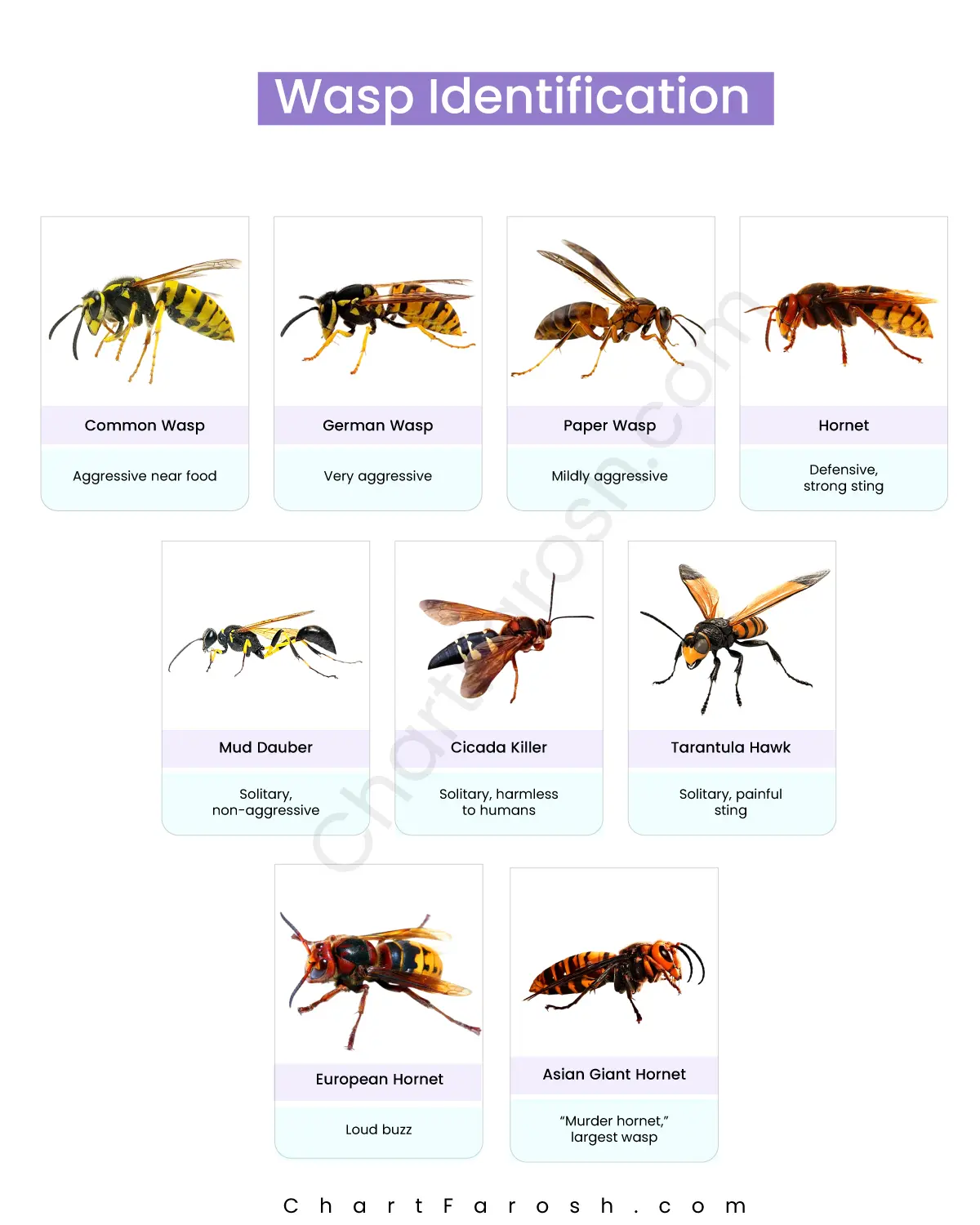
Table of Contents
Wasp Identification Chart With Pictures
When identifying a wasp, the most reliable features to observe include body shape, color banding, wing position while resting, and nesting locations.
A proper ID chart can help you distinguish between species that may look similar to a bee or even a dragonfly, especially in motion.
I will create a table-style chart here, and you can later insert reference images for quicker comparison. By studying body length, hair coverage, aggression level, and regional presence, you’ll be able to determine whether you’re dealing with a harmless paper wasp or a more defensive hornet-like species.
| Common Name | Scientific Name | Size | Color & Markings | Nest Type | Behavior | Habitat |
| Common Wasp | Vespula vulgaris | 12–17 mm | Yellow with black bands | Paper nest in ground or wall cavities | Aggressive near food | UK, Europe, USA |
| German Wasp | Vespula germanica | 13–16 mm | Black and yellow with 3 dots on face | Underground paper nest | Very aggressive | Global |
| Paper Wasp | Polistes spp. | 16–25 mm | Long legs, narrow waist, brown/yellow | Umbrella-shaped paper nests | Mildly aggressive | Worldwide |
| Hornet | Vespa crabro | 25–35 mm | Reddish brown & yellow | Large paper nests in trees | Defensive, strong sting | Europe, Asia |
| Mud Dauber | Sceliphron caementarium | 15–25 mm | Black or metallic blue | Mud tube nests | Solitary, non-aggressive | Global |
| Cicada Killer | Sphecius speciosus | 30–50 mm | Black with yellow stripes | Burrows in soil | Solitary, harmless to humans | USA |
| Tarantula Hawk | Pepsis grossa | 40–50 mm | Blue-black body, orange wings | Soil burrows | Solitary, painful sting | USA, Mexico |
How to Identify Wasps
There are a few major traits that set wasps apart from bees and other insects. First, look at the abdomen, wasps have a very narrow waist known as a petiole, giving them a sleeker and more elongated appearance.
Their bodies are typically less hairy, as they do not rely on pollen collection the same way bees do. Watch how they behave: bees are often gentle and busy collecting nectar, while wasps are predators and scavengers, regularly hunting other insects such as fly larvae or swarming around food scraps.
Facial structure is another key detail, many wasp species have smooth, sharply defined facial features and mandibles built for biting prey.
Wing position also helps with ID: wasps usually fold their wings back tightly when resting.
If you observe the insect’s nest, that can tell you a lot too. Paper and umbrella-shaped nests are common signs of paper wasps, while underground nests often belong to yellowjackets.
Big Wasp Identification Chart
Large wasps like hornets and powerful hunters such as cicada killers stand out due to their significant size. These wasps can measure beyond an inch long, with robust bodies meant for stronger attacks and large prey.
Their scale alone can make them alarming, but large doesn’t always mean dangerous. A detailed wasp identification guide will make it easier to recognize these bigger, more imposing wasps so people can stay alert and maintain distance when needed.
| Wasp Type | Size | Color | Region | Behavior | Notable Features |
| Asian Giant Hornet | 40–50 mm | Orange & black | Japan, Asia, NW USA | Aggressive, powerful sting | “Murder hornet,” largest wasp |
| European Hornet | 25–35 mm | Red-brown & yellow | Europe, UK | Defensive, nocturnal | Loud buzz |
| Cicada Killer Wasp | 30–50 mm | Black & yellow | USA | Solitary, harmless | Huge, burrowing |
| Tarantula Hawk | 40–50 mm | Metallic blue-black | USA, Mexico | Solitary, strong sting | Hunts spiders |
Black Wasp Identification Chart
Black wasps can look particularly threatening due to their bold, dark coloration and rapid flight behavior.
Some black species are solitary hunters that paralyze prey and remain uninterested in humans, while others are social and more likely to guard their nests.
Examining shine on the exoskeleton, wing tint (often blue or violet), and the body’s muscle tone can help differentiate between black hornets, mason wasps, and harmless mud daubers. The chart here will offer a reliable breakdown by region and typical habitat.
| Common Name | Scientific Name | Size | Color | Behavior | Nest Type |
| Great Black Wasp | Sphex pensylvanicus | 25–40 mm | Shiny black | Solitary, not aggressive | Burrows in ground |
| Mud Dauber | Sceliphron spp. | 15–25 mm | Black with yellow legs | Solitary, calm | Mud nests |
| Spider Wasp | Pompilidae family | 15–30 mm | Blue-black | Solitary, paralyzes spiders | Soil burrows |
| Blue Mud Wasp | Chalybion californicum | 20–25 mm | Metallic blue | Solitary, non-stinging | Mud nests |
Yellow Wasp Identification Chart
Yellow and black wasps are the most commonly encountered types, often instantly recognized due to their warning coloration that signals defensive capability.
These include yellowjackets and other aggressive scavengers frequently found around food and garbage.
| Common Name | Size | Color | Nest | Aggression | Region |
| Yellowjacket | 10–16 mm | Bright yellow with black stripes | Ground or wall cavities | Highly aggressive | Global |
| Paper Wasp | 16–25 mm | Yellow & brown | Hanging paper nests | Mildly aggressive | Worldwide |
| German Wasp | 13–16 mm | Yellow/black with face dots | Underground nest | Very aggressive | Europe, USA |
| Sand Wasp | 10–15 mm | Yellow & black | Ground burrows | Solitary | USA, Australia |
Paper Wasp Identification
Paper wasps are moderately sized with thin waists and long legs that hang below them in flight. They build umbrella-like paper nests under roofs, eaves, and other sheltering surfaces.
While they can sting when threatened, they are generally more docile when away from their nests. Color patterns vary widely, making them interesting but at times confusing to identify, which is why the upcoming chart is especially helpful for recognition.
| Feature | Description |
| Scientific Name | Polistes spp. |
| Size | 16–25 mm |
| Color | Brown, yellow, black, red (varies) |
| Nest Shape | Open umbrella-like paper combs |
| Behavior | Mildly aggressive; defends nest |
| Habitat | Eaves, sheds, branches |
| Diet | Nectar, caterpillars |
| Lifespan | Few months (queens overwinter) |
🇬🇧 Wasp Identification UK
Britain is home to several common wasp species such as the common wasp and German wasp, both frequent garden visitors.
The climate supports a variety of social and solitary species that can be spotted in woodlands, parks, and urban gardens.
Observing behavior near plants, food waste, or home structures can help determine the species lurking around.
| Species | Size | Color | Aggression | Nesting Area |
| Common Wasp (Vespula vulgaris) | 12–17 mm | Yellow & black | High | Ground, attics |
| German Wasp (Vespula germanica) | 13–16 mm | Black/yellow | Very high | Underground |
| Tree Wasp (Dolichovespula sylvestris) | 11–15 mm | Yellow/black with orange face | Medium | Bushes, trees |
| Red Wasp (Vespula rufa) | 12–15 mm | Reddish yellow | Low | Hedges, roofs |
| European Hornet (Vespa crabro) | 25–35 mm | Brown & yellow | Moderate | Trees, sheds |
🇦🇺 Wasp Identification Australia
Australia features a diverse range of native and introduced wasps, from paper wasps to dangerous European wasps now established in many regions.
Some species are beneficial garden predators, while others pose greater risks due to aggressive nesting.
| Species | Size | Color | Behavior | Nest Type | Common Locations |
| European Wasp | 12–17 mm | Yellow/black | Very aggressive | Underground paper nest | NSW, VIC, SA |
| Paper Wasp (Polistes humilis) | 15–20 mm | Brown/yellow | Mildly aggressive | Hanging nests | QLD, NSW |
| Mud Dauber | 15–25 mm | Black/yellow | Solitary | Mud tube nest | Nationwide |
| Potter Wasp | 10–15 mm | Black with white bands | Solitary | Clay pot-like nest | Rural areas |
Solitary Wasps in Gardens
Solitary wasps are some of the most under-appreciated insects in home gardens, yet they provide a tremendous ecological benefit.
Unlike social wasps, they do not form colonies or defend large nests, meaning they are far less aggressive toward people and pets. Each female builds and maintains her own small nest, usually hidden in soil, wood tunnels, or even tiny gaps in walls.
These wasps are skilled hunters, targeting pests like caterpillars, spiders, and aphids, helping gardeners reduce the need for chemical pesticides.
Their behavior is fascinating to observe because each type has a unique hunting and nesting strategy, some paralyze prey permanently for their young, while others store multiple insects in a burrow before sealing it.
Some facts about wasps are
- Rarely sting humans
- Excellent at controlling pests
- Nests usually hidden
Wasp Nest Identification Guide
Being able to correctly identify a wasp nest is extremely important for safety – not all nests are equally dangerous. Different wasp species build uniquely structured nests based on their lifestyle and colony size.
When inspecting a nest, the first step is always to maintain a safe distance. Look at the building material, is it paper-like, thick mud, or hidden beneath soil? Note the activity level: dozens of wasps coming and going means you’re dealing with a social species capable of swarming.
Seasonal behavior also matters, nests grow rapidly in summer and may become a major hazard if ignored. Proper identification allows you to decide whether you can leave the nest alone, remove it later, or require professional intervention immediately.
FAQs
How can I tell a wasp from a bee?
Wasps have a thin waist, smooth shiny bodies, and are more aggressive, while bees are rounder and hairy.
What should I do if I find a wasp nest near my home?
Keep distance and call pest professionals if the nest is large or near busy walkways.
Do all wasps sting?
Most social wasps can sting, but many solitary species are unlikely to sting unless trapped.
What attracts wasps the most?
Sugary foods, meat, trash, fallen fruits, and open drink containers.
Are wasps beneficial to gardens?
Yes, most wasps are excellent predators of pests and help maintain ecological balance.