Beetle Identification Chart
Last summer, while tending to my small garden, I noticed a shiny green beetle resting on a rose petal. At first, I thought it was a harmless little bug, until I found a few more munching on the leaves nearby.
That moment sent me down a rabbit hole of curiosity. I started snapping pictures, comparing them online, and eventually built my own mini beetle identification chart to figure out which ones were friends and which were foes.
It’s fascinating how many kinds of beetles you can find once you start paying attention. Some are brightly colored and harmless, others burrow underground, and a few can even damage furniture or plants.
That’s when I realized, identifying beetles isn’t just about curiosity; it’s about understanding the tiny ecosystem around you.
Everyone should learn how to recognize different species, explore common, poisonous, flying, and ground beetles, and even check region-specific charts for places like Australia and the UK.
Whether you’re a gardener, homeowner, or just someone who loves discovering nature up close, this easy-to-follow guide will help you recognize these fascinating insects.
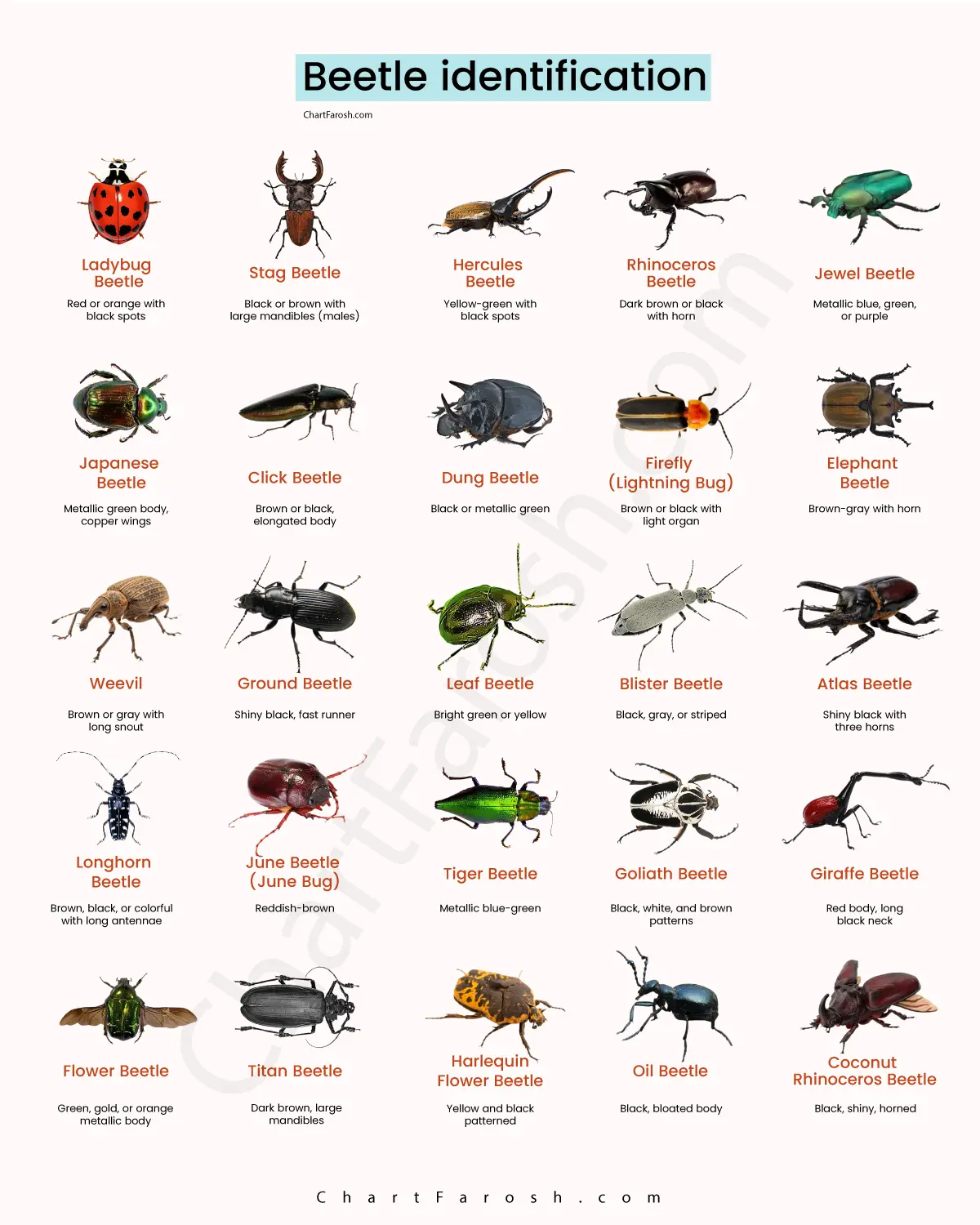
Table of Contents
Beetle Identification Chart with Pictures and Names
A beetle identification chart is a helpful visual tool showing beetle species alongside their photos, sizes, and identifying features. From metallic green scarabs to dull brown ground beetles, each species has distinct body shapes, antennae, and color patterns. A beetle identifier by photo can also help match what you find in your home, yard, or nearby park.
Most Common Types of Beetles
Beetles can be found in nearly every ecosystem, gardens, forests, kitchens, and even ponds. Some, like ladybugs, are beneficial predators of garden pests, while others, such as carpet beetles, can damage fabrics and stored foods.
Recognizing the most common species helps you take quick action when needed or appreciate their ecological role.
| Beetle Name | Appearance / Color | Size (cm) | Habitat | Notable Feature |
| Ladybug Beetle | Red/orange with black spots | 0.5–1 | Gardens, crops | Eats aphids (beneficial insect) |
| Japanese Beetle | Metallic green body, copper wings | 1–1.5 | Gardens, lawns | Damages flowers and leaves |
| Ground Beetle | Shiny black, fast-moving | 1–3 | Soil, under stones | Predatory; hunts pests |
| June Beetle (June Bug) | Reddish-brown | 1.5–2 | Trees, lights | Larvae damage grass roots |
| Click Beetle | Brown or black, long body | 1–3 | Fields, grass | Makes clicking sound to flip upright |
| Weevil | Gray or brown with long snout | 0.3–1 | Grains, stored food | Common household pest |
| Carpet Beetle | Small, black or mottled brown | 0.3–0.5 | Indoors, carpets | Feeds on fabric and dead skin |
| Flour Beetle | Reddish-brown | 0.4–0.6 | Kitchens, stored grains | Found in flour and cereals |
| Stag Beetle | Black/brown, large mandibles | 3–8 | Woodlands | Males use jaws for fighting |
| Rhinoceros Beetle | Dark brown or black, horned | 3–6 | Forests, gardens | Very strong; lifts heavy weights |
House Beetle Identification Chart
If you’ve seen tiny brown or black insects indoors, they may belong to the family of house beetles. These include carpet beetles, flour beetles, and powderpost beetles.
Most are drawn to stored food, fabrics, or wooden furniture. Knowing their differences can help you identify infestations early and apply the right pest control methods.
| Beetle Type | Color / Appearance | Size (mm) | Common Location in Home | Signs of Infestation | Harm Level |
| Carpet Beetle | Black, brown, or patterned | 2–5 | Carpets, closets, furniture | Small holes in fabric, shed skins | Moderate |
| Flour Beetle | Reddish-brown | 3–4 | Pantry, flour bags | Contaminated grains | Low |
| Drugstore Beetle | Brown, oval | 2–3 | Pantry, dried foods | Tiny exit holes in packaging | Low |
| Cigarette Beetle | Light brown, round | 2–3 | Pantry, tobacco | Holes in paper or dried goods | Low |
| Larder Beetle | Dark brown with yellow band | 7–9 | Kitchen, stored meat | Found near dried foods | Moderate |
| Furniture Beetle | Brown with ridged back | 3–6 | Wooden furniture | Powdery dust, holes in wood | High (structural damage) |
| Grain Beetle | Flat, dark brown | 2–4 | Cereal boxes, rice | Crawling insects in grains | Low |
| Spider Beetle | Brown/red, round body | 1.5–3 | Cupboards, basements | Feeds on stored dry goods | Low |
| Black Carpet Beetle | Black or dark brown | 3–5 | Rugs, wool clothing | Damaged fabrics | Moderate |
| Powderpost Beetle | Reddish-brown | 4–7 | Wooden beams, furniture | Fine wood dust, holes | High (wood damage) |
Poisonous Types of Beetles
While most beetles are harmless, a few species can deliver a nasty bite or release toxic chemicals as a defense. The blister beetle, for example, secretes cantharidin, a toxin that can irritate human skin.
Understanding which beetles are poisonous helps prevent allergic reactions, burns, or contamination in pets. Always handle unknown beetles with care.
| Beetle Name | Toxic Substance / Effect | Appearance | Region | Danger Level | Notes |
| Blister Beetle | Cantharidin toxin (causes blisters on skin) | Black or striped | North America, Europe | Moderate | Contact causes painful blisters |
| Bombardier Beetle | Hot chemical spray (boiling liquid defense) | Black with orange spots | Worldwide | Moderate | Shoots hot gas at predators |
| Rove Beetle (Paederus) | Pederin toxin (causes severe skin burns) | Slender, black/orange | Africa, Asia, tropics | High | Touch causes dermatitis (Nairobi Fly) |
| Oil Beetle | Cantharidin secretion | Black, bloated body | Europe, North America | Moderate | Toxic if crushed on skin |
| Soldier Beetle (some species) | Mild irritant secretion | Orange/red | Worldwide | Low | Not deadly but may cause irritation |
| Darkling Beetle (Tenebrionid) | Secretes foul-smelling defensive fluid | Black or brown | Worldwide | Low | Can irritate eyes or skin |
| Ironclad Beetle | Extremely hard exoskeleton | Gray-brown | North America | Low | Not toxic, but hard to kill |
Small Beetle Insect Identification
Small beetles, often under 5mm long, can be hard to identify without magnification. Common examples include grain beetles, cigarette beetles, and weevils.
These tiny insects often infest pantries, feeding on cereals, rice, and flour. Their small size allows them to hide easily in packaging, which is why regular inspection of stored food is important.
| Beetle Name | Appearance / Color | Size (mm) | Common Location | Behavior | Harm Level |
| Carpet Beetle | Black, brown, or mottled with scales | 2–5 | Indoors (carpets, fabrics) | Feeds on wool, silk, fur | Moderate |
| Flour Beetle | Reddish-brown, oval body | 3–4 | Kitchens, pantries | Infests stored grains and flour | Low |
| Cigarette Beetle | Light brown, round shape | 2–3 | Pantry, tobacco products | Damages dried goods | Low |
| Drugstore Beetle | Brown, cylindrical | 2–3 | Cupboards, paper, books | Eats dried foods and glue | Low |
| Spider Beetle | Reddish-brown, spider-like shape | 1.5–3 | Pantries, basements | Active at night, feeds on old food | Low |
| Grain Beetle | Flat, dark brown | 2–4 | Cereal, rice, grains | Crawls in stored foods | Low |
| Khapra Beetle | Reddish-brown, hairy | 1.5–3 | Grains, seeds | Highly destructive stored product pest | High |
| Larder Beetle | Black with yellow band | 6–9 | Kitchen, pantry | Eats animal products | Moderate |
| Biscuit Beetle | Small, round, brown | 2–3 | Stored food | Feeds on starch and dry food | Low |
| Black Carpet Beetle | Dark brown or black | 3–5 | Fabrics, furniture | Larvae damage natural fibers | Moderate |
Ground Beetle Identification
Ground beetles are often dark-colored, shiny, and fast-moving. They live under rocks, logs, and soil surfaces, where they prey on other insects.
Despite their intimidating look, they are beneficial predators in gardens. Recognizing ground beetles can help you differentiate them from harmful bugs that attack plants or crops.
| Beetle Name | Color / Appearance | Size (cm) | Habitat | Behavior | Harm Level |
| Common Ground Beetle | Shiny black or metallic green | 1–3 | Gardens, under rocks | Nocturnal, fast runners | Low (beneficial) |
| Tiger Beetle | Metallic green or bronze | 1–2 | Sandy soils, open ground | Fast predator, hunts insects | Beneficial |
| Bombardier Beetle | Black with orange spots | 1–2 | Forest floor, soil | Sprays boiling chemicals for defense | Moderate |
| Violet Ground Beetle | Dark purple-black | 2–3 | Woodlands, gardens | Predates on slugs and snails | Beneficial |
| Woodland Ground Beetle | Brown or black, long legs | 1.5–2.5 | Under leaf litter | Hunts other small insects | Beneficial |
| Fiery Searcher Beetle | Metallic green with red edges | 2–3.5 | Forest edges, gardens | Hunts caterpillars | Beneficial |
| False Bombardier Beetle | Brownish-black | 1–2 | Under logs, stones | Emits defensive odor | Low |
| Black Caterpillar Hunter | Glossy black | 2–3 | Gardens, fields | Preys on caterpillars | Beneficial |
| Punctured Ground Beetle | Black with ridged body | 1.5–2.5 | Soil, debris | Nocturnal hunter | Beneficial |
| Ironclad Ground Beetle | Gray-brown, very tough | 2–3 | Under bark, rotting wood | Extremely hard exoskeleton | Low |
Flying Beetle Identification
Flying beetles include a wide variety of species, such as June bugs, click beetles, and fireflies. Their ability to fly allows them to travel long distances in search of food or mates.
If you see beetles attracted to lights at night, they’re likely harmless outdoor fliers. Examining their wings and flight patterns can aid in accurate identification.
| Beetle Name | Color / Appearance | Size (cm) | Where Found | Flying Behavior | Harm Level |
| Japanese Beetle | Metallic green with copper wings | 1–1.5 | Gardens, lawns | Strong flyer, swarms plants | High (plant pest) |
| June Beetle (June Bug) | Reddish-brown | 1.5–2 | Near lights at night | Heavy, clumsy flier | Moderate |
| Click Beetle | Brown or black, elongated | 1–3 | Grass, fields | Makes clicking sound when flying | Low |
| Soldier Beetle | Orange-red with black markings | 1–2 | Flowers, gardens | Active flier, harmless | Low |
| Lightning Beetle (Firefly) | Black with glowing abdomen | 1–2 | Yards, gardens | Emits light during flight | Beneficial |
| Longhorn Beetle | Brown, long antennae | 2–5 | Forests, wood | Slow, buzzing flight | Moderate |
| Stag Beetle | Brown-black, large mandibles | 3–8 | Forests | Flies short distances at dusk | Moderate |
| Rose Chafer | Metallic green or golden | 1–1.5 | Flowers, fruit trees | Flies during day | Moderate |
| Blister Beetle | Black or striped | 1–2.5 | Meadows, crops | Slow flight, releases toxin | High (skin irritation) |
| Rhinoceros Beetle | Dark brown or black, horned | 3–6 | Forests, gardens | Noisy flight | Low |
Big Type of Beetle Identification
Large beetles are often striking and easy to notice. Rhinoceros beetles, stag beetles, and titan beetles are among the biggest in the world. Their size and unique horns make them fascinating to collectors and researchers.
Many large beetles are harmless and serve an important ecological role in decomposing dead wood and organic matter.
| Beetle Name | Appearance / Color | Size (cm) | Location | Behavior | Harm Level |
| Hercules Beetle | Olive-green with black spots, large horn | 5–17 | Tropical forests | Strong, slow-moving, harmless | Low |
| Goliath Beetle | Black, white, or brown with markings | 6–11 | African rainforests | Feeds on fruit and sap | Low |
| Rhinoceros Beetle | Black or brown, horned males | 3–6 | Forests, gardens | Strong but non-aggressive | Low |
| Stag Beetle | Brown-black with large jaws (males) | 3–8 | Forests, woodlands | Flies at dusk, territorial | Moderate |
| Titan Beetle | Dark brown, thick body | 13–17 | South America | One of largest beetles, strong jaws | Moderate |
| Elephant Beetle | Yellow-brown, large horn | 7–12 | Central & South America | Harmless, feeds on decaying fruit | Low |
| Atlas Beetle | Black-brown, triple horns | 6–12 | Southeast Asia | Very strong, defends territory | Low |
| Longhorn Beetle | Brown-black, long antennae | 2–15 | Forests, wood | Larvae bore into trees | Moderate |
| Palm Weevil | Reddish-brown or black | 2–4 | Tropical areas | Destroys palm trees | High |
| Harlequin Beetle | Black with orange/yellow stripes | 3–4 | Tropical forests | Active during day, harmless | Low |
Black Beetle Identification Chart
Black beetles are among the most common varieties found worldwide. These include darkling beetles, ground beetles, and black carpet beetles. While they may look similar, their body shape and habitat provide clues.
A black beetle identification chart can help you tell which species are garden-friendly and which may indicate a home infestation.
| Beetle Name | Appearance / Color | Size (mm) | Common Habitat | Behavior | Harm Level |
| Black Carpet Beetle | Shiny black oval body | 3–5 | Indoors, carpets, fabrics | Larvae damage wool and silk | Moderate |
| Ground Beetle | Glossy black, flat body | 10–30 | Gardens, soil | Nocturnal predator | Beneficial |
| Oil Beetle | Dull black, soft body | 10–30 | Meadows, grasslands | Secretes oil when disturbed | Moderate |
| Blister Beetle | Black, slender body | 10–25 | Fields, crops | Can blister skin | High |
| Darkling Beetle | Matte black, elongated body | 5–25 | Dry, sandy areas | Feeds on decaying material | Low |
| Black Vine Weevil | Matte black with snout | 8–12 | Gardens, potted plants | Damages roots | High |
| False Bombardier Beetle | Glossy black, long legs | 8–12 | Under rocks, wood | Emits defensive odor | Low |
| Common Black Ground Beetle | Jet black, ridged body | 10–20 | Gardens, under debris | Eats pests | Beneficial |
| Rove Beetle | Long, black, flexible body | 10–25 | Soil, compost | Preys on maggots and insects | Beneficial |
| Dung Beetle | Black, round | 10–30 | Fields, farms | Rolls dung balls, cleans waste | Beneficial |
Brown Beetle Identification Chart
Brown beetles are typically associated with stored food or wood damage. Cigarette beetles, furniture beetles, and khapra beetles are brown in color and often small. Identifying brown beetles correctly helps prevent food contamination or furniture decay.
| Beetle Name | Appearance / Color | Size (mm) | Found In | Behavior | Harm Level |
| June Beetle (June Bug) | Reddish-brown, oval | 15–25 | Gardens, near lights | Feeds on roots, flies at night | Moderate |
| Cigarette Beetle | Light brown, round | 2–3 | Pantry, dried goods | Infests stored food | Low |
| Drugstore Beetle | Brown, cylindrical | 2–3 | Cupboards, books | Eats dried food and paper | Low |
| Biscuit Beetle | Brown, small, round | 2–3 | Pantry | Damages grains and dry food | Low |
| Larder Beetle | Brown-black with yellow band | 6–9 | Kitchen, storage | Eats animal products | Moderate |
| Carpet Beetle (Brown Form) | Brown patterned with scales | 2–4 | Fabrics, furniture | Larvae damage wool | Moderate |
| Longhorn Beetle | Brown, long antennae | 20–50 | Wood, forests | Larvae bore into trees | High |
| Powderpost Beetle | Light brown, cylindrical | 2–7 | Wooden furniture | Creates small exit holes | High |
| Sawtoothed Grain Beetle | Brown, flat body | 2–3 | Grains, cereal | Common pantry pest | Moderate |
| Rice Weevil | Reddish-brown with snout | 2–4 | Stored grains | Destroys rice and wheat | High |
Beetle Identification Chart Australia
Australia is home to unique beetle species, including Christmas beetles, jewel beetles, and Eucalyptus leaf beetles.
Their brilliant metallic colors and varied shapes make them easy to recognize. For homeowners, knowing which beetles are native and which are invasive can protect both gardens and native wildlife.
| Beetle Name | Appearance / Color | Size (mm) | Found In | Behavior / Notes |
| Christmas Beetle | Green-gold metallic | 20–30 | Eastern Australia | Active in summer; attracted to lights |
| Rhinoceros Beetle | Dark brown to black, horned | 40–60 | Queensland, NT | Strong but harmless; feeds on fruit sap |
| Stag Beetle | Brown-black with large mandibles | 20–80 | Forests and gardens | Males use jaws for mating fights |
| Longhorn Beetle | Brown or orange with long antennae | 15–60 | Bushlands, wood piles | Larvae bore into timber |
| Dung Beetle | Black or brown, round | 10–30 | Rural and farmland | Rolls dung, beneficial to soil |
| Ladybird Beetle | Red/orange with black spots | 4–8 | Gardens and crops | Beneficial, eats aphids |
| Botany Bay Weevil | Black with white spots | 10–12 | NSW coastal regions | Feeds on native plants |
| Eucalyptus Leaf Beetle | Yellow-brown or green | 5–12 | Eucalyptus trees | Defoliates gum leaves |
| Plague Soldier Beetle | Black with red/orange markings | 10–15 | Gardens, flowers | Harmless pollinator |
| Click Beetle | Brown-black, elongated | 10–25 | Grass, soil | Makes clicking sound to flip over |
Beetle Identification Chart UK
In the UK, common beetles include stag beetles, weevils, and flower beetles. Many are beneficial pollinators or decomposers, while others can become pests in crops or homes.
A UK beetle identification chart helps distinguish these species and understand their ecological impact.
| Beetle Name | Appearance / Color | Size (mm) | Found In | Behavior / Notes |
| Stag Beetle | Black-brown, large jaws (males) | 30–75 | Southern England | UK’s largest beetle; protected species |
| Ground Beetle | Shiny black, flat body | 10–25 | Gardens, under stones | Nocturnal predator; beneficial |
| Violet Ground Beetle | Black with purple sheen | 15–20 | Woodlands | Active hunter of slugs |
| Cockchafer (May Bug) | Brown, furry underside | 20–30 | Countryside, gardens | Clumsy fliers; harmless |
| Devil’s Coach Horse Beetle | Black, raises tail like scorpion | 20–30 | Gardens, woodlands | Bites if handled; eats pests |
| Harlequin Ladybird | Red/orange with variable spots | 5–8 | Urban gardens | Invasive species in the UK |
| Rose Chafer | Metallic green | 20–25 | Gardens, roses | Pollinator; harmless |
| Soldier Beetle | Red body with black tips | 7–10 | Meadows, flowers | Beneficial insect |
| Carpet Beetle | Brown/black patterned | 3–4 | Indoors, fabrics | Larvae damage clothing |
| Deathwatch Beetle | Brown, wood-boring | 5–7 | Old timber buildings | Clicks in mating season; damages wood |
Beetle Life Cycle and Behavior
Beetles undergo complete metamorphosis from egg to larva (grub), pupa, and finally adult. Understanding this life cycle helps in identifying the stage at which an infestation might be easiest to control.
- Eggs: Usually laid in soil, wood, or food sources.
- Larvae: Feed actively and cause most of the damage.
- Pupa: Resting stage before transformation.
- Adult: Reproductive stage with distinct wings and shell.
Their behavior also varies, some beetles are nocturnal, others diurnal, and a few mimic wasps or ants for protection.
Also read: Beneficial Insects list
FAQs
What’s the best way to identify a beetle I find at home?
Use a beetle identification guide or online photo-based app. Note its color, size, and behavior, then match it with a beetle identification chart PDF for quick comparison.
Are all beetles harmful to humans or pets?
No. Most beetles are harmless, but some like blister beetles, can secrete toxins that irritate skin or harm animals if ingested.
How can I tell the difference between a beetle and a bug?
Beetles have hard wing covers (elytra) that meet in a straight line down the back, while bugs have softer bodies and visible mouthparts designed for piercing and sucking.
What attracts beetles into homes?
Food crumbs, pet food, and bright lights often attract beetles indoors. Sealing cracks and cleaning regularly helps prevent them from entering.
Can beetles fly?
Yes, most beetles have wings beneath their hard shell covers. Some fly well (like June beetles), while others, such as ground beetles, rarely do.
What’s the biggest beetle species in the world?
The Titan beetle from South America can reach over 6.5 inches (16 cm) long, making it one of the largest insects known.
Are there poisonous beetles in the UK or Australia?
While most are not deadly, certain blister beetles or rove beetles can cause mild skin irritation. Always avoid handling unknown species directly.
Can I download a printable beetle chart for identification?
Yes. You can easily find a printable beetle identification chart PDF online or create your own with photos of local species for field use.