Wasp Nest Identification Chart
I’ll never forget the day I almost trimmed a hedge that was home to a full colony of wasps. At first glance, the small gray lump looked like a piece of paper stuck to a branch, harmless.
When I got closer, though, dozens of wasps suddenly rushed out. Thankfully, I backed away quickly and avoided stings, but that moment taught me one important lesson: knowing what a wasp nest looks like can prevent painful surprises.
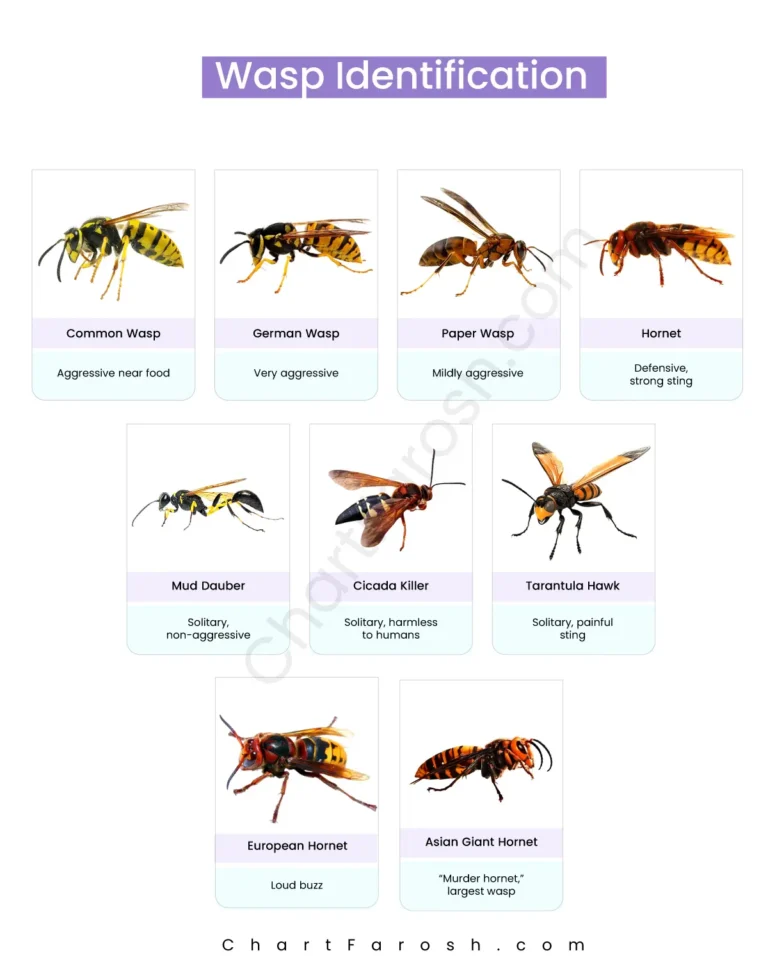
A proper wasp nest identification guide helps homeowners, gardeners, and curious nature lovers quickly tell whether a nest is active, what type of wasp built it, and whether removal is necessary.
Since some wasp species are beneficial pest controllers, identifying nests correctly can help us make the right decision: leave them alone or seek removal.
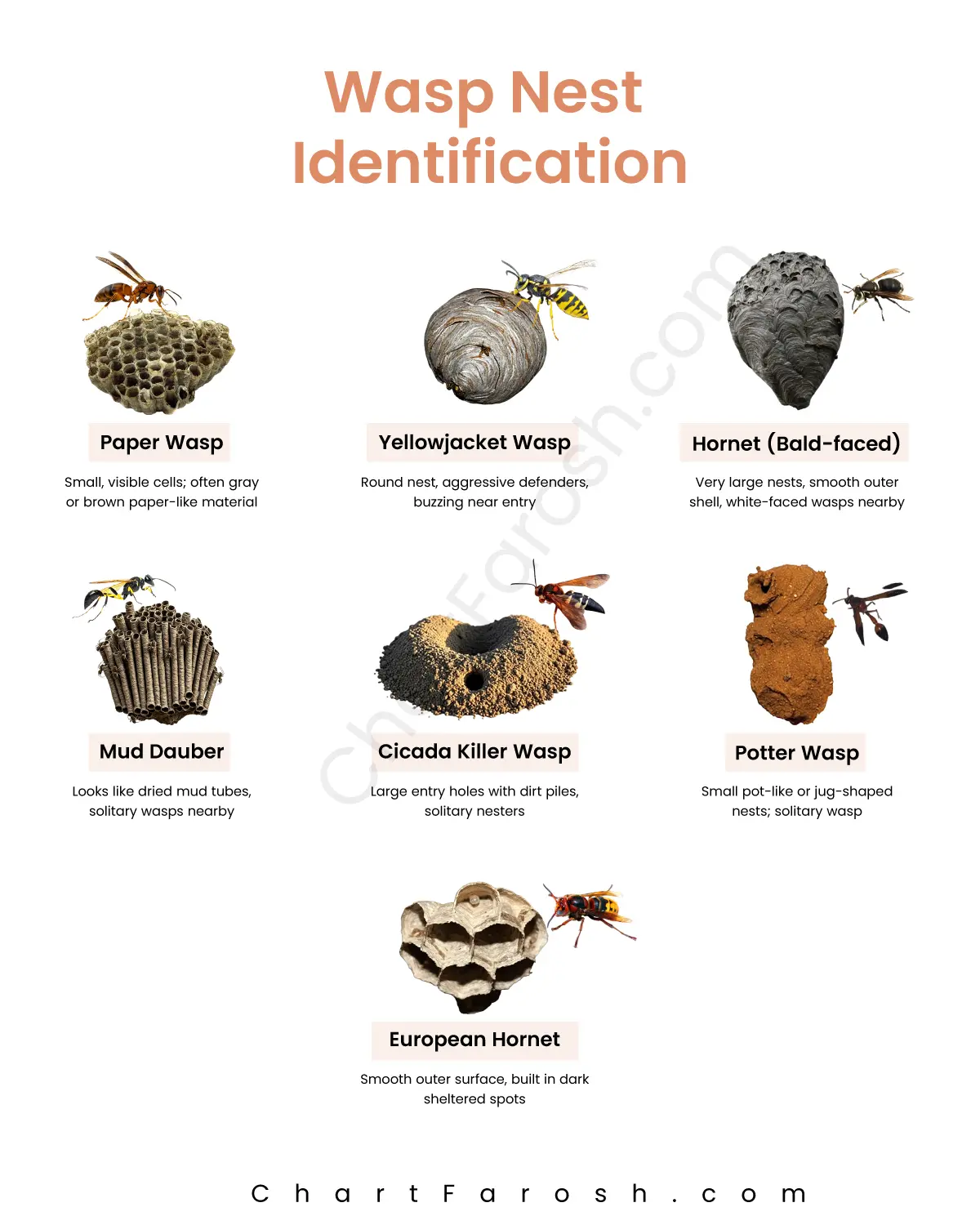
Table of Contents
Types of Wasp Nests Pictures and Guide
There are several kinds of wasp nests: dome-shaped, umbrella-shaped, underground chambers, and even nests inside wall cavities.
Every design tells you something about the species’ behavior and aggression level. In this wasp identification guide, you’ll soon recognize whether you’re dealing with a solitary hunter or a large defensive colony before getting too close.
How to Find a Wasp Nest (Avoiding Surprises)
Finding a nest isn’t always easy, especially for ground-nesting species. Wasps typically build nests close to food sources and sheltered spaces, so you’ll need to be observant and patient.
Watch the flight paths of foraging wasps; they often fly in straight lines back to the nest. Early morning and late evening are the best times to track them when activity slows and movement becomes more predictable. Nests may be hidden:
- Under roof eaves and decks
- Inside sheds, attics, and garages
- Within bushes, dense shrubs, or tall grass
- Buried underground in abandoned rodent burrows
- In wall gaps or behind shutters
Yellow Wasp Nest Identification Chart
Yellow jackets are among the most common social wasps and are known for their aggression when defending their nests.
Their colonies can grow very large, especially underground. Recognizing these nests quickly can prevent dangerous encounters.
This section is part of ensuring a thorough wasp nest identification guide, helping you know exactly what kind of stinging neighbors may be nearby.
| Identification Feature | Nest Material | Nest Shape | Typical Location | Colony Size | Aggression Level | Risk Level for Humans |
| Yellow Jackets | Chewed wood fibers (paper-like) | Layered, large, enclosed structure | Underground burrows, wall voids, attics | 1,000–5,000+ wasps | Extremely high near nest | Very dangerous – professional removal advised |
| European Yellow Jacket | Paper-like pulp | Oval, hidden inside voids | Beneath floors, inside wall cavities | Large social colonies | High, especially in late summer | High risk of multiple stings |
| Western Yellow Jacket | Paper fibers | Underground spherical nests | Lawns, gardens, near tree roots | Up to thousands | Very aggressive scavengers | High – avoid disturbing ground nests |
| Southern Yellow Jacket | Paper-like | Layered enclosed cells | Trees, bushes, and ground | Large colonies | High aggression when provoked | High threat to pets & kids |
Paper Wasp Nest Identification
Paper wasps create the familiar umbrella-shaped nests with visible open cells. Unlike yellow jackets, they have smaller colonies and are generally less aggressive unless threatened.
Their nests are often out in the open, making them easier to detect early. Including them in your wasp nest identification guide helps homeowners understand which species they can safely observe from a distance, and which to avoid.
| Feature | Description |
| Nest Location | Under eaves, porch roofs, beams |
| Material | Papery with visible hexagonal cells |
| Shape | Umbrella-shaped, hangs from a single stalk |
| Colony Size | Typically 20–200 wasps |
| Aggression Level | Moderate, defend nest when disturbed |
| Best Time for Identification | Spring to mid-summer |
| Removal Risk | Medium, best done in early colony stages |
Round Wasp Nest Identification
Ground-nesting wasps are some of the hardest to detect because their nests are hidden beneath the soil surface. These species, commonly yellow jackets and digger wasps, burrow into lawns, gardens, and even loose gravel or mulch.
You might notice a small hole with frequent wasp traffic going in and out. Because they feel vibrations from footsteps and lawnmowers, they can become highly aggressive if disturbed, posing a significant risk to people and pets.
| Feature | Nest Material | Entry Visibility | Typical Depth | Colony Size | Aggression Level | Risk Level |
| Yellow Jacket Ground Nest | Paper-like interior | Small hole in soil | 3–12 inches | 1,000+ | Very High | Severe — avoid |
| Digger Wasp | Soil tunnels | Visible mound | Shallow | Very Small | Low – solitary | Minimal |
| Cicada Killer Wasp | Soil burrows | Large mound of soil | 6–12 inches | Solitary | Low | Low to moderate |
| Miner Wasp | Loose soil | Small sand piles | Shallow | Solitary or small group | Low | Low |
| Hornet (rare ground nests) | Paper nest underground | Not obvious | Variable | Large | Very High | Severe |
Mud Wasp Nest Identification
Mud wasps, especially Mud Daubers, build nests using wet mud, creating tube-like, pot-shaped, or clumped structures attached to sheltered surfaces like sheds, porch ceilings, attics, and barns.
These nests are usually small and solitary, and the builder rarely defends it, meaning mud nests are generally low-risk compared to paper wasp nests.
| Feature | Nest Appearance | Nest Material | Typical Location | Colony Size | Aggression Level | Distinct Traits |
| Mud Dauber | Cylindrical tubes | Mud | Barns, attics, sheds | Solitary | Very Low | Spider-storing predators |
| Black-and-Yellow Mud Dauber | Smooth mud tubes | Mud | Protected vertical surfaces | Solitary | Very Low | Long, thin waist |
| Blue Mud Dauber | Reused nests from others | Mud | Garages, cracks | Solitary | Very Low | Metallic blue color |
| Organ Pipe Mud Dauber | Multiple tube rows | Mud | Under bridges/eaves | Small group | Low | Large pipe-like set |
| Potter Wasp | Pot or vase shape | Mud | Leaves, twigs, walls | Single offspring | Low | Small, unique ceramic look |
Large Types of Wasp Nests Pictures
Large wasp nests are expansive, multi-layered colonies usually belonging to yellow jackets or hornets. These nests can grow bigger than a basketball and house thousands of wasps.
They are often found in attics, wall voids, trees, or abandoned structures, and removing them without professional help is extremely dangerous.
| Species | Nest Size Potential | Nest Material | Location | Colony Size | Aggression Level | Seasonal Risk Increase |
| Bald-Faced Hornet | Very large football shape | Paper pulp | Trees & high structures | 400–1,000 | Very High | Late summer |
| European Hornet | Bulky layered structure | Chewed wood | Attics, barns | 500–1,500 | High | Warm months |
| Yellow Jacket | Can exceed 2 ft | Paper pulp | Walls/underground | 1,000–10,000 | Extreme | Fall peak |
| Giant Asian Hornet | Massive layered nest | Paper pulp | Ground or trees | Very Large | Very High | Always high |
| High-Rise Paper Wasp Colony | Large open comb structure | Paper | Roof edges | 200+ | Moderate | Early summer |
Small Wasp Nest Pictures & Guide
Small nests are common early in the season when queens are establishing new colonies. These nests may start the size of a marble and grow gradually as more workers emerge.
Early detection gives homeowners the best chance of safe removal before the colony becomes large and aggressive. Typical signs of a small wasp nest:
- Small paper-like sphere
- Open comb structure
- Light wasp traffic
- Position in shaded
FAQs
Do wasp nests die in winter?
Yes. Most worker wasps die when cold weather arrives. Only the queen survives by hibernating, usually in a sheltered location away from the original nest.
Can wasps come back to the same spot?
Absolutely. Even though they don’t reuse old nests, queens may choose the same protected area to start a new colony the next spring.
Is it safe to remove a small wasp nest myself?
Small nests with just one queen (usually early spring) can sometimes be handled safely if you take precautions.
How can I tell if a nest belongs to wasps or bees?
Bees have hairier bodies, collect pollen, and build wax nests. Wasps are smooth, more aggressive, and create paper-like nests from chewed wood fibers.
Should I seal a ground nest hole to get rid of wasps?
No. Blocking the entrance can trap wasps and make them extremely aggressive, increasing the risk of stings.