Cat Poop Color Chart – What Your Cat’s Litter Box Is Telling You
I never thought I’d spend this much time analyzing cat poop, but here we are. A few years ago, one of my cats started leaving behind stools that just didn’t look right.
Same food, same routine, but the color was… off. At first, I brushed it off as a one-time thing. Then it happened again.
That’s when I realized something most cat parents learn eventually: the litter box tells you more about your cat’s health than you think.
If you’ve ever Googled cat poop color meaning at 2 a.m., you’re not alone. Poop color, texture, and frequency can reveal digestive issues, diet problems, and sometimes early warning signs of illness.
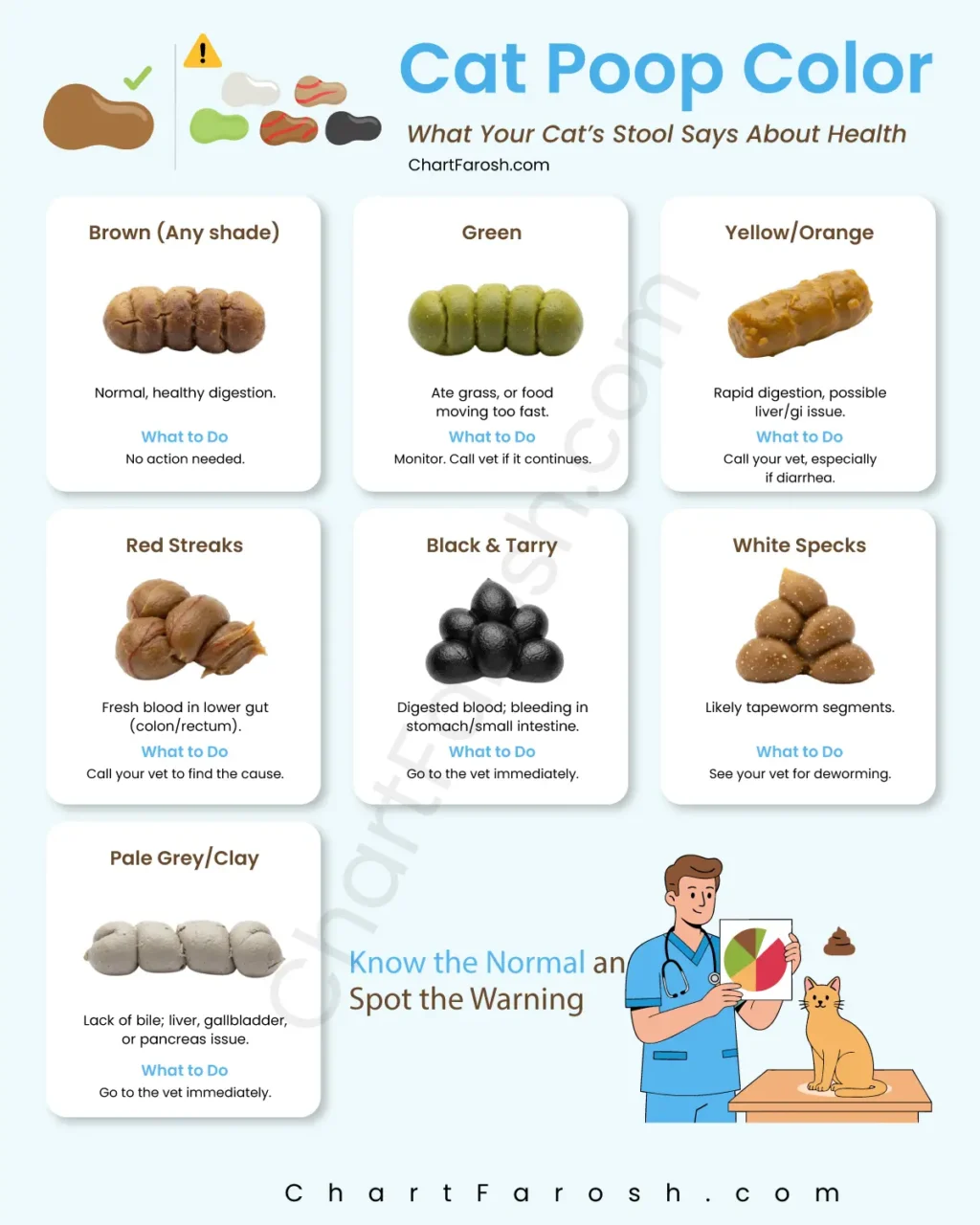
Table of Contents
Cat Poop Color Chart
A cat poop color chart is one of the easiest ways to visually understand what’s going on inside your cat’s digestive system.
Color changes often happen before behavioral symptoms show up, which is why vets ask about stool appearance so often.
While Cat poop color pictures online can be helpful, it’s important to pair visuals with context. A single odd poop isn’t always a crisis. Patterns matter more than one-off changes.
| Color | Likely Meaning | What to Do |
| Brown (Any shade) | Normal, healthy digestion. | No action needed. |
| Green | Ate grass, or food moving too fast. | Monitor. Call vet if it continues. |
| Yellow/Orange | Rapid digestion, possible liver/gi issue. | Call your vet, especially if diarrhea. |
| Red Streaks | Fresh blood in lower gut (colon/rectum). | Call your vet to find the cause. |
| Black & Tarry | Digested blood; bleeding in stomach/small intestine. | Go to the vet immediately. |
| White Specks | Likely tapeworm segments. | See your vet for deworming. |
| Pale Grey/Clay | Lack of bile; liver, gallbladder, or pancreas issue. | Go to the vet immediately. |
Types of Cat Poop Chart
Not all cat poop is created equal. Beyond color, consistency and shape play a huge role in determining gut health. Some stools look fine but signal dehydration or poor nutrient absorption.
This chart focuses on different types of cat poop and what they usually mean for your cat’s overall digestive balance.
| Poop Type | Appearance | Common Cause | Health Concern Level | What to Do |
| Firm & log-shaped | Smooth, brown | Healthy digestion | Normal | No action needed |
| Hard pellets | Dry, crumbly | Dehydration | Mild | Increase water intake |
| Soft blobs | Mushy but formed | Diet change | Mild–Moderate | Monitor diet |
| Watery diarrhea | Liquid | Infection, parasites | High | Vet visit |
| Sticky or greasy | Shiny coating | Fat malabsorption | Moderate | Vet check |
Normal Cat Poop Color
Normal cat poop is usually some shade of brown. That color comes from bile, digestion, and the breakdown of food.
As long as the stool is well-formed and your cat is acting normal, brown poop is generally a good sign.
Understanding what’s normal makes it easier to notice when something changes. Knowing baseline cat poop color meaning helps prevent unnecessary panic and helps you act quickly when needed.
| Color | Shade | Texture | Frequency | Health Status |
| Medium brown | Chocolate-like | Firm | Daily | Ideal |
| Light brown | Tan | Slightly soft | Daily | Usually normal |
| Dark brown | Deep brown | Firm | Daily | Normal |
| Brown with flecks | Speckled | Firm | Daily | Diet-related |
| Brown, well-shaped | Uniform | Smooth | Daily | Healthy gut |
Unhealthy Cat Poop Chart
Unhealthy poop doesn’t always mean an emergency, but it does mean paying attention. Persistent color changes or odd textures usually point to diet intolerance, infections, or internal issues.
If you’re constantly comparing stools to Cat poop color pictures, it’s time to look beyond visuals and track duration, behavior, and appetite too.
| Color | Texture | Possible Cause | Risk Level | Action |
| Black | Tarry | Internal bleeding | High | Vet immediately |
| Yellow | Soft | Liver issues | Moderate | Vet visit |
| Green | Loose | Fast digestion | Mild–Moderate | Monitor |
| Gray | Chalky | Bile problems | Moderate | Vet visit |
| Red streaks | Mucus/blood | Colon irritation | High | Vet visit |
Brown Cat Poop Meaning
Brown cat poop is what most vets want to see. It indicates that food is being digested properly and bile production is normal. Variations in shade usually relate to diet rather than disease.
That said, sudden changes in shade or smell can still signal digestive stress. Understanding cat poop color meaning helps you distinguish harmless changes from real issues.
| Shade | Texture | Diet Influence | Smell | Concern Level |
| Medium brown | Firm | Balanced diet | Mild | None |
| Dark brown | Firm | High protein | Normal | Low |
| Light brown | Soft | Carb-heavy | Slight | Low |
| Brown + mucus | Sticky | Gut irritation | Strong | Moderate |
| Brown + odor | Loose | Food intolerance | Strong | Moderate |
Black or Dark Cat Poop Causes
Black or very dark poop is one of the few colors you should never ignore. It often indicates digested blood from the upper GI tract, which can be serious.
While Cat poop color pictures can help identify black stools, texture and smell matter too, black poop is often sticky and tar-like.
| Appearance | Texture | Possible Cause | Severity | Action |
| Jet black | Sticky | Internal bleeding | High | Emergency vet |
| Dark brown | Firm | Iron supplements | Low | Monitor |
| Black streaks | Mixed | Ulcers | High | Vet visit |
| Black + diarrhea | Liquid | Infection | High | Vet |
| Black odor | Tarry | GI bleed | High | Immediate care |
Yellow Cat Poop and Health Issues
Yellow poop often points to problems with fat digestion or bile production. It’s commonly linked to liver or pancreatic issues, especially if it’s persistent.
If your cat’s poop stays yellow for more than a day or two, it’s more than a diet issue.
| Shade | Texture | Likely Cause | Duration | Concern |
| Pale yellow | Soft | Liver stress | Ongoing | Moderate |
| Bright yellow | Loose | Infection | Short-term | Moderate |
| Yellow mucus | Sticky | Gut inflammation | Ongoing | High |
| Yellow diarrhea | Watery | Parasites | Ongoing | High |
| Yellow + smell | Greasy | Fat malabsorption | Moderate | Vet visit |
Green Cat Poop Causes
Green poop usually means food is moving too quickly through the intestines. It can also be linked to diet changes or eating grass.
Short-term green poop isn’t always alarming, but frequent episodes deserve attention.
| Shade | Texture | Cause | Risk | Action |
| Light green | Soft | Diet change | Low | Monitor |
| Dark green | Loose | Bacteria | Moderate | Vet |
| Green mucus | Slimy | Infection | High | Vet |
| Green diarrhea | Watery | Parasites | High | Vet |
| Green specks | Firm | Grass | Low | Monitor |
Gray or Pale Cat Stool Meaning
Gray or pale stool is often linked to bile issues. Without enough bile, poop loses its brown color and looks chalky or clay-like.
This is one color change that usually warrants a vet visit.
| Color | Texture | Cause | Severity | Action |
| Light gray | Dry | Bile blockage | Moderate | Vet |
| Pale clay | Chalky | Liver disease | High | Vet |
| Gray diarrhea | Loose | Pancreas | High | Vet |
| Gray mucus | Sticky | Inflammation | Moderate | Vet |
| Gray + smell | Greasy | Malabsorption | Moderate | Vet |
Red / Bloody Cat Poop Warning
Red blood usually comes from the lower digestive tract. It may appear as streaks or drops and often accompanies straining.
Unlike darker blood, bright red blood is easier to spot and shouldn’t be ignored.
| Blood Type | Texture | Cause | Urgency | Action |
| Red streaks | Firm | Constipation | Moderate | Vet |
| Drops of blood | Soft | Anal irritation | Moderate | Vet |
| Bloody diarrhea | Liquid | Infection | High | Vet |
| Blood + mucus | Slimy | Colitis | High | Vet |
| Blood clots | Mixed | Injury | High | Immediate care |
Mucus in Cat Poop Explained
Mucus looks like a slimy coating and usually signals inflammation in the intestines. Small amounts occasionally happen, but frequent mucus isn’t normal.
Tracking frequency matters more than one appearance.
| Amount | Texture | Cause | Risk | Action |
| Small coating | Firm | Stress | Low | Monitor |
| Thick mucus | Soft | Colitis | Moderate | Vet |
| Mucus strands | Loose | Parasites | High | Vet |
| Mucus + blood | Slimy | Infection | High | Vet |
| Chronic mucus | Any | IBD | High | Vet |
Orange Cat Poop Causes
Orange poop often links back to bile concentration or diet, especially foods high in artificial coloring.
Persistent orange stool needs attention.
| Shade | Texture | Cause | Duration | Concern |
| Light orange | Soft | Diet dye | Short-term | Low |
| Dark orange | Firm | Bile concentration | Moderate | Monitor |
| Orange diarrhea | Loose | Infection | High | Vet |
| Orange mucus | Slimy | Inflammation | High | Vet |
| Orange + smell | Greasy | Liver issues | Moderate | Vet |
Cat Digestive Health Indicators
Poop color is only one piece of the puzzle. Appetite, energy levels, coat quality, and litter box habits matter just as much.
Use this chart to assess overall digestive health.
| Indicator | Healthy Sign | Warning Sign | Meaning | Action |
| Appetite | Consistent | Loss of appetite | GI issue | Vet |
| Energy | Playful | Lethargic | Illness | Vet |
| Coat | Shiny | Dull | Poor absorption | Diet check |
| Poop frequency | Regular | Irregular | Digestive issue | Monitor |
| Litter habits | Normal | Straining | Constipation | Vet |
FAQs
How often should I check my cat’s poop?
At least once a day when cleaning the litter box.
Is one odd-colored poop a problem?
Not usually, patterns matter more than one incident.
Can food change poop color?
Yes, diet changes commonly affect color and texture.
When should I call the vet?
If abnormal poop lasts more than 48 hours or includes blood.
Are online charts reliable?
They help, but always consider behavior and duration too.