Korean Cat Breeds: A Guide for Cat Parents
A couple of years ago, I went down a very specific rabbit hole while looking for my next cat. I wasn’t searching for anything “exotic” or trendy.
I just wanted a cat that felt familiar in a quiet way, observant, emotionally intelligent, not overly demanding, but still deeply bonded to their human. Somewhere between scrolling breeder pages and watching Korean cat cafés on YouTube at 2 a.m.
I noticed something interesting. Many of the cats I was drawn to were from Korea or had traits commonly associated with Korean cat breeds.
That curiosity turned into proper research. I started reading about native Korean cats, mixed domestic breeds, and how culture and environment shaped their personalities.
What I found was refreshing: Korean cats aren’t bred to extremes. They’re practical, adaptable, and incredibly intuitive companions.
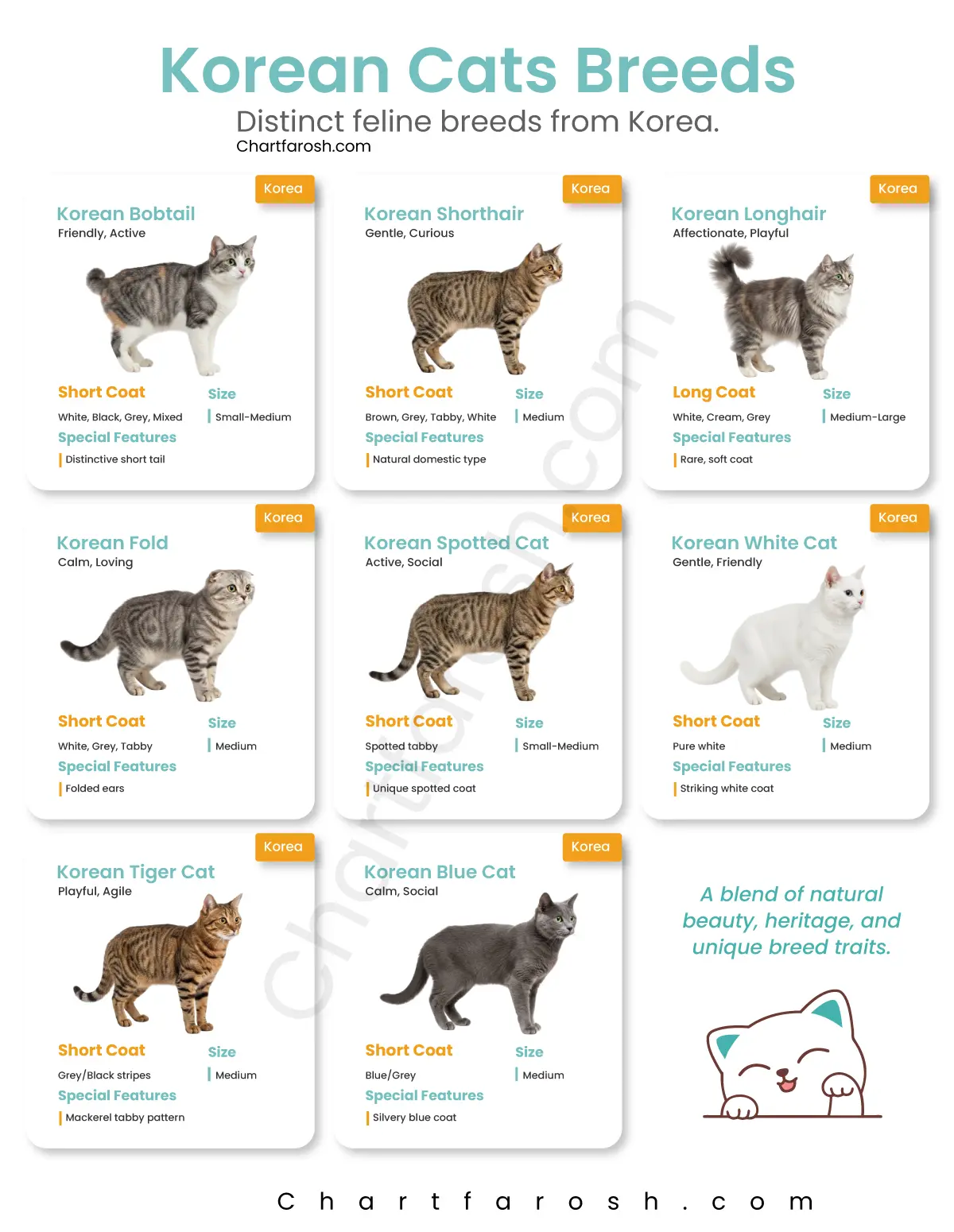
Table of Contents
Korean Cat Breeds
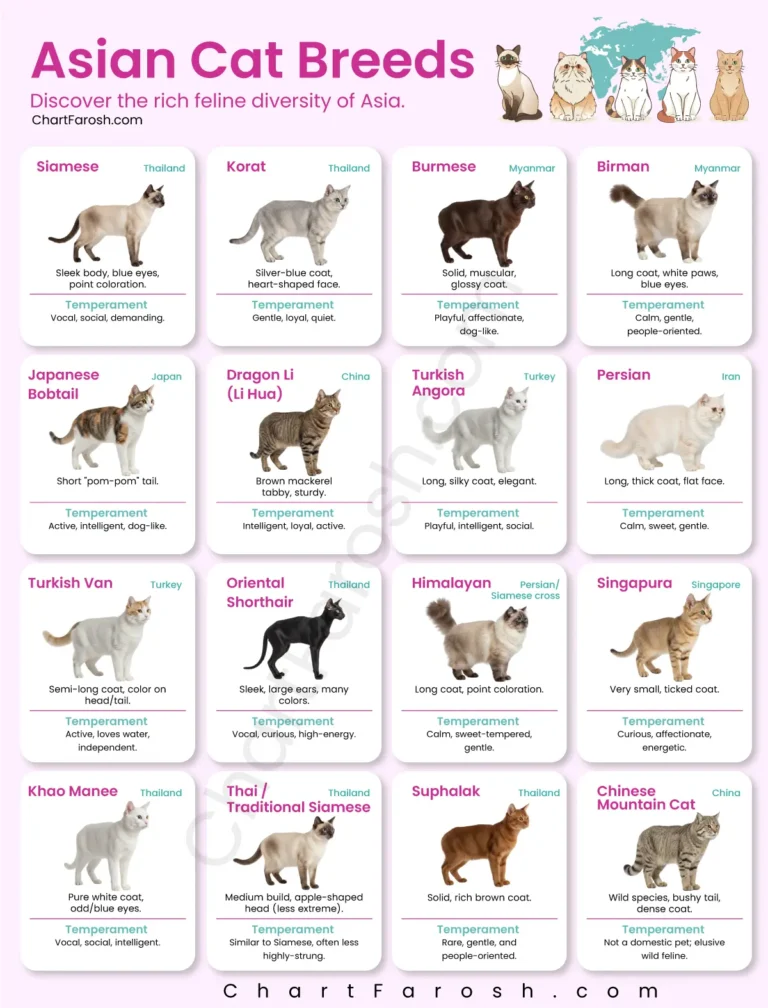
Korean cat breeds aren’t always officially recognized in the same way as Western pedigree cats, but that doesn’t make them any less special.
Most Korean cats descend from natural landrace populations rather than selective breeding programs. This means their traits developed through environment, survival, and human companionship rather than aesthetics alone.
| Breed Name | Origin | Coat Type | Color Variations | Size | Temperament | Special Features | Popularity |
| Korean Bobtail | Korea | Short | White, Black, Grey, Mixed | Small-Medium | Friendly, Active | Distinctive short tail | Moderate |
| Korean Shorthair | Korea | Short | Brown, Grey, Tabby, White | Medium | Gentle, Curious | Natural domestic type | Common |
| Korean Longhair | Korea | Long | White, Cream, Grey | Medium-Large | Affectionate, Playful | Rare, soft coat | Rare |
| Korean Fold | Korea | Short | White, Grey, Tabby | Medium | Calm, Loving | Folded ears | Rare |
| Korean Spotted Cat | Korea | Short | Spotted tabby | Small-Medium | Active, Social | Unique spotted coat | Moderate |
| Korean White Cat | Korea | Short | Pure white | Medium | Gentle, Friendly | Striking white coat | Moderate |
| Korean Tiger Cat | Korea | Short | Grey/Black stripes | Medium | Playful, Agile | Mackerel tabby pattern | Moderate |
| Korean Blue Cat | Korea | Short | Blue/Grey | Medium | Calm, Social | Silvery blue coat | Rare |
Types of Korean Cat Breeds
When we talk about types, we’re really talking about categories based on physical traits, coat length, and tail variations rather than strict breeds.
Korean cats tend to fall into a few recognizable groups, especially when observed in shelters and traditional neighborhoods.
These types reflect how cats adapted to Korea’s climate and urban lifestyle, cold winters, compact living spaces, and close human interaction.
Understanding these types helps future owners choose a cat that fits their home environment.
| Type | Tail Style | Coat Length | Common Colors | Personality | Notes |
| Korean Bobtail | Short or kinked | Short–Medium | Tabby, Calico | Intelligent, loyal | Native landrace |
| Domestic Korean Shorthair | Long tail | Short | Mixed | Adaptable, social | Most common |
| Korean Longhair Mix | Long tail | Long | Solid, bi-color | Calm, observant | Cold-climate adapted |
| Street-born Rescue Type | Variable | Short | Earth tones | Alert, affectionate | Strong survival instincts |
| Café Companion Type | Long tail | Medium | White, cream | Friendly, calm | Popular in cat cafés |
Popular Korean Cat Breeds
Popularity in Korea isn’t driven by looks alone. Temperament matters a lot. Cats that adapt well to apartment living, coexist peacefully with humans, and maintain a calm presence are favored.
This is why many Korean cats are quietly affectionate rather than demanding.
Globally, interest in Korean cats has grown thanks to social media and Korean pet culture. People searching for a korean cat breeds list often want cats that feel emotionally present without being clingy.
| Breed/Type | Popularity Level | Personality | Apartment Friendly | Grooming Needs | Ideal For |
| Korean Bobtail | High | Loyal, smart | Yes | Low | Families |
| Korean Shorthair | Very High | Balanced | Yes | Low | First-time owners |
| Café Mix Breeds | Medium | Social | Yes | Medium | Singles |
| Rescue Korean Cats | Medium | Bonded | Yes | Low | Experienced owners |
| Traditional Alley Cats | Medium | Independent | Moderate | Low | Quiet homes |
Cute Korean Cat Breeds
Cuteness in Korean cats isn’t about exaggerated features. It’s in their expressions, body language, and subtle habits. Slight head tilts, soft eye contact, and calm curiosity make them incredibly endearing.
Many owners describe Korean cats as “quietly charming.” If you like cats that melt your heart without demanding attention, this category will resonate.
| Breed/Type | Defining Cute Trait | Eye Shape | Size | Energy Level | Social Style |
| Korean Bobtail | Bunny-like tail | Round | Medium | Moderate | Loyal |
| Shorthair Mix | Soft expressions | Almond | Medium | Balanced | Friendly |
| Longhair Mix | Fluffy cheeks | Large | Medium | Low | Gentle |
| Café Companion Cats | Calm gaze | Wide | Small–Medium | Low | Social |
| Rescue Kittens | Playful clumsiness | Variable | Small | High | Curious |
Rare Korean Cat Breeds
Truly rare Korean cats are usually defined by genetics rather than breed recognition. Unusual coat patterns, naturally occurring bobtails, or colorations uncommon in Korea fall into this category.
Because Korea doesn’t heavily commercialize breeding, rarity often comes from nature rather than design. These cats are typically found through rescues or private caretakers.
| Type | Rarity Reason | Coat Pattern | Tail | Availability | Special Note |
| Natural Bobtail Variants | Genetic | Tabby/Calico | Short | Rare | Native genes |
| All-White Korean Cats | Color genetics | White | Long | Rare | Deafness check |
| Tortoiseshell Females | Gender genetics | Tortoiseshell | Long | Limited | Almost always female |
| Blue-gray Shorthairs | Color rarity | Solid | Long | Rare | Mistaken for Russian Blue |
| Longhair Bobtails | Trait combination | Mixed | Short | Very rare | Natural occurrence |
Fluffy Korean Cat Breeds
Fluffiness isn’t the norm in Korea, but cold winters in northern regions contributed to thicker coats in some cats. These cats tend to be calmer and more observant, conserving energy rather than bouncing off walls.
Fluffy Korean cats are great for owners who enjoy grooming but still want a low-drama companion.
| Type | Coat Length | Shedding Level | Grooming Needs | Personality | Climate Suitability |
| Korean Longhair Mix | Long | Medium | Moderate | Calm | Cold |
| Fluffy Bobtail | Medium | Medium | Moderate | Loyal | Cold |
| Winter-adapted Rescue | Medium | High | Moderate | Alert | Cold |
| Café Longhair Cats | Long | Medium | High | Gentle | Indoor |
| Semi-fluffy Shorthairs | Medium | Low | Low | Balanced | Mild |
Small Korean Cat Breeds
Korean cats are often naturally compact, making them ideal for apartment living. Smaller size doesn’t mean fragile; these cats are muscular, agile, and surprisingly athletic.
If you’re looking for a manageable-sized cat that still has presence, this category is worth exploring.
| Type | Average Weight | Body Type | Energy Level | Apartment Friendly | Ideal Owner |
| Petite Shorthairs | 3–4 kg | Lean | Moderate | Yes | Singles |
| Small Bobtails | 3–4 kg | Compact | Moderate | Yes | Families |
| Café Companion Cats | 3 kg | Slim | Low | Yes | Seniors |
| Rescue Females | 2.5–3.5 kg | Lean | Variable | Yes | Patient owners |
| Urban Alley Cats | 3–4 kg | Athletic | High | Moderate | Active homes |
Korean Bobtail Cats
The Korean Bobtail deserves its own section. Unlike selectively bred bobtails, this trait occurred naturally.
Their short or kinked tail doesn’t affect balance or health, and many owners say it actually enhances communication.
These cats express emotion through posture and eye contact rather than vocalization.
They’re deeply loyal but not needy. A Korean Bobtail might follow you from room to room, not to demand attention, but simply to be present.
They’re excellent problem-solvers, quick learners, and surprisingly intuitive about human moods. For anyone looking at a korean cat breeds list, this breed often becomes the favorite once experienced firsthand.
Korean Street Cats and Rescues
One of the most overlooked aspects of Korean cat breeds is the street-born population. These cats are intelligent, resilient, and deeply appreciative once bonded.
Many of the best companion cats come from rescues, carrying the same traits people admire in pedigree breeds, without the price tag.
Adopting a Korean rescue often means welcoming a cat that understands boundaries, routines, and shared living.
| Trait | Description |
| Intelligence | High |
| Bonding Style | Deep but gradual |
| Health | Strong genetics |
| Training | Litter-trained quickly |
| Lifestyle Fit | Apartments & homes |
Conclusion
Exploring Korean cat breeds is more than just looking at coat colors or tail types, it’s about understanding a philosophy of companionship.
These cats aren’t designed to be flashy or extravagant; they’re built for connection, adaptability, and emotional intelligence.
Whether it’s the loyal Korean Bobtail, the observant street-born rescues, or the fluffy longhairs that thrive in colder regions, each type carries a unique personality shaped by Korea’s environment, culture, and history.
FAQs
Are Korean cat breeds good for apartments?
Yes, most Korean cats adapt extremely well to small living spaces.
Do Korean cats need a lot of grooming?
Shorthairs require minimal grooming. Longhairs need weekly brushing.
Are Korean Bobtails healthy?
Yes, they are naturally occurring and generally very healthy.
Are Korean cats vocal?
They tend to be quieter and communicate through behavior.
Is it hard to find Korean cat breeds outside Korea?
Pure native types are rare, but similar mixes exist worldwide.