Food Cholesterol Chart: A Simple Guide to Heart-Healthy Choices
A few years ago, during a routine health check, my doctor casually mentioned that my cholesterol numbers were borderline.
I didn’t feel unwell, I exercised occasionally, and I thought my diet was decent, but that comment stuck with me.
I started paying closer attention to what I was eating, especially foods I had always assumed were harmless.
That experience pushed me to learn how food cholesterol really works, cholesterol foods list and how small dietary changes can make a big difference over time.
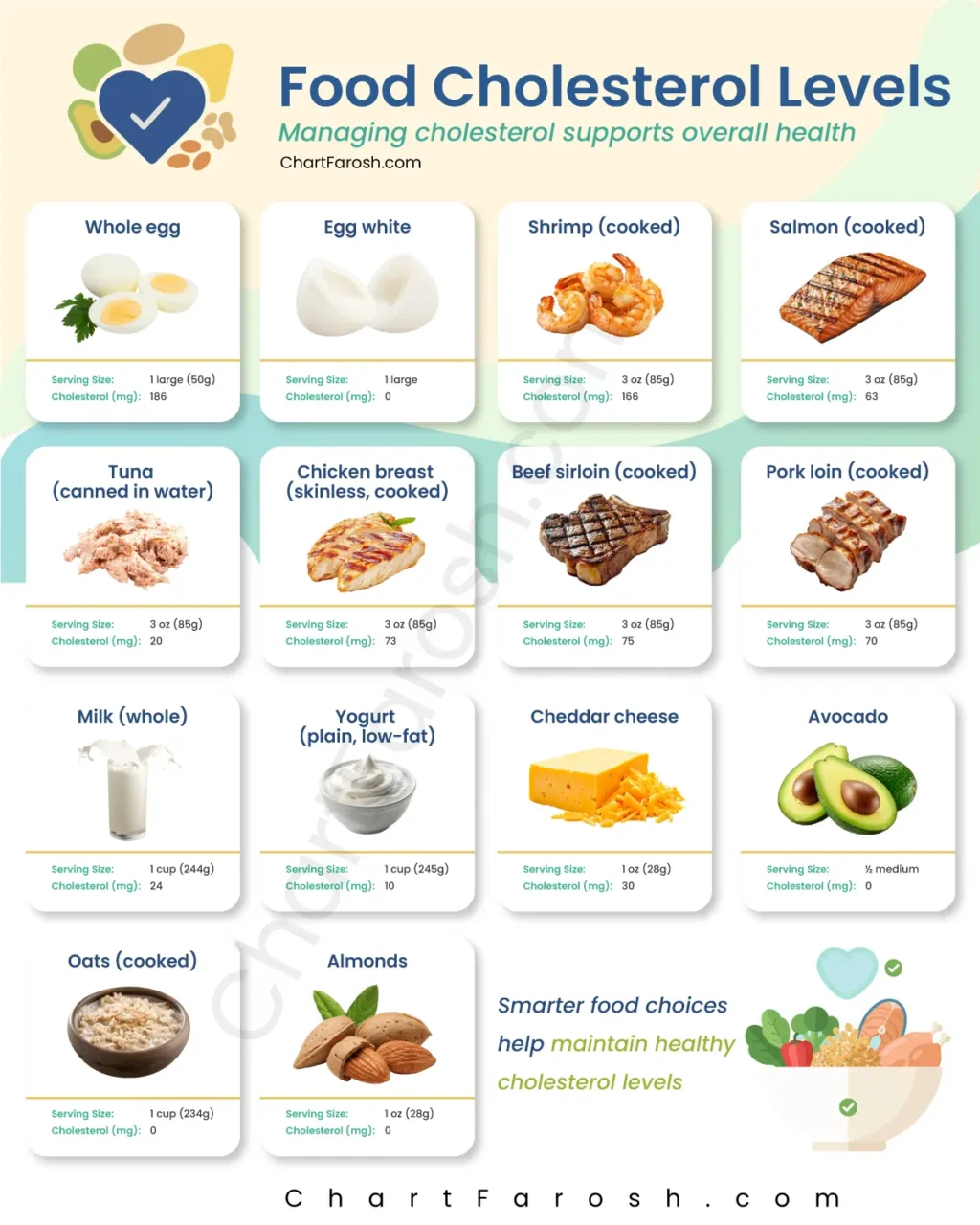
Table of Contents
Food Cholesterol Chart (per serving)
Food cholesterol refers to the cholesterol naturally present in animal-based foods such as meat, eggs, and dairy.
For many years, dietary cholesterol was considered a major contributor to high blood cholesterol levels, but modern research shows the relationship is more complex.
While some people are more sensitive to cholesterol intake, overall heart health is influenced by a combination of genetics, total diet quality, saturated fat intake, and lifestyle factors like exercise and weight management.
| Food Item | Serving Size | Cholesterol (mg) |
| Whole egg | 1 large (50g) | 186 |
| Egg white | 1 large | 0 |
| Shrimp (cooked) | 3 oz (85g) | 166 |
| Salmon (cooked) | 3 oz (85g) | 63 |
| Tuna (canned in water) | 3 oz (85g) | 20 |
| Chicken breast (skinless, cooked) | 3 oz (85g) | 73 |
| Beef sirloin (cooked) | 3 oz (85g) | 75 |
| Pork loin (cooked) | 3 oz (85g) | 70 |
| Milk (whole) | 1 cup (244g) | 24 |
| Yogurt (plain, low-fat) | 1 cup (245g) | 10 |
| Cheddar cheese | 1 oz (28g) | 30 |
| Avocado | ½ medium | 0 |
| Oats (cooked) | 1 cup (234g) | 0 |
| Almonds | 1 oz (28g) | 0 |
What Is Dietary Cholesterol?
Dietary cholesterol is a waxy, fat-like substance found only in animal foods. It plays an essential role in the body, helping produce hormones, vitamin D, and bile acids needed for digestion.
Your liver produces most of the cholesterol your body needs, while the rest comes from food.
For many people, consuming cholesterol-rich foods does not significantly raise blood cholesterol levels, but moderation is still important.
How Cholesterol Affects Heart Health
Cholesterol travels through the bloodstream in lipoproteins, mainly LDL (often called “bad” cholesterol) and HDL (“good” cholesterol).
High LDL levels can contribute to plaque buildup in arteries, increasing the risk of heart disease and stroke.
Diets high in saturated fats and trans fats have a stronger impact on raising LDL cholesterol than dietary cholesterol alone.
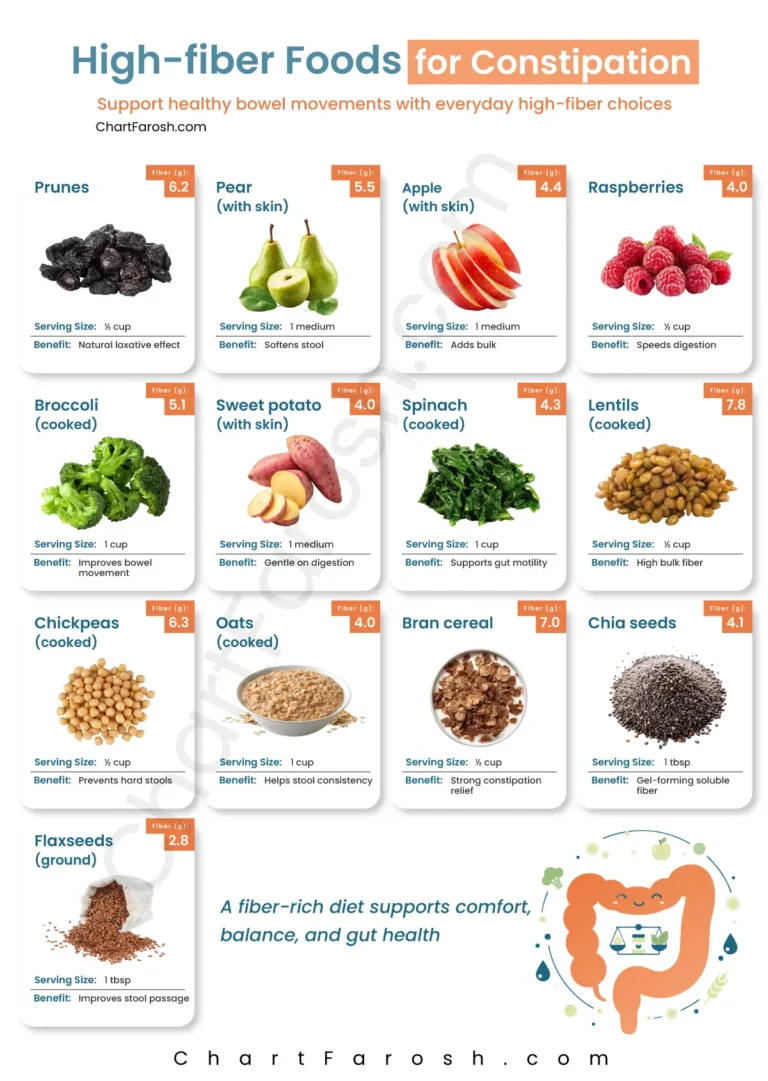
Balancing cholesterol intake with fiber-rich foods and healthy fats supports better heart health.
Low Cholesterol Foods
Low cholesterol foods list are primarily plant-based and include fruits, vegetables, whole grains, legumes, nuts, and seeds.
These foods contain little to no cholesterol and are rich in fiber, which helps reduce LDL cholesterol levels.
Lean proteins like skinless poultry and certain fish are also considered lower in cholesterol compared to red meats and organ meats.
LOW Cholesterol Foods
*(All plant-based foods contain 0 mg of dietary cholesterol)*
| Food Item | Serving Size | Cholesterol (mg) | Notes |
| FRUITS | |||
| Apple | 1 medium (182g) | 0 | High in fiber |
| Banana | 1 medium (118g) | 0 | |
| Berries (strawberries, blueberries) | 1 cup (150g) | 0 | Rich in antioxidants |
| Orange | 1 medium (131g) | 0 | |
| Broccoli | 1 cup chopped (91g) | 0 | |
| Spinach | 1 cup raw (30g) | 0 | |
| Carrots | 1 cup chopped (128g) | 0 | |
| Bell peppers | 1 medium (119g) | 0 | |
| Oatmeal (dry) | ½ cup (40g) | 0 | Contains soluble fiber |
| Brown rice (cooked) | 1 cup (195g) | 0 | |
| Quinoa (cooked) | 1 cup (185g) | 0 | Complete protein |
| Whole wheat bread | 1 slice (32g) | 0 | Check label for added fats |
| Black beans (cooked) | ½ cup (86g) | 0 | High in fiber |
| Lentils (cooked) | ½ cup (99g) | 0 | |
| Almonds | 1 oz (23 nuts) | 0 | Heart-healthy fats |
| Walnuts | 1 oz (14 halves) | 0 | Omega-3 fatty acids |
| Tofu (firm) | ½ cup (126g) | 0 | |
| Tempeh | ½ cup (83g) | 0 | Fermented soy |
| Avocado | ½ medium (100g) | 0 | Monounsaturated fats |
| Olive oil | 1 tbsp (14g) | 0 | |
| Egg whites | From 1 large egg (33g) | 0 | |
| Skinless chicken breast | 3 oz (85g) | 73 | Lower than dark meat with skin |
| Salmon (Atlantic) | 3 oz (85g) | 54 | *Contains heart-healthy omega-3s* |
| Skim milk | 1 cup (245g) | 5 | Very low |
| Non-fat plain yogurt | 1 cup (245g) | 10 | Very low |
High Cholesterol Foods
High cholesterol foods are typically animal-derived and include egg yolks, organ meats (like liver), shellfish, full-fat dairy products, and processed meats.
While these foods can be part of a balanced diet for some people, frequent consumption, especially alongside high saturated fat intake, may increase the risk of elevated blood cholesterol in sensitive individuals.
| Food Item | Serving Size | Cholesterol (mg) | Notes |
| Egg yolk | 1 large yolk (17g) | 185 | The white has 0 mg |
| Whole egg | 1 large (50g) | 186 | |
| Butter | 1 tbsp (14g) | 31 | Also high in saturated fat |
| Cheddar cheese | 1 oz (28g) | 28 | Full-fat version |
| Beef liver (fried) | 3 oz (85g) | 324 | Extremely high |
| Chicken liver | 3 oz (85g) | 490 | Very high |
| Lamb kidney | 3 oz (85g) | 426 | Organ meats are very high |
| Ground beef (80% lean) | 3 oz (85g) | 77 | |
| Ribeye steak | 3 oz (85g) | 70 | |
| Shrimp | 3 oz (85g) | 166 | High cholesterol, low sat fat |
| Lobster | 3 oz (85g) | 124 | |
| Squid (calamari) | 3 oz (85g) | 198 | |
| Liverwurst | 2 oz (57g) | 85 | |
| Salami | 2 oz (57g) | 60 | |
| Sausage, Egg & Cheese Biscuit | 1 sandwich | 250 | Approximate, varies by chain |
| Double cheeseburger | 1 sandwich | 100-150 | Varies by restaurant |
Cholesterol in Meat, Fish, and Eggs
Animal proteins are the primary sources of dietary cholesterol, but not all options affect your health the same way.
The cholesterol content varies widely depending on the type of meat, preparation method, and fat content.
Eggs, for example, are often debated while they are high in cholesterol, they are also rich in nutrients like choline and high-quality protein.
Fish can contain cholesterol too, but many types provide heart-protective omega-3 fatty acids that help balance overall cardiovascular risk.
| Food Item | Serving Size | Cholesterol (mg) | Heart Health Notes |
| Egg (whole) | 1 large | ~186 mg | Nutrient-dense; limit if sensitive |
| Egg whites | 1 cup | 0 mg | Cholesterol-free protein |
| Chicken breast (skinless) | 3 oz | ~73 mg | Lean option |
| Beef sirloin | 3 oz | ~75 mg | Higher saturated fat |
| Pork chop | 3 oz | ~80 mg | Choose lean cuts |
| Salmon | 3 oz | ~55 mg | Rich in omega-3s |
| Shrimp | 3 oz | ~166 mg | High cholesterol, low fat |
Cholesterol in Dairy Foods
Dairy products contain cholesterol primarily due to their fat content. Full-fat dairy tends to be higher in cholesterol and saturated fat, which can raise LDL (“bad”) cholesterol levels.
However, dairy can still be part of a heart-conscious diet when you choose low-fat or fat-free versions.
These provide essential nutrients like calcium, vitamin D, and protein without significantly impacting cholesterol levels.
| Dairy Product | Serving Size | Cholesterol (mg) | Health Tip |
| Whole milk | 1 cup | ~24 mg | Higher saturated fat |
| 2% milk | 1 cup | ~18 mg | Moderate option |
| Skim milk | 1 cup | ~5 mg | Heart-friendly |
| Cheddar cheese | 1 oz | ~30 mg | Limit portions |
| Greek yogurt (low-fat) | 1 cup | ~10 mg | Protein-rich choice |
| Butter | 1 tbsp | ~31 mg | Use sparingly |
Zero-Cholesterol Plant Foods
Plant-based foods naturally contain zero cholesterol, making them a powerful foundation for heart-healthy eating.
Beyond being cholesterol-free, many plant foods contain soluble fiber and plant sterols, which actively help lower LDL cholesterol levels.
Diets rich in fruits, vegetables, whole grains, and legumes are consistently linked to lower rates of heart disease.
| Food Group | Examples | Added Benefits |
| Fruits | Apples, berries, oranges | High fiber, antioxidants |
| Vegetables | Spinach, broccoli, carrots | Nutrient-dense, low calories |
| Whole grains | Oats, brown rice, quinoa | Helps reduce LDL |
| Legumes | Lentils, beans, chickpeas | Protein + fiber combo |
| Nuts & seeds | Almonds, flaxseed, chia | Healthy fats |
| Plant oils | Olive oil, canola oil | Supports HDL cholesterol |
Recommended Daily Cholesterol Intake
Modern nutrition guidelines no longer enforce a strict cholesterol limit for everyone, but intake still matters, especially for individuals with heart disease, diabetes, or genetic cholesterol sensitivity.
Most experts suggest keeping dietary cholesterol under 300 mg per day, while those at higher cardiovascular risk should aim closer to 200 mg per day.
What matters just as much as cholesterol numbers is where that cholesterol comes from.
A diet heavy in vegetables, whole grains, and healthy fats can offset moderate cholesterol intake from nutrient-rich foods like eggs or fish.
Instead of tracking every milligram, focus on reducing saturated fat, avoiding trans fats, and prioritizing whole, minimally processed foods.
Tips to Lower Dietary Cholesterol
Lowering dietary cholesterol starts with choosing lean proteins, increasing fiber intake, and limiting saturated and trans fats.
Replacing red meat with fish or plant proteins, using olive oil instead of butter, and eating more fruits, vegetables, and whole grains can significantly improve cholesterol levels.
Regular physical activity and maintaining a healthy weight also play a key role.
FAQs
Does eating cholesterol automatically raise blood cholesterol?
Not always. For most people, saturated and trans fats have a greater impact on blood cholesterol than dietary cholesterol itself.
Are eggs bad for cholesterol?
Eggs are high in cholesterol but low in saturated fat. Many people can eat them in moderation without issues.
What foods lower cholesterol naturally?
Oats, beans, nuts, seeds, fruits, vegetables, and foods rich in soluble fiber help lower LDL cholesterol.
Should I completely avoid high-cholesterol foods?
No. Moderation is key. Balance them with fiber-rich and plant-based foods.
Is a zero-cholesterol diet necessary?
Not for most people. A balanced diet focused on whole foods is more effective than total elimination.