Indian Food Chart
Have you ever wondered what makes Indian cuisine so unique and appealing? The answer lies in the spices and the deep cultural traditions that shape each dish.
Indian food offers a rich mix of flavors. Each flavor has its own history and meaning. This often reflects the different areas and cultures of India.
From the northern plains to the southern coast, each part of India provides a unique food experience. In the north, you will find thick curries and soft breads.
The south is famous for its sour tamarind flavors and light, steamed dishes. Central India offers a mix of both. This creates a rich blend of strong and subtle tastes.
However, Indian food is not only about variety. It is also focused on nutrition. Meals are usually balanced and include different food groups.
This ensures each meal is as healthy as it is tasty. By looking at the Indian food chart, you not only learn about the food. You also discover the shared history of one of the world’s oldest cultures.
This article will guide you on a tasty tour of the Indian food chart. It will show you the main foods eaten in daily meals. This guide will also reveal some of the healthiest and tastiest dishes from India to your meals.
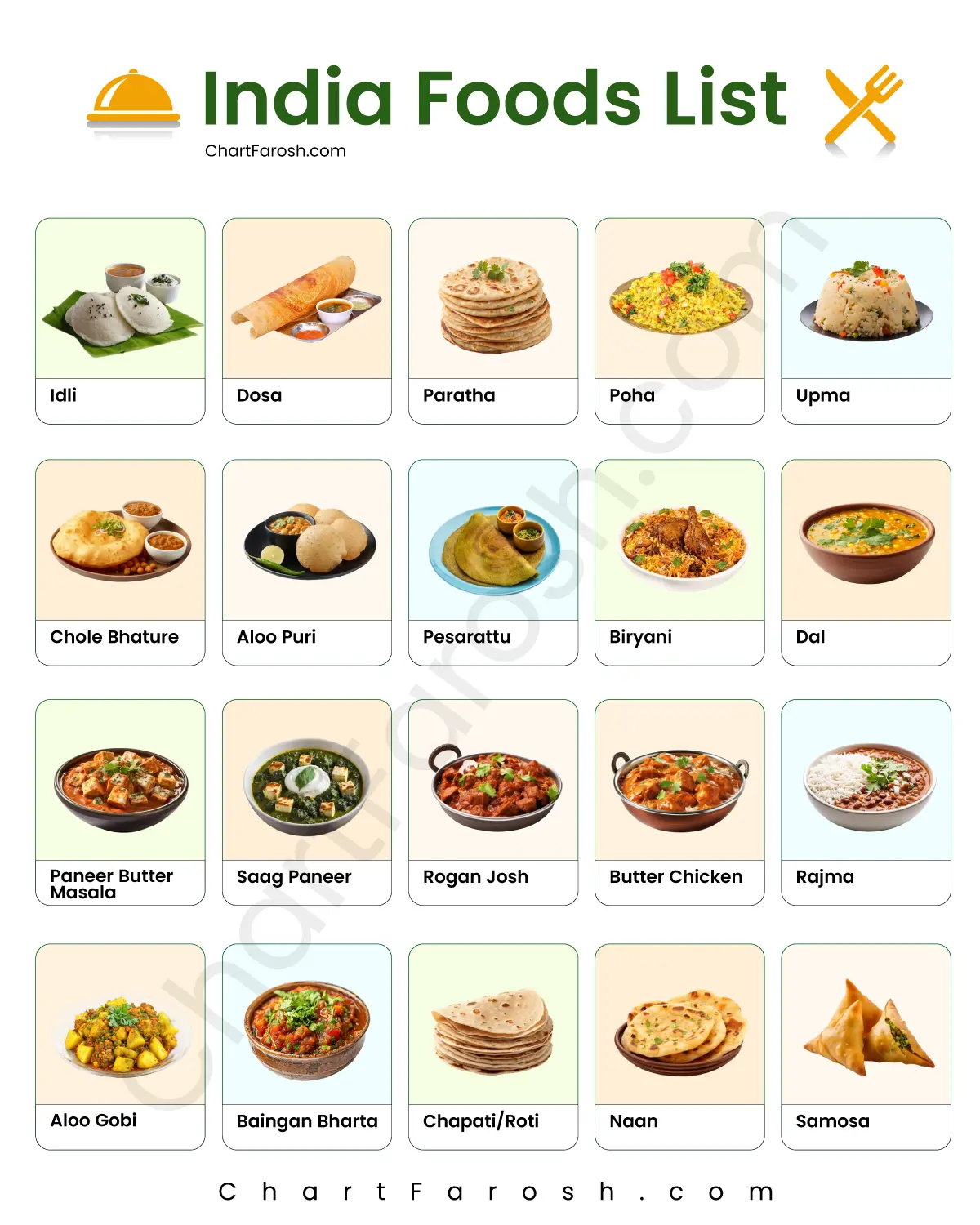
Table of Contents
Indian Food Chart
The “Indian food chart with pictures” offers a fascinating look at the diverse foods of India.
Each dish is not just tasty but also rich in culture and good for health. From fermented foods like dosa and idli to the simple yet nutritious dals, and various breads like naan, chapati, and paratha, Indian cuisine blends great flavors, health benefits, and tradition.
Fermentation and Health
Dosa and idli are key parts of South Indian breakfasts. They showcase India’s long history of fermentation.
This process not only improves the taste and texture but also makes the nutrients easier to digest. It is good for gut health. Fermentation helps keep energy levels stable throughout the day.
Bread Varieties Across Regions
Breads such as chapati, naan, and paratha show the cooking diversity of different Indian regions.
Chapati is a daily staple in many homes. It is both simple and healthy. Naan is often enjoyed on special occasions.
It is baked in a clay oven, giving it a unique puffiness and charred taste. Paratha is very versatile. It can be filled with various mixtures, from spiced potatoes to fresh vegetables. This makes it both tasty and healthy.
Legumes as Nutritional Powerhouses
Foods like rajma and various dals are important in India’s vegetarian diet.
They are celebrated for their flavor and health benefits. High in protein and fiber, these legumes are crucial for a balanced diet. They aid digestion and provide essential nutrients.
Sweet Celebrations
Desserts such as gulab jamun and jalebi are central to Indian celebrations. Each sweet bite combines tradition and flavor.
Gulab jamun is made from milk solids. It is fried and soaked in sweet syrup. Jalebi is a spiralized sweet dipped in saffron syrup. These desserts are not just treats. They are part of the happiness in festivals and special events.
Cultural Significance of Beverages
No discussion of Indian food is complete without mentioning chai and lassi. Chai, a spiced milk tea, is found all over India.
It is as much a social drink as a refreshing one. It brings people together, offering warmth and comfort at any time.
Lassi is favored in the hot northern regions. It is known for its cooling effects and digestive benefits, especially after a spicy meal.
Looking at the Indian food chart reveals that each dish and drink is more than just food. They feed the body, honor traditions, and unite people.
The table below offers a peek at the favorite foods often eaten at different meals in India. Each is full of history and taste.
| Meal Type | Food Item | Description | Food Group |
| Breakfast | Idli | Steamed rice cakes | Grains |
| Dosa | Fermented crepe made from rice and lentils | Grains, Legumes | |
| Paratha | Flatbread stuffed with vegetables or meat | Grains, Vegetables | |
| Poha | Flattened rice with spices and vegetables | Grains, Vegetables | |
| Upma | Savory semolina porridge with vegetables | Grains, Vegetables | |
| Chole Bhature | Spicy chickpeas with deep-fried bread | Legumes, Grains | |
| Aloo Puri | Fried bread served with spiced potatoes | Grains, Vegetables | |
| Pesarattu | Green gram (mung bean) pancake | Legumes, Grains | |
| Lunch/Dinner | Biryani | Spiced rice with meat or vegetables | Grains, Protein |
| Dal | Lentil soup | Legumes | |
| Paneer Butter Masala | Cottage cheese in tomato-based gravy | Dairy, Vegetables | |
| Saag Paneer | Spinach with cottage cheese | Vegetables, Dairy | |
| Rogan Josh | Spicy red meat curry | Protein | |
| Butter Chicken | Creamy tomato-based chicken curry | Protein, Dairy | |
| Rajma | Kidney beans in a spicy gravy | Legumes | |
| Aloo Gobi | Potatoes and cauliflower in spices | Vegetables | |
| Baingan Bharta | Roasted eggplant curry | Vegetables | |
| Chapati/Roti | Whole wheat flatbread | Grains | |
| Naan | Leavened flatbread | Grains | |
| Snacks | Samosa | Fried pastry with spiced filling | Grains, Vegetables |
| Pakora | Vegetable fritters | Vegetables | |
| Bhel Puri | Puffed rice with vegetables and tangy tamarind | Grains, Vegetables | |
| Vada Pav | Spiced potato fritter in a bun | Grains, Vegetables | |
| Pav Bhaji | Spicy vegetable mash with bread | Vegetables, Grains | |
| Desserts | Gulab Jamun | Fried dough balls in sugar syrup | Dairy, Grains |
| Jalebi | Deep-fried sweet spirals | Grains, Sugar | |
| Rasgulla | Cheese balls in syrup | Dairy, Sugar | |
| Kheer | Rice pudding | Dairy, Grains | |
| Ladoo | Sweet flour and sugar balls | Grains, Sugar | |
| Barfi | Sweet milk-based fudge | Dairy, Sugar | |
| Beverages | Chai | Spiced tea | Beverage |
| Lassi | Yogurt-based drink | Dairy, Beverage | |
| Nimbu Pani | Lemonade | Beverage | |
| Thandai | Spiced milk drink | Dairy, Beverage |
What is the daily eating food in India?
The daily diet of Indian people includes grains, vegetables, legumes, and dairy. These foods are often cooked with spices that make them delicious and good for health.
Staples in Daily Meals
Rice and wheat are main foods in many homes. In the south and east, rice is a big part of meals. In the north and west, people eat more wheat in the form of rotis or chapatis.
Legumes like lentils, chickpeas, and beans are important for protein. This is especially true in vegetarian diets, which are common across India. Vegetables are cooked with spices and are key for a balanced meal.
Snacks and Sweets
People often snack between meals. Popular snacks include bhel puri and fruit chaat. Bhel puri mixes puffed rice, vegetables, and tamarind sauce.
Fruit chaat combines fresh fruits with spices and lime juice. Sweets are not eaten daily but are important during festivals and special events. Examples include ladoos and kheer.
Common Beverages
Coffee, chai and nimbu pani are popular drinks among daily meals. Chai is a spiced tea with milk. Both chai and coffee offer a refreshing break and help with relaxation.
Nimbu pani, a kind of lemonade, keeps people hydrated, especially in the hot months.
Conclusion
Looking at the “Indian food chart” is like going on a food tour of India from your dining table. Each meal lets you try the varied, tasty, and well-balanced dishes from India.
Whether you cook a lot or just love to try new foods, this guide shows many great dishes. These dishes come from a long history of cooking traditions.