Potassium Rich Foods Chart
I never really thought much about potassium until a routine check-up revealed my levels were slightly on the lower side. My doctor explained that potassium plays a huge role in muscle health, nerve function, hydration, and even keeping blood pressure stable. Suddenly, that tiny nutrient I’d never paid attention to became something I had to look into seriously.
That’s when I started digging into the potassium content of foods, making a personal potassium rich foods list, and learning which meals could naturally help me balance things out. What I found was eye-opening: potassium isn’t just in bananas like everyone says. It’s in a wide range of vegetables, fruits, legumes, meats, dairy, and even drinks.
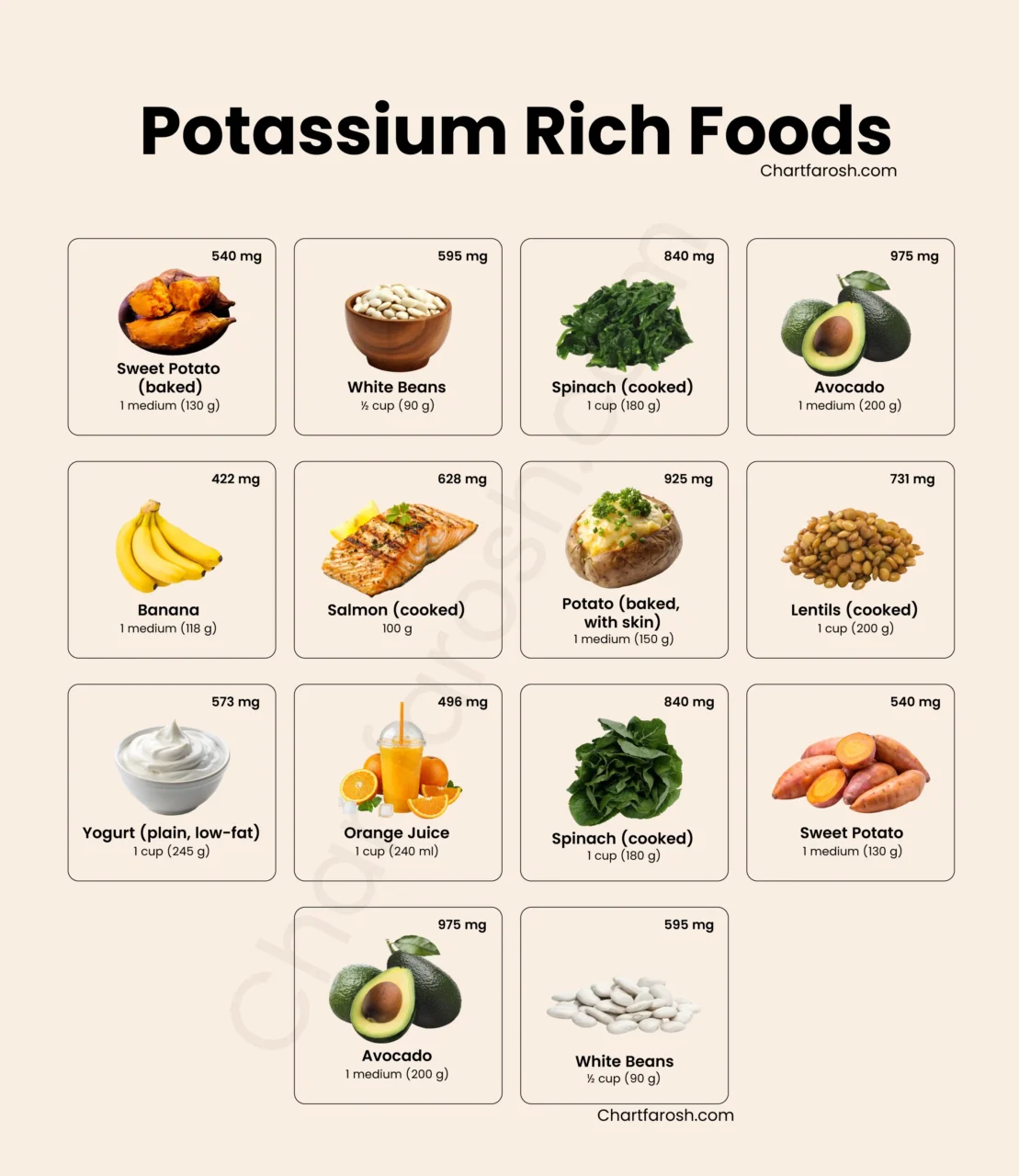
Table of Contents
Top 10 Foods High in Potassium
When people hear potassium, bananas usually come to mind first. But truthfully, there are foods with far more potassium per serving. Think of leafy greens, potatoes, beans, fish, and even certain fruits like avocados.
These top potassium sources are great to keep handy, especially if you’re looking to meet your daily needs naturally without supplements. By learning the potassium content of foods, you’ll notice that many everyday staples pack in more potassium than you’d expect.
| Food Name | Serving Size | Potassium |
| Sweet Potato (baked) | 1 medium (130 g) | 540 mg |
| White Beans | ½ cup (90 g) | 595 mg |
| Spinach (cooked) | 1 cup (180 g) | 840 mg |
| Avocado | 1 medium (200 g) | 975 mg |
| Banana | 1 medium (118 g) | 422 mg |
| Salmon (cooked) | 100 g | 628 mg |
| Potato (baked, with skin) | 1 medium (150 g) | 925 mg |
| Lentils (cooked) | 1 cup (200 g) | 731 mg |
| Yogurt (plain, low-fat) | 1 cup (245 g) | 573 mg |
| Orange Juice | 1 cup (240 ml) | 496 mg |
High Potassium Foods to Avoid
For people with kidney disease or other medical conditions, high potassium intake can actually be dangerous. The kidneys regulate potassium levels, so when they don’t work properly, too much potassium can build up in the blood, leading to muscle weakness, irregular heartbeat, or worse.
That’s why some individuals are given a restricted diet where they need to avoid or limit items from the potassium rich foods list such as bananas, potatoes, spinach, tomatoes, and beans. With the right knowledge, you can still eat well without overloading on potassium.
| Food Name | Serving Size | Potassium |
| Spinach (cooked) | 1 cup (180 g) | 840 mg |
| Sweet Potato | 1 medium (130 g) | 540 mg |
| Avocado | 1 medium (200 g) | 975 mg |
| White Beans | ½ cup (90 g) | 595 mg |
| Banana | 1 medium (118 g) | 422 mg |
Potassium Rich Vegetables
Vegetables are one of the most reliable and abundant sources of potassium. Potatoes (especially baked with skin), sweet potatoes, spinach, Swiss chard, and beets are at the top of the list.
Even lighter veggies like zucchini and carrots contribute a decent amount. Having a variety of vegetables not only gives you potassium but also adds fiber, vitamins, and antioxidants. If you’re serious about making a potassium rich foods list, this category is a must.
| Food Name | Serving Size | Potassium |
| Spinach (cooked) | 1 cup (180 g) | 840 mg |
| Beet Greens (cooked) | 1 cup (144 g) | 655 mg |
| Potato (baked) | 1 medium (150 g) | 925 mg |
| Swiss Chard | 1 cup (175 g) | 961 mg |
| Broccoli (cooked) | 1 cup (156 g) | 457 mg |
Potassium Rich Fruits
Fruits are another excellent way to get your daily potassium, and not just from bananas. Oranges, avocados, kiwis, cantaloupes, and dried fruits like raisins and apricots are all rich in potassium.
If you’re trying to balance the potassium content of foods, fruits are great because they provide natural sweetness along with hydration. Just be mindful with dried fruits, since the potassium becomes more concentrated per serving.
| Food Name | Serving Size | Potassium |
| Avocado | 1 medium (200 g) | 975 mg |
| Banana | 1 medium (118 g) | 422 mg |
| Orange | 1 medium (131 g) | 237 mg |
| Kiwi | 1 medium (76 g) | 215 mg |
| Apricot (fresh) | 1 cup (155 g) | 427 mg |
Potassium Rich Legumes
Beans and legumes are powerhouse foods for potassium. Lentils, kidney beans, white beans, and soybeans are all loaded with potassium, along with plant-based protein and fiber.
They make an ideal choice if you’re looking for long-lasting energy and satiety. For vegetarians and vegans, legumes are one of the best categories to include in a potassium rich foods list since they check multiple boxes: minerals, protein, and slow-digesting carbs.
| Food Name | Serving Size | Potassium |
| White Beans | ½ cup (90 g) | 595 mg |
| Lentils (cooked) | 1 cup (200 g) | 731 mg |
| Kidney Beans (cooked) | ½ cup (90 g) | 358 mg |
| Soybeans (edamame) | ½ cup (78 g) | 436 mg |
| Black Beans (cooked) | ½ cup (86 g) | 305 mg |
Potassium Rich Meat and Fish
Animal-based proteins are often overlooked in potassium discussions, but they’re very effective sources. Fish like salmon, tuna, and halibut are especially rich in potassium, while beef, chicken, and pork also contribute a solid amount.
Not only do these foods boost your potassium intake, but they also provide protein, iron, and other vital nutrients. Pairing them with potassium rich vegetables can help build a truly balanced meal.
| Food Name | Serving Size | Potassium |
| Salmon (cooked) | 100 g | 628 mg |
| Tuna (cooked) | 100 g | 522 mg |
| Chicken Breast (roasted) | 100 g | 256 mg |
| Beef (cooked) | 100 g | 318 mg |
| Turkey (roasted) | 100 g | 239 mg |
Potassium Rich Dairy Products
Dairy is another sneaky but reliable source of potassium. Milk, yogurt, and even cheese contain potassium, though the amounts vary depending on the type. Yogurt (especially plain, unsweetened) is one of the best dairy options for those needing extra potassium.
If you already enjoy dairy daily, you’re likely adding to your potassium intake without realizing it. This is why it’s important to look at the potassium content of foods across all categories, not just produce.
| Food Name | Serving Size | Potassium |
| Yogurt (plain, low-fat) | 1 cup (245 g) | 573 mg |
| Milk (whole) | 1 cup (244 ml) | 322 mg |
| Buttermilk | 1 cup (245 ml) | 370 mg |
| Cottage Cheese | 1 cup (210 g) | 217 mg |
| Cheddar Cheese | 1 oz (28 g) | 28 mg |
Potassium Rich Nuts and Seeds
Nuts and seeds are small but mighty when it comes to nutrients, and potassium is no exception. Almonds, pistachios, sunflower seeds, and pumpkin seeds all have significant amounts of potassium. They’re perfect as snacks or sprinkled into salads, smoothies, or yogurt bowls. Just remember: nuts are also calorie-dense, so portion control matters if you’re eating them daily.
| Food Name | Serving Size | Potassium |
| Almonds | 1 oz (28 g) | 208 mg |
| Cashews | 1 oz (28 g) | 187 mg |
| Sunflower Seeds | 1 oz (28 g) | 184 mg |
| Pumpkin Seeds | 1 oz (28 g) | 228 mg |
| Pistachios | 1 oz (28 g) | 291 mg |
Potassium Rich Cereals and Grains
Whole grains such as quinoa, bulgur, and brown rice contain potassium, though usually in lower amounts compared to vegetables and legumes. Still, when you consider how often grains appear in meals, the potassium adds up. Breakfast cereals that are fortified can also help increase your intake. If you’re building a potassium rich foods list, don’t forget this often-overlooked category.
| Food Name | Serving Size | Potassium |
| Quinoa (cooked) | 1 cup (185 g) | 318 mg |
| Brown Rice (cooked) | 1 cup (195 g) | 154 mg |
| Oats (cooked) | 1 cup (234 g) | 164 mg |
| Barley (cooked) | 1 cup (157 g) | 193 mg |
| Millet (cooked) | 1 cup (174 g) | 108 mg |
Potassium Rich Drinks
Beverages can surprisingly be a strong source of potassium. Orange juice, coconut water, and tomato juice are classic examples. Smoothies made from potassium-rich fruits and vegetables are also an easy way to boost intake. Of course, not every drink is created equal.
While coconut water is naturally high in potassium, soft drinks and processed beverages usually add sugar without much nutrient value.
| Food Name | Serving Size | Potassium |
| Orange Juice | 1 cup (240 ml) | 496 mg |
| Tomato Juice | 1 cup (240 ml) | 556 mg |
| Coconut Water | 1 cup (240 ml) | 600 mg |
| Prune Juice | 1 cup (240 ml) | 707 mg |
| Carrot Juice | 1 cup (240 ml) | 689 mg |
Daily Potassium Requirements
On average, adults should aim for around 2,500–3,000 mg of potassium per day, though exact recommendations vary. Checking the potassium content of foods helps you know if you’re meeting your needs.
- Women generally need slightly less potassium than men.
- Athletes may need more due to losses from sweating.
- People with kidney issues may require medical supervision to avoid too much potassium.
FAQs
What is the best potassium rich foods list for everyday meals?
A balanced list includes bananas, oranges, potatoes, spinach, beans, fish, yogurt, nuts, and whole grains. Each category adds a different nutrient profile while also contributing to your potassium intake.
What is the potassium content of foods compared to supplements?
Whole foods provide potassium along with fiber, vitamins, and other minerals, while supplements give potassium in isolated form. Most doctors recommend focusing on foods unless you have a medical need for supplements.
Can too much potassium be harmful?
Yes. While potassium is essential, excessive intake (especially in people with kidney problems) can cause hyperkalemia, a dangerous condition where potassium builds up in the blood. Always check with your doctor if you’re unsure about your levels.
How can I naturally increase my potassium intake?
Incorporate more fruits like bananas and oranges, vegetables like spinach and potatoes, and protein-rich sources like beans, fish, and yogurt. Even swapping sugary drinks for coconut water can help.
Which potassium rich foods are best for athletes?
Athletes benefit most from foods that replenish both potassium and hydration: bananas, sweet potatoes, avocados, coconut water, and yogurt. These options help with muscle recovery and electrolyte balance after workouts.