Seafood Cholesterol Chart
Seafood always had a “healthy” reputation in my head, but at some point I realized I didn’t actually know what that meant nutritionally, especially when it came to cholesterol.
Fish, shrimp, crab, shellfish. they all get lumped together, even though they’re very different foods.
After seeing conflicting advice everywhere, I finally sat down and compared cholesterol levels across different types of seafood.
That’s when things started to make more sense. Some seafood options are naturally low in cholesterol and easy to eat regularly, while others are much richer and better treated as occasional choices.
A clear Seafood Cholesterol Chart takes the guesswork out and helps you choose based on facts, not assumptions.
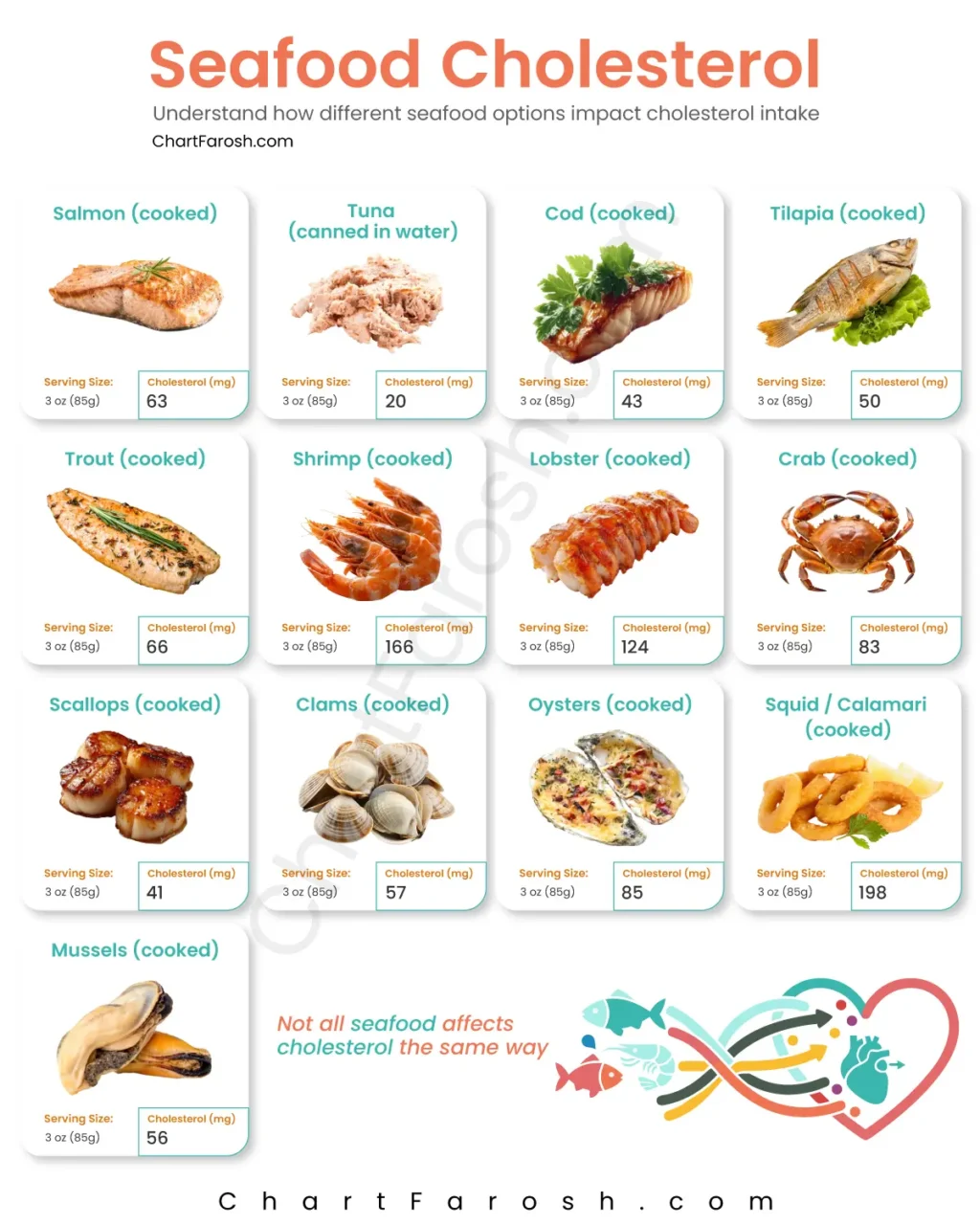
Table of Contents
Seafood Cholesterol Chart
A Seafood Cholesterol Chart allows you to compare different types of seafood by serving size and cholesterol content.
This is especially useful because seafood varies widely, oily fish, lean fish, shellfish, and mollusks all fall under the same umbrella but behave very differently nutritionally.
| Seafood Type | Food Item | Serving Size | Cholesterol (mg) |
| Fish | Salmon (cooked) | 3 oz (85g) | 63 |
| Fish | Tuna (canned in water) | 3 oz (85g) | 20 |
| Fish | Cod (cooked) | 3 oz (85g) | 43 |
| Fish | Tilapia (cooked) | 3 oz (85g) | 50 |
| Fish | Trout (cooked) | 3 oz (85g) | 66 |
| Shellfish | Shrimp (cooked) | 3 oz (85g) | 166 |
| Shellfish | Lobster (cooked) | 3 oz (85g) | 124 |
| Shellfish | Crab (cooked) | 3 oz (85g) | 83 |
| Shellfish | Scallops (cooked) | 3 oz (85g) | 41 |
| Shellfish | Clams (cooked) | 3 oz (85g) | 57 |
| Shellfish | Oysters (cooked) | 3 oz (85g) | 85 |
| Mollusks | Squid / Calamari (cooked) | 3 oz (85g) | 198 |
| Mollusks | Mussels (cooked) | 3 oz (85g) | 56 |
Low Cholesterol Seafood
Low cholesterol seafood options tend to be lean fish with lower fat content. These are often recommended for people managing cholesterol levels or looking for lighter protein sources that are still nutrient-dense.
Fish like cod, tilapia, and haddock typically fall into this category. Including these regularly provides protein and essential nutrients without significantly increasing dietary cholesterol.
| Seafood | Serving Size | Cholesterol (mg) |
| Tuna (canned in water) | 3 oz (85g) | 20 |
| Cod (cooked) | 3 oz (85g) | 43 |
| Tilapia (cooked) | 3 oz (85g) | 50 |
| Scallops (cooked) | 3 oz (85g) | 41 |
High Cholesterol Seafood
High cholesterol seafood is usually found among shellfish and certain mollusks. While these foods can be nutritious and rich in minerals, they contain more cholesterol per serving than most fish.
Shrimp, squid, and lobster are common examples. These don’t need to be avoided completely, but they’re best eaten in moderation, especially if cholesterol intake is a concern.
| Seafood | Serving Size | Cholesterol (mg) |
| Shrimp (cooked) | 3 oz (85g) | 166 |
| Lobster (cooked) | 3 oz (85g) | 124 |
| Squid / Calamari (cooked) | 3 oz (85g) | 198 |
Fish Cholesterol Levels
Fish cholesterol levels vary based on species, fat content, and portion size. Fatty fish often get attention for omega-3s, but that doesn’t automatically mean high cholesterol.
Many fish provide heart-supportive fats while still keeping cholesterol moderate. Looking at fish cholesterol levels individually helps you balance benefits without overgeneralizing.
| Fish | Serving Size | Cholesterol (mg) |
| Salmon (cooked) | 3 oz (85g) | 63 |
| Tuna (canned in water) | 3 oz (85g) | 20 |
| Cod (cooked) | 3 oz (85g) | 43 |
| Tilapia (cooked) | 3 oz (85g) | 50 |
| Trout (cooked) | 3 oz (85g) | 66 |
Shellfish Cholesterol Guide
Shellfish are nutritionally dense and rich in minerals like zinc, selenium, and iodine, but they also tend to be higher in cholesterol than most finned fish.
That doesn’t make shellfish unhealthy, it simply means portion size and frequency matter more.
Understanding shellfish cholesterol levels helps you enjoy them intentionally rather than avoiding them altogether.
| Shellfish | Serving Size | Cholesterol (mg) |
| Shrimp (cooked) | 3 oz (85g) | 166 |
| Lobster (cooked) | 3 oz (85g) | 124 |
| Crab (cooked) | 3 oz (85g) | 83 |
| Scallops (cooked) | 3 oz (85g) | 41 |
| Clams (cooked) | 3 oz (85g) | 57 |
| Oysters (cooked) | 3 oz (85g) | 85 |
Crab Cholesterol Chart
Crab is often viewed as a lighter shellfish option, but its cholesterol content can still surprise people.
While it’s relatively low in fat and calories, crab contains more cholesterol than many lean fish.
This makes crab a good occasional protein choice rather than an everyday staple for those monitoring cholesterol intake.
| Crab Type | Serving Size | Cholesterol (mg) |
| Blue Crab | 3 oz (85g) | 82 |
| Dungeness Crab | 3 oz (85g) | 81 |
| King Crab | 3 oz (85g) | 83 |
| Snow Crab | 3 oz (85g) | 80 |
Mollusks Cholesterol Chart
Mollusks include foods like clams, mussels, oysters, and scallops. These are nutritionally unique and vary widely in cholesterol levels.
Some mollusks are relatively moderate in cholesterol, while others are among the highest in the seafood category. A dedicated mollusks chart helps clarify these differences.
| Mollusks | Serving Size | Cholesterol (mg) |
| Squid / Calamari (cooked) | 3 oz (85g) | 198 |
| Mussels (cooked) | 3 oz (85g) | 56 |
| Clams (cooked) | 3 oz (85g) | 57 |
| Oysters (cooked) | 3 oz (85g) | 85 |
Mollusks Cholesterol Facts
Mollusks are often misunderstood when it comes to cholesterol. While many are higher in cholesterol, they are also low in saturated fat and packed with nutrients like iron, vitamin B12, and omega-3 fatty acids.
Dietary cholesterol doesn’t affect everyone the same way, and for many people, saturated fat intake plays a larger role in blood cholesterol levels than cholesterol from foods like mollusks.
Still, because mollusks can be cholesterol-dense, they’re best eaten as part of a varied diet rather than daily staples.
Cholesterol in Fish vs Chicken
Fish and chicken are both considered lean protein options, but their cholesterol levels can differ depending on the cut, preparation, and type.
Fish generally contains less cholesterol than dark-meat chicken with skin, but lean chicken breast can be comparable to many fish varieties.
Comparing them side by side helps make informed protein choices.
| Protein Type | Serving Size | Cholesterol (mg) | Fat Content | Notes |
| Cod | 3 oz | ~45 mg | Very low | Lean fish |
| Salmon | 3 oz | ~55 mg | Moderate | Omega-3 rich |
| Tilapia | 3 oz | ~50 mg | Low | Mild fish |
| Chicken breast (skinless) | 3 oz | ~65 mg | Low | Lean poultry |
| Chicken thigh (with skin) | 3 oz | ~90 mg | Higher | More fat |
| Shrimp | 3 oz | ~165 mg | Very low | High cholesterol |
Does Cooking Seafood Change Cholesterol Levels?
Cooking seafood doesn’t significantly change its cholesterol content, but it does affect the overall nutritional impact of the meal.
Cholesterol itself remains fairly stable under heat, while added fats, breading, or sauces can increase saturated fat intake, which plays a bigger role in blood cholesterol levels.
Grilling, steaming, baking, and poaching keep seafood lighter and preserve its natural benefits.
Frying or cooking seafood in butter-heavy sauces can turn a low-cholesterol option into a less heart-friendly choice, even if the seafood itself hasn’t changed.
How Often Should You Eat High-Cholesterol Seafood?
High-cholesterol seafood doesn’t need to be avoided, but it shouldn’t be an everyday protein for most people.
Enjoying shellfish or mollusks a few times per week in reasonable portions fits well into a balanced diet.
Pairing higher-cholesterol seafood with fiber-rich foods like vegetables, legumes, or whole grains can help offset its impact.
Frequency, portion size, and overall diet quality matter far more than a single meal choice.
Quick Seafood Cholesterol Summary
Seafood isn’t one-size-fits-all when it comes to cholesterol. Lean fish tend to be lower in cholesterol and suitable for frequent meals, while shellfish and mollusks are richer and better enjoyed occasionally.
Using a Seafood Cholesterol Chart helps you rotate choices, balance portions, and avoid unnecessary restriction. Cholesterol awareness isn’t about fear, it’s about informed variety.
FAQs
Is seafood high in cholesterol overall?
It depends on the type. Many fish are low to moderate, while shellfish are higher.
Is shrimp bad for cholesterol?
Shrimp is high in dietary cholesterol but low in saturated fat, so moderation is key.
Are mollusks worse than fish for cholesterol?
Generally yes, but they also provide important nutrients.
Is fish healthier than chicken for cholesterol?
Often yes, especially compared to fatty or skin-on chicken cuts.
Do cooking methods affect cholesterol levels?
They don’t change cholesterol itself, but added fats can impact overall heart health.