Low Energy Density Foods Chart
Energy density means the number of calories (energy) in a specific amount of food. Low energy density foods are the ones with low calories in large portions.
Foods low in energy density can aid in weight management by providing satisfying portions appropriate for calorie needs.
You can have larger, more satisfying portions of these foods for fewer calories. Research suggests that people feel full according to the amount of food they eat, not the number of calories they take in.
This is important as being able to eat a greater amount of food can help keep you feeling full, and you can eat plenty of low-energy foods for relatively few calories.
In this article, we will be discussing in detail the low-energy-density food which you can incorporate in your daily diet.
These nutritious and low calorie intake will let you satisfy your cravings without impacting negatively on your weight. Stay tuned for some amazing fun facts that we are about to uncover.
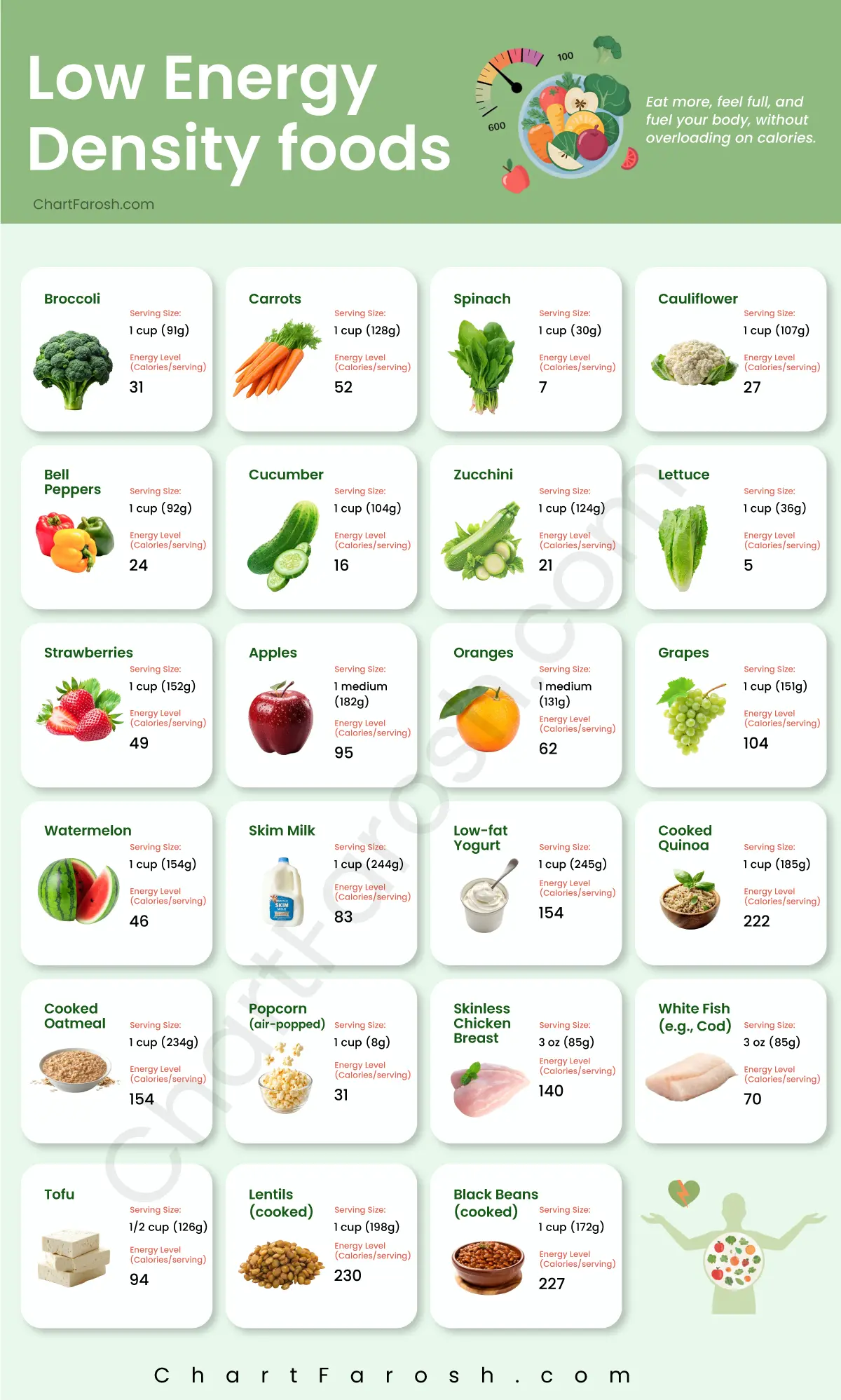
Table of Contents
Low Energy Density Foods Chart
Low density foods offer less calories and have high water and fiber content, the best example of which is grapefruit. Low energy dense foods are perfect for the ones who strive to lose weight but can’t control their cravings.
Incorporating such food choices in your diet will let you enjoy more food with fewer calories. Consuming such foods will helps you feel fuller on fewer calories. The low energy density foods have a lot of water or fiber content.
Water in foods can add volume to the meal, making you feel fuller without adding to the calories. Examples of foods with lower energy density are fresh fruit and vegetables.
Low energy density foods include the ones that absorb water during cooking, like pasta, rice, and pulses, and dishes with added water, such as soups.
The food having greater fiber content also comes in the low energy density foods. Our body cannot fully digest dietary fiber, so dietary fiber provides fewer calories per gram (only 2 kcal per gram) than carbohydrates, protein, and fat.
Choosing fiber-rich foods can help us feel fuller.
Reducing the amount of fat you add to dishes when cooking can also lower their energy density.
Generally, if you lower the fat content of a recipe, you can get a bigger portion for the same number of calories without disrupting your calorie count.
The healthiest lower energy dense choices are foods that are high in protein but low in fat and calories, such as:
- Beans, peas, and lentils which are also good sources of fiber.
- Fish.
- Lean meat and poultry.
- Low-fat or fat-free dairy products, such as milk, yogurt, and cheese.
- Egg whites.
Have a look at the low energy density foods chart given below. It will help you remember the details of the nutritional content of the foods you can include in your daily meal for a low energy density diet.
| Food Category | Food Item | Serving Size | Energy Level (Calories per serving) |
| Vegetables | Broccoli | 1 cup (91g) | 31 |
| Carrots | 1 cup (128g) | 52 | |
| Spinach | 1 cup (30g) | 7 | |
| Cauliflower | 1 cup (107g) | 27 | |
| Bell Peppers | 1 cup (92g) | 24 | |
| Cucumber | 1 cup (104g) | 16 | |
| Zucchini | 1 cup (124g) | 21 | |
| Lettuce | 1 cup (36g) | 5 | |
| Fruits | Strawberries | 1 cup (152g) | 49 |
| Apples | 1 medium (182g) | 95 | |
| Oranges | 1 medium (131g) | 62 | |
| Grapes | 1 cup (151g) | 104 | |
| Watermelon | 1 cup (154g) | 46 | |
| Dairy | Skim Milk | 1 cup (244g) | 83 |
| Low-fat Yogurt | 1 cup (245g) | 154 | |
| Grains | Cooked Quinoa | 1 cup (185g) | 222 |
| Cooked Oatmeal | 1 cup (234g) | 154 | |
| Popcorn (air-popped) | 1 cup (8g) | 31 | |
| Protein | Skinless Chicken Breast | 3 oz (85g) | 140 |
| White Fish (e.g., Cod) | 3 oz (85g) | 70 | |
| Tofu | 1/2 cup (126g) | 94 | |
| Legumes | Lentils (cooked) | 1 cup (198g) | 230 |
| Black Beans (cooked) | 1 cup (172g) | 227 |
Low Energy Density Fruits
Research has shown that low energy dense diets help people maintain satiety and control their hunger while lowering their caloric intake.
Data also indicates that people who consume a low energy dense diet eat a balanced diet that is higher in fiber, vitamins A and C, and folate.
So, how can you apply these principles to help control your weight and maintain a healthful diet?
The approach is simple: consume more low energy foods such as fruits. Incorporate at least 1-2 servings of fruits or vegetables into each meal or snack.
For each meal you can try and eat more fruits so that you feel fuller and eat less.
There are different varieties of low energy density fruits that will satisfy your cravings without adding large calories in your daily intake.
Top fruit choices include Strawberries, Apples, Oranges, Grapes, Watermelon, Blueberries, Raspberries, and Cantaloupe.
These fruits will not only make you feel fuller but also help in uplifting your overall health. The vitamins and nutrients will improve the metabolic functionality of your body and you can see significant improvement in your energy levels.
Not all of these low energy fruits are available in every season. Each one has a specific season on which you will find them easily in your nearby grocery stores.
Ensure the consumption of seasonal fruits available to you and make the most out of the nutrients they supply to your body.
Also, some fruits such as Apple and Banana are available all year round so you rely on these fruits when you can;t find any other fruit.
Consult the table below to help you remember which fruits can be incorporated in your low energy diet meals.
| Food Item | Serving Size | Energy Level (Calories per serving) |
| Strawberries | 1 cup (152g) | 49 |
| Apples | 1 medium (182g) | 95 |
| Oranges | 1 medium (131g) | 62 |
| Grapes | 1 cup (151g) | 104 |
| Watermelon | 1 cup (154g) | 46 |
| Blueberries | 1 cup (148g) | 84 |
| Raspberries | 1 cup (123g) | 64 |
| Cantaloupe | 1 cup (160g) | 54 |
| Peaches | 1 medium (150g) | 59 |
| Pineapple | 1 cup (165g) | 82 |
| Kiwi | 1 medium (69g) | 42 |
| Plums | 1 medium (66g) | 30 |
| Blackberries | 1 cup (144g) | 62 |
| Papaya | 1 cup (140g) | 55 |
| Honeydew Melon | 1 cup (177g) | 61 |
Conclusion
Low energy density foods are the perfect meal choice for the ones struggling with weight loss. If you are looking to lose weight but can’t control your cravings, then you should modify your daily food intake.
Start consuming low energy density foods as they are low in calories and you can enjoy them in larger portions.
They will not add much calories to your daily intake and let you satisfy your cravings without compromising on taste.
There are different foods which come under this category which you can incorporate in your meals. Some of the common options are mentioned in the low energy density food charts above.
These tables will offer all the information you need to switch to a healthier lifestyle.