Low GI Food Chart
If you are looking to manage your diabetes, lose weight, or simply improve your overall health, you are at the right place. This article will give you the knowledge that you need to make better food choices.
In this guide, you’ll find a printable list of low GI foods for easy reference. There are detailed charts showing the GI values of different foods. You’ll also discover the top 10 low glycemic foods and a special zero GI chart.
These resources will help you add low GI foods to your diet, whether you have a specific health goal or just want to feel better.
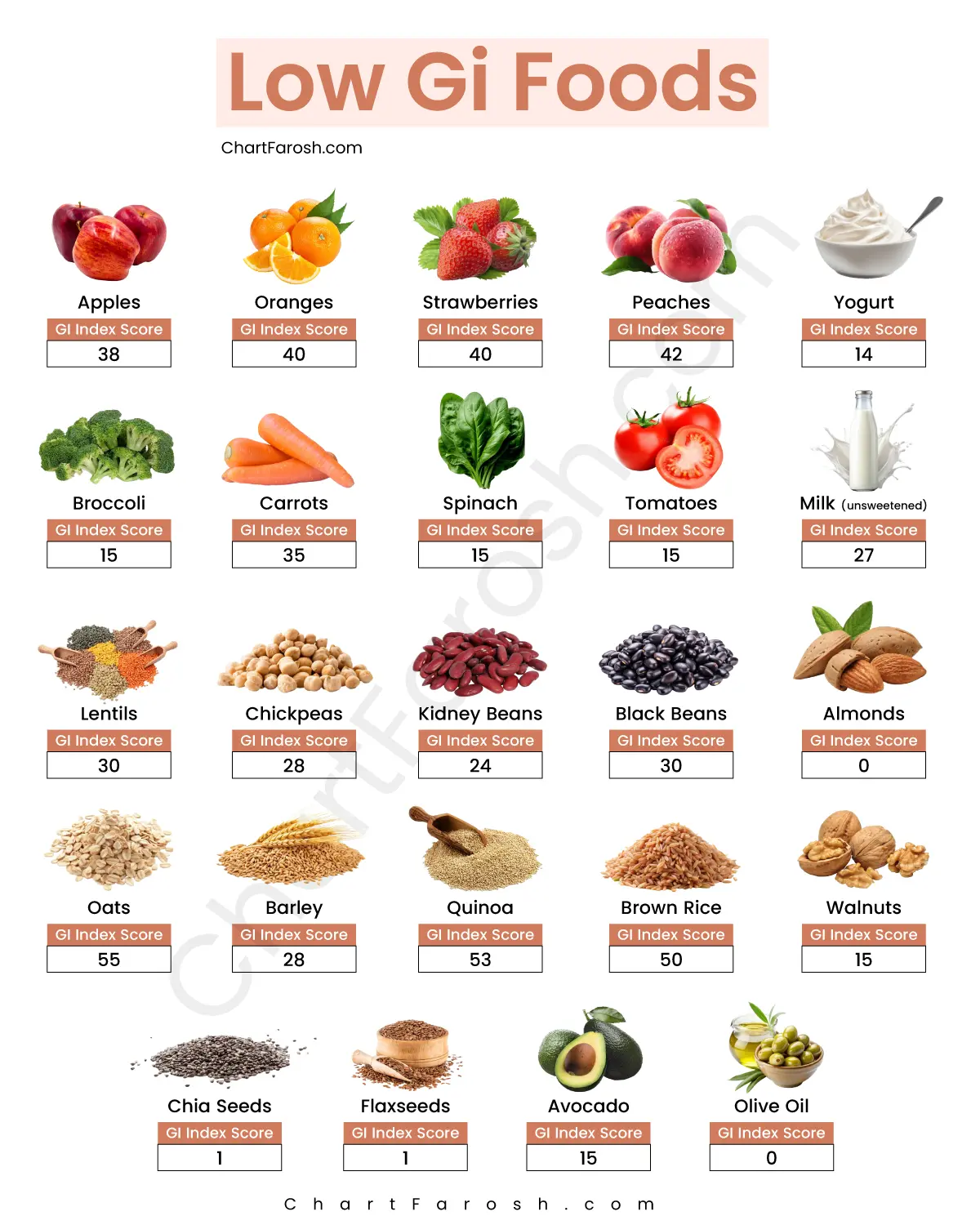
Table of Contents
Low GI Foods Chart
You might be surprised to learn that many of your favorite foods are low GI. This allows you to choose healthier options without sacrificing flavor.
Whether you are managing diabetes, trying to lose weight, or just want to eat better, knowing about the list of low glycemic index foods can help a lot. It can really change how you plan your diet.
Fruits like apples, oranges, strawberries, and peaches are not only tasty but also have a low GI.
Rich in fiber, antioxidants, and essential vitamins, these fruits can be enjoyed as snacks or added to meals.
They help control blood sugar and support health. Vegetables such as broccoli, carrots, spinach, and tomatoes are also low GI and full of essential nutrients.
They offer vitamins and minerals while keeping your blood sugar stable.
When it comes to low-GI foods, legumes such as lentils, chickpeas, black beans, and kidney beans top the list.
They add plant-based protein and fiber to your diet. These foods are nutritious and versatile. They fit into many dishes from salads to soups.
Whole grains like oats, barley, quinoa, and brown rice provide lasting energy and important nutrients. These include fiber, vitamins, and minerals.
Moreover, nuts and seeds, such as almonds, walnuts, chia seeds, and flaxseeds, are also part of the low GI food group.
They provide healthy fats, protein, and fiber. They are perfect for snacks or adding to meals. Dairy products like yogurt and unsweetened milk also have a low GI.
They offer nutrients like calcium and protein. Using olive oil and avocado in your diet can provide healthy fats that are good for your heart. Their role in affecting blood sugar levels is quite minimal.
Below is a detailed chart of various low GI foods, categorized by their GI scores.
| Food Name | GI Index Score |
| Apples | 38 |
| Oranges | 40 |
| Strawberries | 40 |
| Peaches | 42 |
| Broccoli | 15 |
| Carrots | 35 |
| Spinach | 15 |
| Tomatoes | 15 |
| Lentils | 30 |
| Chickpeas | 28 |
| Kidney Beans | 24 |
| Black Beans | 30 |
| Oats | 55 |
| Barley | 28 |
| Quinoa | 53 |
| Brown Rice | 50 |
| Yogurt | 14 |
| Milk (unsweetened) | 27 |
| Almonds | 0 |
| Walnuts | 15 |
| Chia Seeds | 1 |
| Flaxseeds | 1 |
| Avocado | 15 |
| Olive Oil | 0 |
Top 10 Low Glycemic Foods
Choosing the right foods can greatly impact our health, especially when you don’t want to compromise on your health.
Among the top 10 low glycemic index foods are cherries, grapefruit, apples, and pears. Cherries are tasty and full of antioxidants.
Grapefruit gives you vitamin C and fiber. With their high fiber and vitamin content, apples and pears make great additions to any snack or meal.
Other top low GI foods include plums, oranges, strawberries, and peaches. Plums have vitamins and minerals and a low GI score.
Renowned for their vitamin C, oranges offer a great nutritional boost. They help keep blood sugar levels stable.
Strawberries are delicious, high in antioxidants, and fiber. Peaches offer vitamins A and C. They aid in stabilizing blood sugar levels over time.
Vegetables like broccoli and tomatoes complete the top 10 low GI foods. With its high content of vitamins C, K, and fiber, broccoli contributes to blood sugar management.
Tomatoes are versatile and packed with nutrients like lycopene. Adding these top 10 low glycemic index foods in your diet can help you manage sugar levels while enjoying a variety of nutritious options.
What is the Zero GI Chart?
The zero GI chart lists foods with a glycemic index of zero. This means they do not impact your sugar levels if you are a diabetic patient.
These foods, mainly fats and oils, help manage blood sugar when eaten in moderation.
Including zero GI foods like almonds, olive oil, and avocado in your diet can balance meals with carbohydrates. This contributes to better blood sugar control and overall health.
Almonds and walnuts are great zero GI snacks. They are rich in healthy fats and protein. Chia seeds and flaxseeds, both with near-zero GI, are full of omega-3 fatty acids and fiber.
Olive oil is a heart-healthy fat that doesn’t affect blood sugar. Avocados, with their low GI score, offer healthy fats and fiber.
Incorporating these zero GI foods into your diet can help manage your diabetes and in your weight loss journey.
They also provide essential nutrients. Knowing the Fruit Glycemic Index can further assist in choosing the right fruits for your diet.
| Food Name | GI Index Score |
| Almonds | 0 |
| Olive Oil | 0 |
| Avocado | 15 |
| Walnuts | 15 |
| Chia Seeds | 1 |
| Flaxseeds | 1 |
Conclusion
Understanding the glycemic index and adding low GI foods to your diet can greatly improve your health.
These foods contribute to keeping blood sugar levels balanced. They provide lasting energy and support overall well-being.
Make sure to refer to our low GI food chart and consider adding these nutritious options to your meals.