Food Temperature Chart – A Practical Guide
Years ago, while helping a friend prepare food for a small family gathering, I watched a tray of cooked chicken sit on the counter for “just a little while longer.”
Nothing seemed wrong, no smell, no visible issue, but later that evening, a few people felt unwell. That experience stuck with me.
It wasn’t about bad ingredients or poor hygiene; it was about temperature control.
Since then, I’ve paid close attention to food temperatures, whether cooking at home or eating out.
Understanding food temperature charts isn’t just for professionals, it’s a simple habit that protects health every single day.
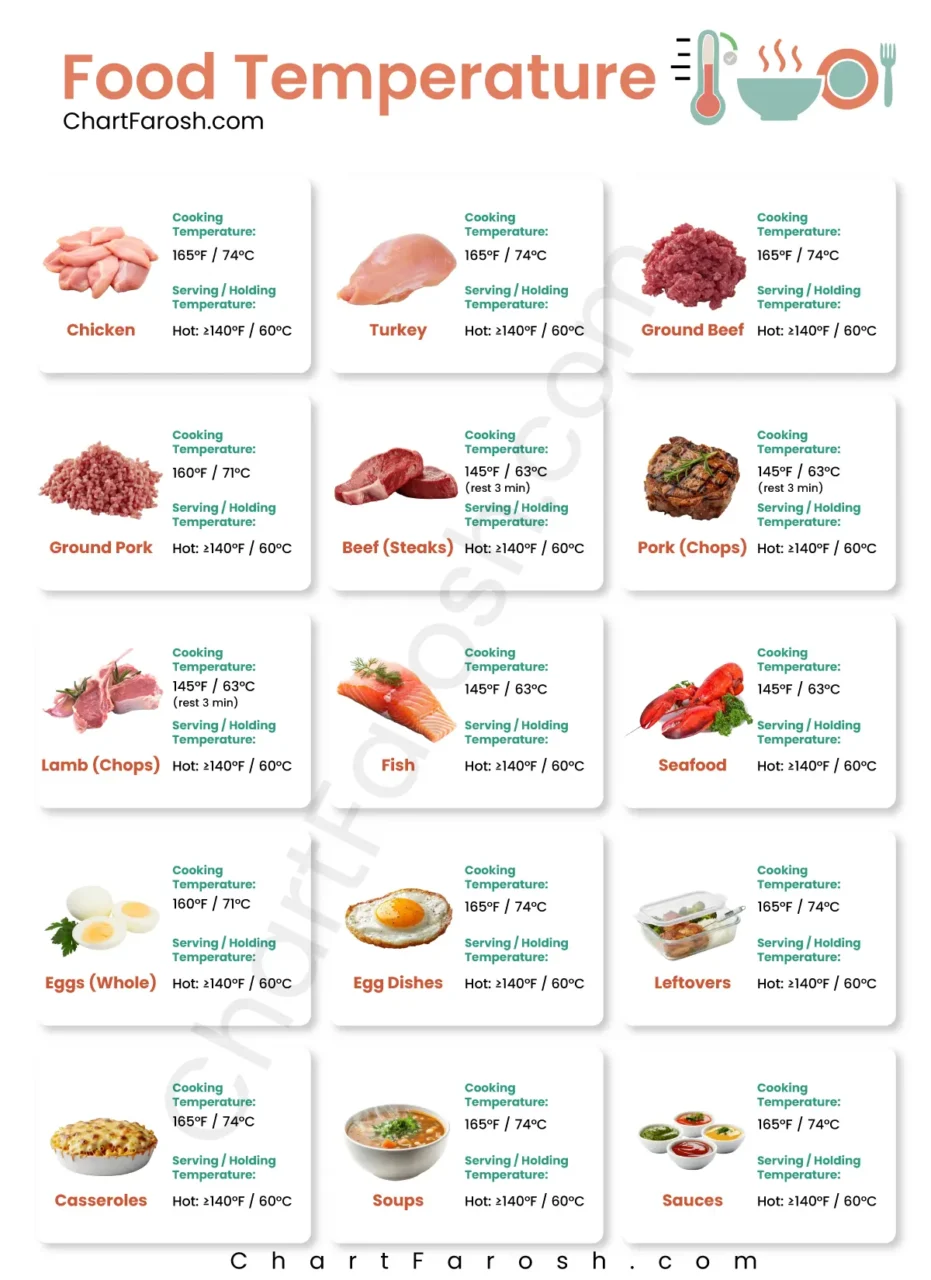
Table of Contents
Food Temperature Chart
A food temperature chart is a quick reference that shows the minimum safe cooking temperatures, safe holding temperatures, and storage guidelines for different foods.
It helps ensure harmful bacteria are destroyed during cooking and prevented from growing during storage or service.
Whether you’re grilling meat, reheating leftovers, or managing food in a restaurant, temperature guidance is one of the most reliable food safety tools available.
| Food Type | Cooking Temperature | Serving / Holding Temperature |
| Chicken | 165°F / 74°C | Hot: ≥140°F / 60°C |
| Turkey | 165°F / 74°C | Hot: ≥140°F / 60°C |
| Ground Beef | 160°F / 71°C | Hot: ≥140°F / 60°C |
| Ground Pork | 160°F / 71°C | Hot: ≥140°F / 60°C |
| Beef (Steaks) | 145°F / 63°C (rest 3 min) | Hot: ≥140°F / 60°C |
| Pork (Chops) | 145°F / 63°C (rest 3 min) | Hot: ≥140°F / 60°C |
| Lamb (Chops) | 145°F / 63°C (rest 3 min) | Hot: ≥140°F / 60°C |
| Fish | 145°F / 63°C | Hot: ≥140°F / 60°C |
| Seafood | 145°F / 63°C | Hot: ≥140°F / 60°C |
| Eggs (Whole) | 160°F / 71°C | Hot: ≥140°F / 60°C |
| Egg Dishes | 165°F / 74°C | Hot: ≥140°F / 60°C |
| Leftovers | 165°F / 74°C | Hot: ≥140°F / 60°C |
| Casseroles | 165°F / 74°C | Hot: ≥140°F / 60°C |
| Soups | 165°F / 74°C | Hot: ≥140°F / 60°C |
| Sauces | 165°F / 74°C | Hot: ≥140°F / 60°C |
Food Temperature Chart for Restaurant Use
In restaurant settings, food temperature charts are essential for compliance and customer safety.
They guide staff on when food is safe to serve, how long it can be held, and when it must be discarded.
Restaurants often rely on charts during prep, service, and storage to maintain consistency and avoid risks associated with improper holding temperatures, which can quickly lead to bacterial growth during busy service hours.
| Food Category | Minimum Cooking Temp | Hot Holding Temp | Cold Holding Temp | Max Holding Time |
| Poultry | 165°F (74°C) | 140°F (60°C) | 40°F (4°C) | 4 hours |
| Ground Meats | 160°F (71°C) | 140°F (60°C) | 40°F (4°C) | 4 hours |
| Whole Cuts of Beef | 145°F (63°C) | 140°F (60°C) | 40°F (4°C) | 4 hours |
| Seafood | 145°F (63°C) | 140°F (60°C) | 40°F (4°C) | 4 hours |
| Cooked Vegetables | 135°F (57°C) | 135°F (57°C) | 40°F (4°C) | 4 hours |
Why Food Temperature Safety Matters
Food safety becomes especially critical when meals move through multiple stages like cooking, holding, serving, and storage.
Even well-prepared food can become unsafe if it sits too long at the wrong temperature.
This is why restaurants and food handlers rely on temperature charts as much as they rely on proper hygiene.
The same principle applies when preparing pet meals, similar temperature awareness is emphasized in best large dog food preparation and storage guidelines, where improper handling can compromise nutritional quality and safety.
Safe Cooking Temperatures Explained
Cooking food to the correct internal temperature is the only reliable way to kill harmful bacteria such as Salmonella and E. coli.
Interestingly, temperature precision is just as important in specialized diets, such as hypoallergenic dog food, where overheating or undercooking can alter proteins and affect digestibility.
In both cases, controlled temperatures protect health and prevent unnecessary risks.
| Food Type | Internal Temp Required | Why It Matters | Thermometer Needed | Risk Level |
| Chicken & Turkey | 165°F (74°C) | Kills Salmonella | Yes | High |
| Ground Beef | 160°F (71°C) | Prevents E. coli | Yes | High |
| Whole Beef/Pork | 145°F (63°C) | Destroys surface bacteria | Yes | Medium |
| Fish & Seafood | 145°F (63°C) | Prevents parasites | Yes | Medium |
| Eggs & Egg Dishes | 160°F (71°C) | Reduces Salmonella risk | Recommended | Medium |
Safe Serving & Holding Temperatures
Once food is cooked, temperature control doesn’t stop. Hot foods should be kept hot, and cold foods should remain cold during service.
Buffets, catering events, and restaurant lines rely heavily on proper holding temperatures to keep food safe for extended periods.
| Food Type | Internal Temp Required | Why It Matters | Thermometer Needed | Risk Level |
| Chicken & Turkey | 165°F (74°C) | Kills Salmonella | Yes | High |
| Ground Beef | 160°F (71°C) | Prevents E. coli | Yes | High |
| Whole Beef/Pork | 145°F (63°C) | Destroys surface bacteria | Yes | Medium |
| Fish & Seafood | 145°F (63°C) | Prevents parasites | Yes | Medium |
| Eggs & Egg Dishes | 160°F (71°C) | Reduces Salmonella risk | Recommended | Medium |
Food Temperature Danger Zone
The food temperature danger zone typically falls between 40°F and 140°F (4°C–60°C). Within this range, bacteria multiply rapidly.
Food left in this zone for too long becomes unsafe, even if it was properly cooked initially.
| Food State | Safe Temperature | Equipment Used | Purpose | Common Mistake |
| Hot Foods | ≥140°F (60°C) | Steam tables, warmers | Prevent bacterial growth | Turning heat too low |
| Cold Foods | ≤40°F (4°C) | Refrigerated units | Slow bacteria growth | Overloading fridge |
| Buffet Hot | ≥140°F (60°C) | Chafing dishes | Safe public serving | Dry heat loss |
| Buffet Cold | ≤40°F (4°C) | Ice beds | Food safety | Ice melting |
| Takeaway | ≥140°F / ≤40°F | Insulated containers | Safe transport | Long delays |
Cooking vs Serving Temperature Differences
Cooking temperature focuses on killing bacteria, while serving temperature focuses on preventing regrowth.
Food can be safely cooked but still become unsafe if held incorrectly afterward.
| Aspect | Cooking Temperature | Serving Temperature | Purpose | Key Risk |
| Primary Goal | Kill bacteria | Prevent regrowth | Food safety | Misunderstanding roles |
| Temperature Level | Higher | Lower but controlled | Safety continuity | Cooling too fast |
| Time Sensitivity | Short-term | Long-term | Holding food safely | Extended exposure |
| Equipment Used | Ovens, grills, fryers | Warmers, chillers | Temperature maintenance | Equipment failure |
| Common Error | Undercooking | Improper holding | Foodborne illness | Neglect monitoring |
Food Storage Temperature Guidelines
Refrigeration and freezing slow bacterial growth but don’t eliminate it entirely. Refrigerators should be kept at or below 40°F (4°C), while freezers should remain at 0°F (-18°C) or lower.
Proper storage temperatures protect food quality and safety, especially when combined with airtight containers and timely consumption.
This ties closely with safe serving & holding temperatures, as improper cooling can undo safe cooking practices.
Reheating Food Safely
Reheating isn’t just about warming food, it’s about restoring it to a safe temperature.
Leftovers should be reheated until steaming hot, ensuring the internal temperature is high enough to eliminate bacteria that may have developed during storage.
Slow or uneven reheating can leave cold spots where bacteria survive, which is why even reheating matters as much as the original cooking.
Common Food Temperature Mistakes
Some of the most common mistakes include relying on visual cues instead of thermometers, leaving food out “just a bit longer,” overcrowding refrigerators, or assuming reheating automatically makes food safe.
Another frequent error is misunderstanding the cooking vs serving temperature differences, which can lead to safe food becoming unsafe after preparation.
Quick Food Safety Temperature Summary
In simple terms: cook food to the correct internal temperature, keep hot food hot, cold food cold, and avoid prolonged time in the danger zone.
Store food promptly, reheat thoroughly, and never assume food is safe based on appearance alone.
A food temperature chart serves as a practical reminder that small temperature details make a big difference in food safety.
FAQs
What is the food temperature danger zone?
It’s the temperature range where bacteria grow rapidly, typically between 40°F and 140°F (4°C–60°C).
Do I really need a food thermometer?
Yes. Visual cues aren’t reliable. A thermometer is the most accurate way to confirm food safety.
How long can food stay in the danger zone?
Generally, no more than 2 hours (or 1 hour if temperatures are above 90°F/32°C).
Is reheating food always safe?
Only if reheated thoroughly to a safe internal temperature. Partial reheating can be risky.
Why are restaurant food temperature charts important?
They help staff consistently maintain safety standards, reduce illness risk, and meet health regulations.