High-Fiber Foods for a Healthier Diet
When I first tried to improve my digestion and energy levels, I realized I wasn’t eating nearly enough fiber.
I assumed a few vegetables here and there were enough, but once I started following a proper list of high fiber foods, the difference was noticeable.
Fiber supports digestion, gut health, and even appetite control, yet it’s one of the most commonly missed nutrients in modern diets.
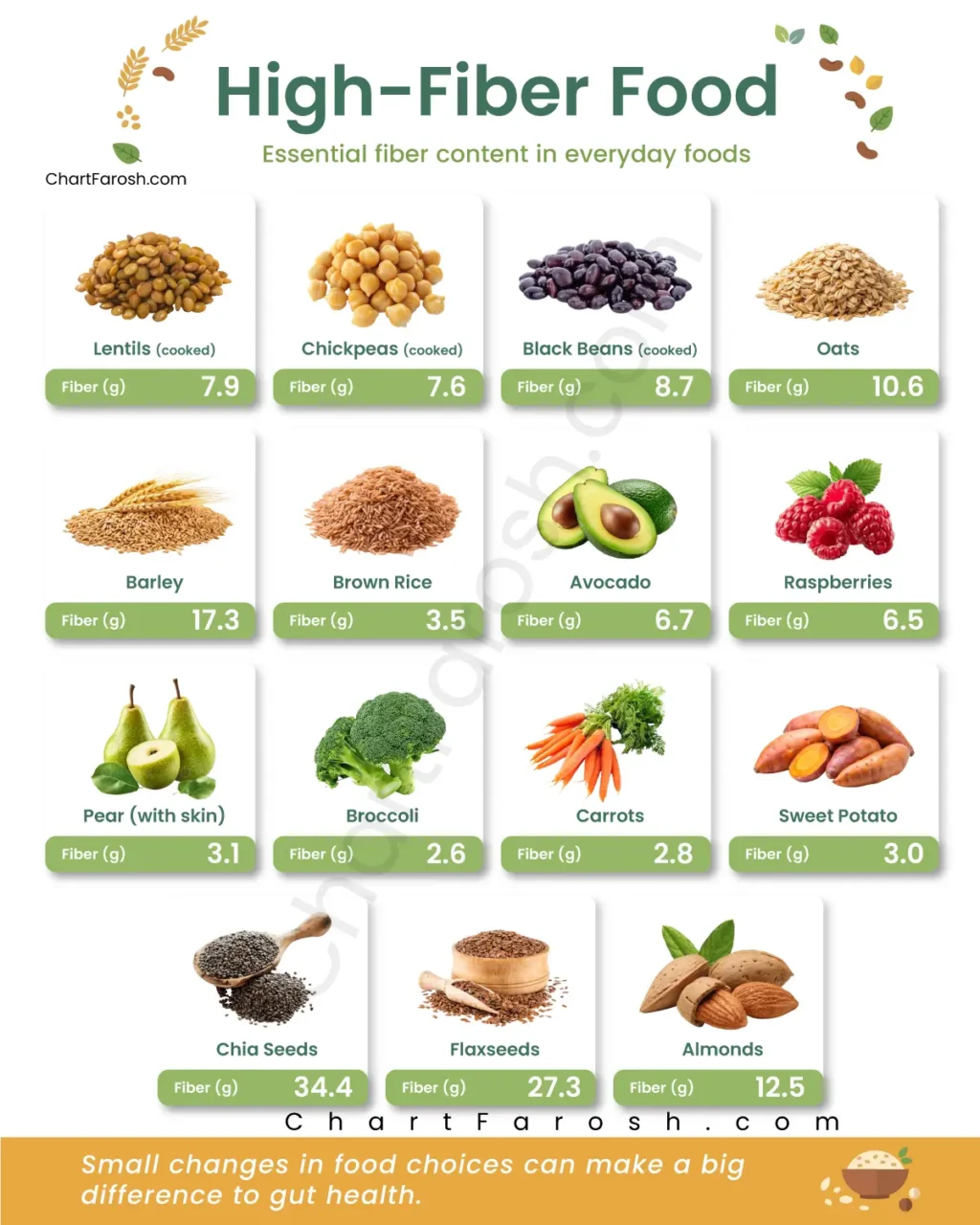
Table of Contents
High-Fiber Food Chart
A high-fiber food chart makes it easier to compare foods at a glance and choose options that support digestion, heart health, and long-term wellness.
Instead of guessing which foods contain the most fiber, a chart organizes common foods by category and fiber content per serving.
| Food Category | Food Item | Fiber (g) |
| Legumes | Lentils (cooked) | 7.9 |
| Legumes | Chickpeas (cooked) | 7.6 |
| Legumes | Black Beans (cooked) | 8.7 |
| Whole Grains | Oats | 10.6 |
| Whole Grains | Barley | 17.3 |
| Whole Grains | Brown Rice | 3.5 |
| Fruits | Avocado | 6.7 |
| Fruits | Raspberries | 6.5 |
| Fruits | Pear (with skin) | 3.1 |
| Vegetables | Broccoli | 2.6 |
| Vegetables | Carrots | 2.8 |
| Vegetables | Sweet Potato | 3.0 |
| Nuts & Seeds | Chia Seeds | 34.4 |
| Nuts & Seeds | Flaxseeds | 27.3 |
| Nuts & Seeds | Almonds | 12.5 |
What Is Dietary Fiber?
Dietary fiber is a type of carbohydrate found in plant-based foods that the body cannot fully digest.
Unlike sugars and starches, fiber passes through the digestive system largely intact, helping regulate bowel movements and support gut health.
There are two main types: soluble fiber, which dissolves in water and helps manage cholesterol and blood sugar, and insoluble fiber, which adds bulk to stool and promotes regular digestion.
Benefits of High-Fiber Foods
High-fiber foods offer a wide range of health benefits beyond digestion. They help you feel fuller for longer, which supports weight management and reduces overeating.
Fiber also plays a role in stabilizing blood sugar levels, lowering cholesterol, and supporting a healthy gut microbiome.
Including a diverse list of high fiber foods in your diet can also reduce the risk of heart disease, type 2 diabetes, and certain digestive disorders.
Best High-Fiber Foods by Category
High-fiber foods come from several major food groups, making it easy to build variety into your meals.
Fruits, vegetables, whole grains, legumes, nuts, and seeds all contribute different types of fiber and nutrients.
Organizing foods by category helps you balance soluble and insoluble fiber while avoiding reliance on just one source.
| Category | Food Example | Fiber (per serving) | Key Benefit |
| Fruits | Raspberries | ~8 g per cup | Gut & heart health |
| Vegetables | Broccoli | ~5 g per cup | Digestive support |
| Grains | Oats | ~4 g per cup | Cholesterol control |
| Legumes | Lentils | ~15 g per cup | Blood sugar balance |
| Nuts & Seeds | Chia seeds | ~10 g per 2 tbsp | Digestive regularity |
High-Fiber Fruits and Vegetables
Fruits and vegetables are among the most accessible sources of fiber and are packed with vitamins, minerals, and antioxidants.
Berries, pears, apples, avocados, broccoli, carrots, and leafy greens are particularly rich in fiber.
Eating fruits with the skin on and choosing whole vegetables instead of juices significantly increases fiber intake while supporting overall gut health.
| Fruit / Vegetable | Fiber (per serving) | Type of Fiber | Best Way to Eat |
| Avocado | ~10 g (1 cup) | Soluble & insoluble | Fresh, sliced |
| Pear | ~6 g (medium) | Insoluble | With skin |
| Apple | ~4 g (medium) | Soluble | Raw |
| Carrots | ~4 g (1 cup) | Insoluble | Raw or cooked |
| Spinach | ~4 g (cooked cup) | Insoluble | Steamed or sautéed |
High-Fiber Grains and Legumes
Grains and legumes are some of the most fiber-dense foods available and form the backbone of any effective list of high fiber foods, especially for plant-based or balanced diets.
| Food | Fiber (per serving) | Protein Content | Ideal Use |
| Lentils | ~15 g per cup | High | Soups, curries |
| Chickpeas | ~12 g per cup | High | Salads, hummus |
| Black beans | ~15 g per cup | High | Bowls, stews |
| Oats | ~4 g per cup | Moderate | Breakfast |
| Quinoa | ~5 g per cup | Complete protein | Side dishes |
High-Fiber Nuts and Seeds
Nuts and seeds may be small, but they deliver a powerful fiber boost along with healthy fats and protein.
Chia seeds, flaxseeds, almonds, pistachios, sunflower seeds, and pumpkin seeds are excellent options.
Because they are calorie-dense, moderate portions are ideal, but even small servings can significantly contribute to daily fiber goals.
| Nut / Seed | Fiber (per serving) | Healthy Fats | Best Use |
| Chia seeds | ~10 g (2 tbsp) | Omega-3 | Smoothies |
| Flaxseeds | ~8 g (2 tbsp) | Omega-3 | Oatmeal |
| Almonds | ~4 g (¼ cup) | Monounsaturated | Snacks |
| Pistachios | ~3 g (¼ cup) | Heart-healthy fats | Snacking |
| Pumpkin seeds | ~2 g (¼ cup) | Zinc-rich | Salad |
How Much Fiber Do You Need Daily?
Daily fiber needs vary depending on age, gender, and overall health, but many people fall short of recommended intake levels.
On average, adult women should aim for about 25 grams of fiber per day, while adult men should aim for around 38 grams per day.
After the age of 50, fiber requirements slightly decrease to approximately 21 grams for women and 30 grams for men, due to changes in calorie needs and metabolism.
Despite these guidelines, most individuals consume less than half of the recommended daily amount.
This fiber gap often results from diets high in refined grains, fast food, and ultra-processed snacks, which are typically low in natural fiber.
Increasing fiber intake doesn’t require drastic changes, small adjustments, like choosing whole grains over refined ones or adding legumes to meals, can add up quickly.
High-Fiber Foods for Digestion
Fiber plays a direct role in digestive health by feeding beneficial gut bacteria and promoting smooth bowel movements.
Soluble fiber helps soften stool, while insoluble fiber prevents constipation by adding bulk.
Including a variety of high-fiber foods from fruits, vegetables, grains, and seeds ensures balanced digestion and long-term gut health.
| Food | Fiber Type | Digestive Benefit | Recommended Frequency |
| Oats | Soluble | Soothes digestion | Daily |
| Beans | Insoluble | Prevents constipation | 3–4× weekly |
| Berries | Soluble | Gut microbiome support | Daily |
| Leafy greens | Insoluble | Stool bulk | Daily |
| Chia seeds | Both | Improves regularity | Daily (small amounts) |
FAQs
What is the best way to increase fiber intake?
Increase fiber gradually and drink plenty of water. Sudden increases can cause bloating or discomfort.
Can you eat too much fiber?
Yes. Excess fiber without enough fluids may cause gas, bloating, or constipation. Balance is key.
Are supplements better than food sources?
Whole foods are always preferred because they provide vitamins, minerals, and antioxidants alongside fiber.
Do cooked foods lose fiber?
Cooking may slightly reduce fiber, but most high-fiber foods retain the majority of their fiber content.
How long does it take to notice digestive benefits?
Most people notice improvements in digestion within 1–2 weeks of consistently following a balanced list of high fiber foods.