Meat Protein Chart
When I first started tracking my protein intake for fitness goals, I thought meat was just meat, I’d eat chicken one day, beef another, and never really thought much about the actual protein numbers. But when I began digging deeper, I realized not all meats are created equal.
Some cuts pack more protein per gram, while others are richer in fat or other nutrients. That’s when I went down the rabbit hole of building my own meat protein chart per 100g, and it completely changed how I planned meals.
Whether you’re into bodybuilding, trying to eat healthier, or just curious about nutrition, knowing the meat protein percentage of different cuts can help you make smarter choices.
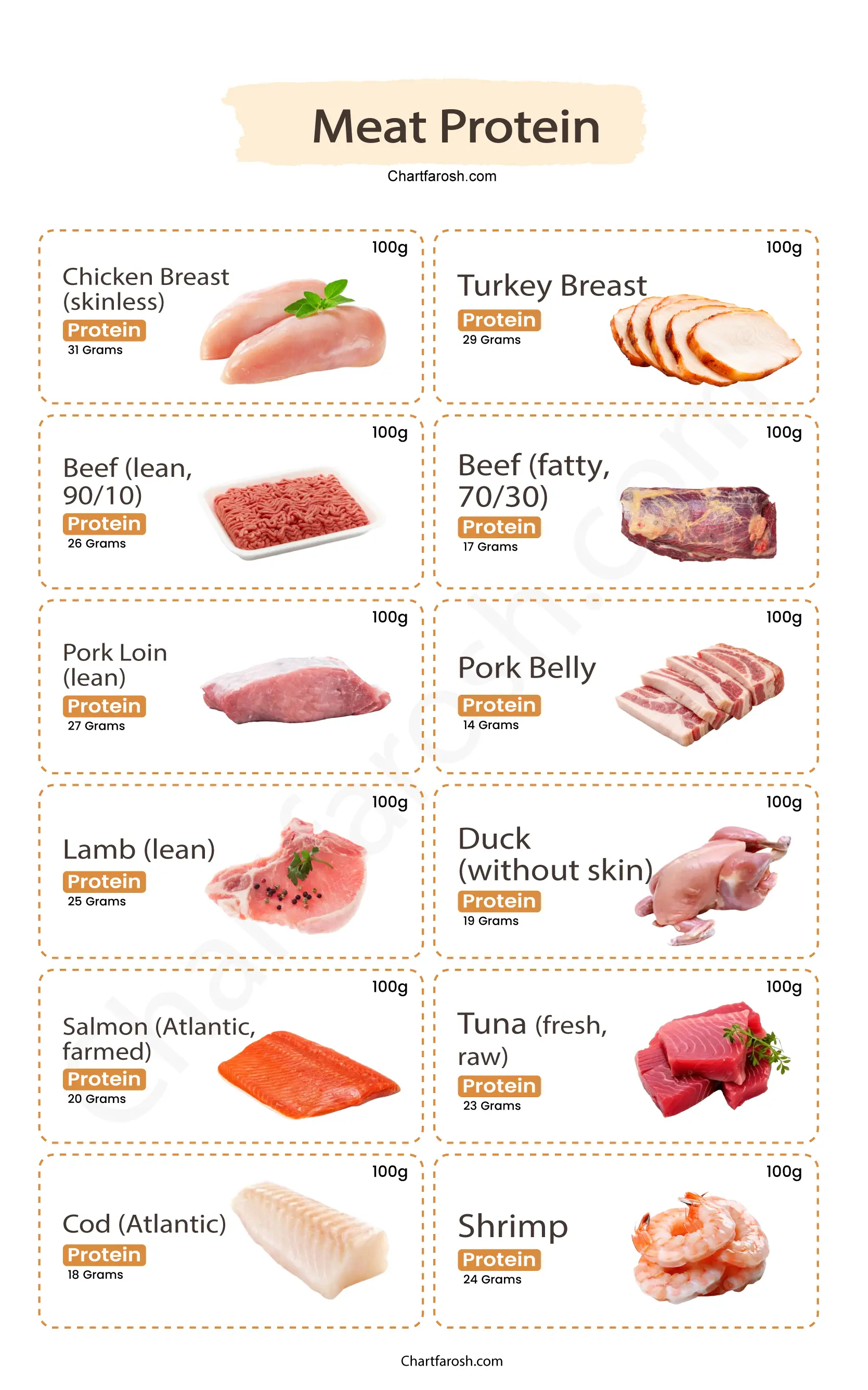
Table of Contents
Which Meat Has the Highest Protein
If you’ve ever wondered which meat gives you the biggest bang for your buck in terms of protein, lean cuts like chicken breast, turkey, and certain types of fish usually take the lead. For red meats, beef and goat can be excellent sources depending on the cut. The catch is that protein content isn’t the only factor, fat, cooking methods, and serving sizes matter too.
This is where a grams of protein in a meat chart is so handy. With a quick glance, you can compare chicken breast vs. beef steak vs. lamb chops and see which aligns best with your nutrition goals. Later, I’ll also share a printable meat protein chart so you can keep it handy in your kitchen or meal-prep binder.
| Meat Type | Serving Size | Protein | Calories | Fat | Notes |
| Chicken Breast (skinless) | 100g | 31g | 165 kcal | 3.6g | Very lean, high protein |
| Turkey Breast | 100g | 29g | 135 kcal | 1g | Lower fat than chicken |
| Beef (lean, 90/10) | 100g | 26g | 217 kcal | 10g | Rich in iron |
| Beef (fatty, 70/30) | 100g | 17g | 332 kcal | 28g | High fat, lower protein |
| Pork Loin (lean) | 100g | 27g | 190 kcal | 7g | Lean cut of pork |
| Pork Belly | 100g | 14g | 518 kcal | 53g | High fat, low protein |
| Lamb (lean) | 100g | 25g | 250 kcal | 20g | Rich flavor, moderate protein |
| Duck (without skin) | 100g | 19g | 140 kcal | 6g | Darker, fattier meat |
| Salmon (Atlantic, farmed) | 100g | 20g | 206 kcal | 13g | High in omega-3 fats |
| Tuna (fresh, raw) | 100g | 23g | 144 kcal | 1g | Lean fish, very high protein |
| Cod (Atlantic) | 100g | 18g | 82 kcal | 0.7g | Very lean white fish |
| Shrimp | 100g | 24g | 99 kcal | 0.3g | Low calorie, high protein |
| Eggs (whole, chicken) | 100g | 13g | 155 kcal | 11g | 1 large egg ≈ 6g protein |
Goat Meat Protein per 100g
Goat meat, also known as chevon or mutton (depending on age), is widely eaten around the world but often overlooked compared to beef or chicken. What many people don’t realize is that goat meat is surprisingly lean and high in protein, making it a fantastic choice for people who want a balance of flavor and nutrition.
Goat has a slightly lower fat content compared to beef and lamb, while still delivering a solid meat protein percentage. It’s also rich in iron and vitamin B12, which are important for energy and red blood cell health.
| Type of Goat Cut | Protein (g) | Fat | Calories | Protein % of Calories | Notes |
| Goat Leg (lean, roasted) | 27g | 9g | 198 | ~54% | High protein, lower fat than lamb. |
| Goat Shoulder (braised) | 25g | 11g | 210 | ~48% | Slightly fattier but still leaner than beef chuck. |
| Ground Goat (cooked) | 26g | 12g | 220 | ~47% | Great for kebabs or curries. |
| Goat Ribs (grilled) | 24g | 15g | 250 | ~42% | Richer flavor, higher fat. |
| Goat Loin (roasted) | 28g | 8g | 190 | ~59% | One of the leanest and most protein-dense cuts. |
| Goat Stew Meat (mixed cuts) | 25g | 10g | 205 | ~49% | Common for slow-cooked dishes. |
Camel Meat Protein per 100g
Camel meat is less common in Western diets but is a staple protein source in parts of the Middle East, Africa, and Asia. Nutritionally, camel is often leaner than beef and contains a good balance of protein and micronutrients like iron and zinc.
Camel’s taste is similar to beef but slightly sweeter, and because it’s lean, it’s often used in stews or ground form. For athletes or those looking for lean proteins, camel ranks surprisingly well in the Meat Protein Content Chart.
| Type of Camel Cut | Protein | Fat | Calories | Protein % of Calories | Notes |
| Camel Loin (grilled) | 27g | 7g | 180 | ~60% | Very lean, excellent protein-to-calorie ratio. |
| Camel Shoulder (braised) | 25g | 10g | 210 | ~48% | Tender when slow-cooked, higher fat. |
| Ground Camel (cooked) | 26g | 11g | 220 | ~47% | Popular for burgers and kebabs. |
| Camel Ribs (grilled) | 23g | 16g | 260 | ~40% | Flavorful but fattier cut. |
| Camel Stew Meat | 24g | 9g | 200 | ~48% | Works best for slow cooking. |
| Camel Sausages (varies) | 22g | 14g | 250 | ~38% | Often mixed with spices, higher in fat. |
Cow Meat Protein
Cow meat (beef) is one of the most widely consumed protein sources in the world. Its meat protein percentage varies depending on the cut, with lean cuts like sirloin or round steak offering the best protein-to-fat ratio, while ribeye and brisket are higher in fat.
Key Points about Beef Protein:
- Leaner cuts (sirloin, round, flank) = higher protein per calorie.
- Fattier cuts (ribeye, short ribs) = lower protein percentage but richer flavor.
- Ground beef protein depends heavily on fat % (90% lean vs 70% lean).
- Beef is also a top source of creatine, zinc, and vitamin B12.
Meat Protein Comparison Chart
Comparing meats side by side helps visualize which gives the most protein per serving. This meat protein chart per oz is especially useful for meal planning.
| Meat Type | Protein | Fat | Calories | Protein % of Calories | Notes |
| Chicken Breast | 31g | 3g | 165 kcal | ~75% | High protein, low fat, fitness staple. |
| Beef (Sirloin) | 27g | 8g | 200 kcal | ~54% | Balanced protein and fat. |
| Lamb (Leg) | 25g | 9g | 195 kcal | ~52% | Strong flavor, moderate fat. |
| Goat (Lean) | 27g | 9g | 198 kcal | ~54% | Leaner than lamb, nutrient-rich. |
| Camel (Loin) | 27g | 7g | 180 kcal | ~60% | Lean and high in protein. |
Meat vs Plant Protein Chart
Meat and plant proteins both have value, but they differ in amino acid profiles and digestibility. Meat is a complete protein (contains all essential amino acids), while many plant proteins need to be combined (like rice + beans) for the same effect.
Why Meat Protein Differs from Plant Protein:
- Amino Acids: Meat = complete; many plants = incomplete.
- Digestibility: Meat proteins are more bioavailable, meaning your body absorbs them efficiently.
- Nutrients: Meat also provides heme iron, zinc, and vitamin B12 (which plants don’t naturally offer).
FAQs
What meat has the most protein per 100g?
Chicken breast usually tops the charts with ~31g of protein per 100g, making it one of the leanest, most protein-dense meats. Goat and camel also score high on the meat protein chart per 100g compared to fattier cuts of beef or lamb.
How much protein is in 1 ounce of meat?
On average, 1 ounce of cooked meat contains 7–9 grams of protein. Chicken breast is on the higher end (~9g), while beef and lamb are closer to 7–8g. This is why a meat protein chart per ounce is handy when portioning meals.
Is goat meat healthier than beef?
Yes, in many ways. Goat is leaner, lower in cholesterol, and has a better meat protein percentage compared to many beef cuts. It’s also rich in iron and is often recommended for people looking for a lean red meat alternative.
Can I get enough protein from meat alone?
Technically yes, but balance matters. Meat provides complete protein and essential nutrients, but relying only on meat can increase saturated fat intake. Combining meat with vegetables, legumes, and whole grains gives a more balanced diet.
Do cooking methods change the protein content?
Not drastically. Cooking may slightly reduce protein digestibility, but the grams of protein in meat remain relatively stable. For example, 100g of raw chicken breast has ~31g protein, while cooked has ~27g due to water loss. The protein amount per calorie actually goes up after cooking.