Baby Food Chart by Month: Feeding Guide for Parents
When my first child started showing interest in food, watching every bite I took and reaching for my spoon, I realized how confusing baby feeding can feel, even if you’re not a first-time parent.
Questions like “Is this the right texture?”, “Am I feeding too much?”, or “Is my baby ready for this?” are incredibly common.
I am here to simplify that journey with a clear baby food chart by month, practical explanations, and safety-focused advice you can actually use day to day.
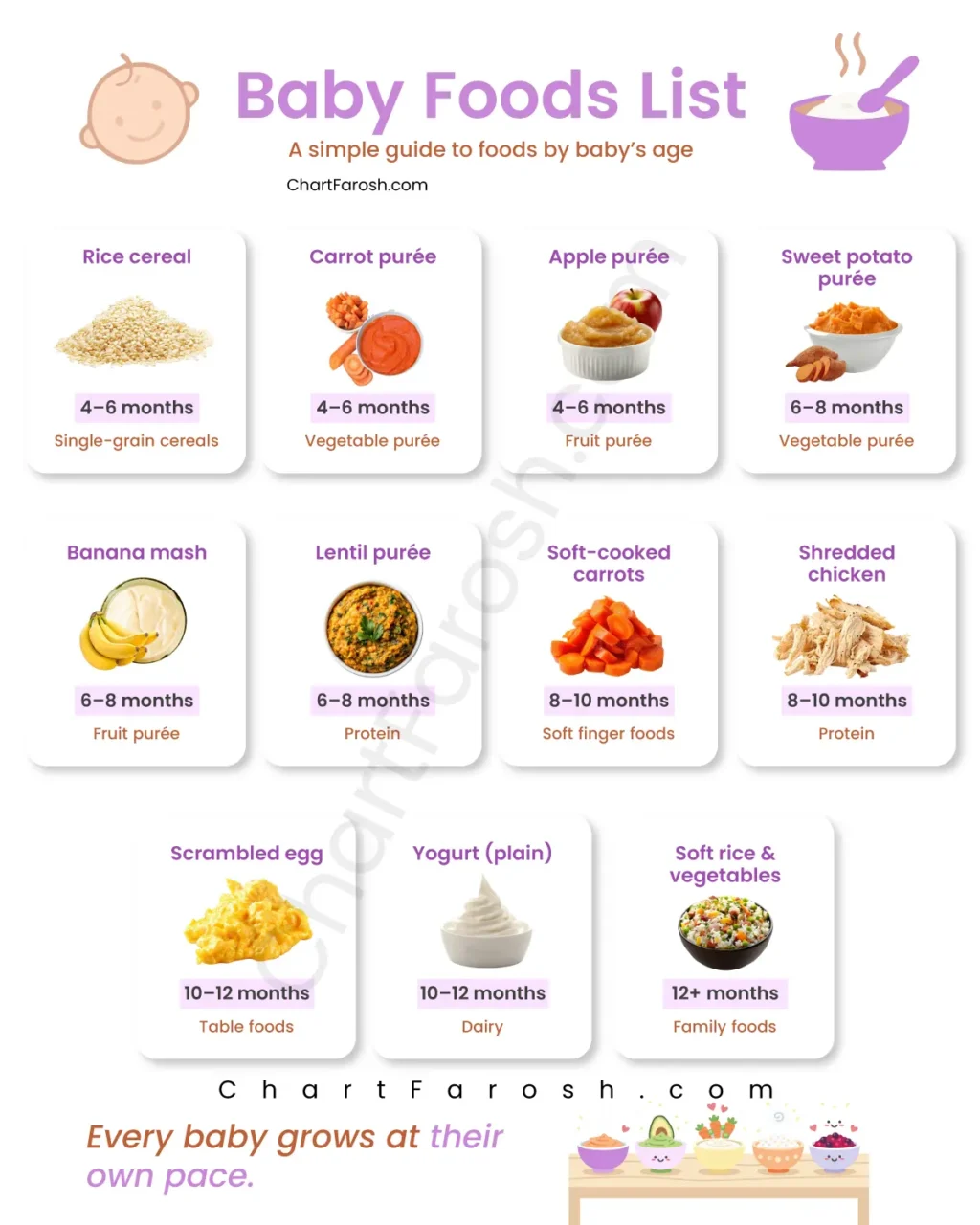
Table of Contents
Baby Food Chart by Age
This baby food chart by age gives an at-a-glance overview of what most babies can eat as they grow.
Remember, every baby develops at their own pace, these are general guidelines, not strict rules.
| Baby Age | Food Type | Food Item | Serving Size | Notes |
| 4–6 months | Single-grain cereals | Rice cereal | 1–2 tbsp | Mix with breast milk or formula |
| 4–6 months | Vegetable purée | Carrot purée | 1–2 tbsp | Smooth texture |
| 4–6 months | Fruit purée | Apple purée | 1–2 tbsp | No added sugar |
| 6–8 months | Vegetable purée | Sweet potato purée | 2–4 tbsp | Rich in vitamin A |
| 6–8 months | Fruit purée | Banana mash | 2–4 tbsp | Soft and easy to digest |
| 6–8 months | Protein | Lentil purée | 1–2 tbsp | Iron source |
| 8–10 months | Soft finger foods | Soft-cooked carrots | 2–4 tbsp | Cut into small pieces |
| 8–10 months | Protein | Shredded chicken | 2–3 tbsp | Well-cooked, soft |
| 10–12 months | Table foods | Scrambled egg | 2–4 tbsp | Fully cooked |
| 10–12 months | Dairy | Yogurt (plain) | 2–4 tbsp | No added sugar |
| 12+ months | Family foods | Soft rice & vegetables | ¼ cup | Avoid added salt |
Baby Food Chart by Month
A baby food chart by month is a helpful guide that shows what types of foods, textures, and feeding frequency are appropriate as your baby grows.
While every baby develops at their own pace, a month-by-month chart offers reassurance and structure-especially for new parents navigating solids for the first time.
This chart focuses on texture progression, nutritional needs, and feeding frequency, not strict rules.
| Baby Age | Food Texture | Example Foods | Meals per Day | Notes |
| 4–6 months | Smooth purées | Rice cereal, oat cereal, mashed banana, sweet potato purée | 1 | Introduce single ingredients; breast milk/formula remains main nutrition |
| 6–7 months | Thick purées | Lentil purée, apple purée, carrot mash, yogurt | 1–2 | Begin iron-rich foods; introduce spoon feeding |
| 7–8 months | Mashed & soft textures | Mashed avocado, scrambled egg, soft rice, mashed beans | 2 | Introduce allergens one at a time if approved by pediatrician |
| 8–9 months | Finger foods | Soft fruit pieces, steamed vegetables, toast strips | 2–3 | Encourage self-feeding; improve hand coordination |
| 9–10 months | Chopped foods | Finely chopped chicken, pasta, soft cheese | 3 | Baby begins chewing more effectively |
| 10–12 months | Family foods (modified) | Small portions of family meals, soft meats, cooked veggies | 3 + snacks | Avoid added salt, sugar, honey, and choking hazards |
When to Start Solid Foods
Deciding when to start solid foods is one of the most common and confusing milestones for parents.
While many people focus on age, developmental readiness is far more important than the calendar.
Most babies are ready to begin solids between 4 and 6 months, but not every baby will be ready at the same time, even siblings can differ.
A baby is typically ready for solid foods when they can sit upright with minimal support, hold their head steady, and show curiosity about what others are eating.
If your baby opens their mouth when food approaches, watches you eat, or tries to grab food, these are positive readiness signs.
Another important indicator is the disappearance of the tongue-thrust reflex, which causes babies to push food out of their mouth automatically.
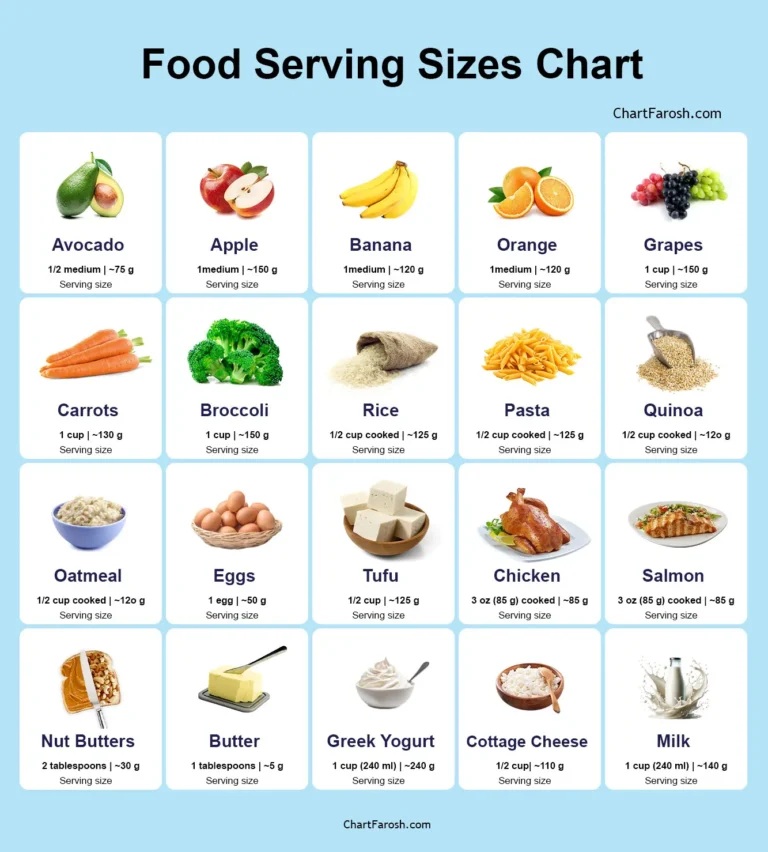
Baby Food Serving Sizes Explained
Serving sizes for babies are much smaller than many parents expect. Babies naturally regulate their intake, so forcing “one more bite” isn’t necessary.
| Age | Typical Serving Size (per food) | Notes |
| 4–6 months | 1–2 teaspoons | Slowly increase if baby wants more |
| 6–8 months | 1–3 tablespoons | Variety matters more than quantity |
| 8–10 months | 2–4 tablespoons | Introduce textures |
| 10–12 months | ¼ cup per food | Add healthy snacks |
| 12+ months | ¼–½ cup | Follow hunger cues |
Best First Foods for Babies
The best first foods are nutrient-dense, easy to digest, and low in allergy risk. Single-ingredient foods help you monitor reactions.
Great first food options include:
- Iron-fortified baby cereal (oat or rice)
- Sweet potato
- Carrot
- Avocado
- Banana
- Pear
- Apple (cooked and puréed)
Iron-rich foods are especially important, as a baby’s iron stores start to decrease around 6 months.
Baby Food Textures by Age
Texture progression is just as important as food choice. Introducing textures gradually helps with chewing, swallowing, and speech development.
| Age | Recommended Texture | Examples |
| 4–6 months | Smooth purée | Thin cereal, fruit purée |
| 6–8 months | Thick purée / mashed | Mashed banana, lentils |
| 8–10 months | Soft finger foods | Soft fruit cubes, pasta |
| 10–12 months | Finely chopped | Rice, minced chicken |
| 12+ months | Family textures | Soft table foods |
Delaying textures beyond 9–10 months may increase picky eating later.
Baby Food Safety Guidelines
Food safety is critical during infancy, as babies have developing immune systems.
Key safety tips:
- Always supervise eating
- Introduce new foods one at a time
- Cook foods thoroughly
- Avoid added salt and sugar
- Use age-appropriate textures
- Ensure baby sits upright during feeding
Wash hands, utensils, and preparation surfaces thoroughly to prevent contamination.
Foods to Avoid for Babies
Some foods pose choking, allergy, or health risks and should be avoided—especially in the first year.
| Food | Why Avoid |
| Honey | Risk of botulism (under 12 months) |
| Whole nuts | Choking hazard |
| Grapes (whole) | Choking hazard |
| Added salt | Strains kidneys |
| Added sugar | Promotes unhealthy habits |
| Cow’s milk (as drink) | Poor iron absorption |
| Hard/raw foods | Choking risk |
Allergenic foods like peanuts and eggs can be introduced early in safe forms, unless advised otherwise by a pediatrician.
Baby Feeding Schedule Overview
A baby feeding schedule provides structure, but it should always remain flexible. Babies grow rapidly during the first year, and their appetite can change from day to day based on growth spurts, teething, sleep patterns, and developmental leaps.
Rather than following a rigid timetable, think of a feeding schedule as a gentle rhythm that helps balance milk feeds and solid meals.
In the early months of solid feeding (4–6 months), solids are often offered once a day, usually after a milk feeding when your baby is relaxed and not overly hungry.
As your baby becomes more comfortable with eating, solid meals naturally increase in frequency.
By 6–8 months, most babies eat two meals per day, and by 8–10 months, three meals become the norm.
| Age | Milk Feeds | Solid Meals |
| 4–6 months | 5–6 | 1 small meal |
| 6–8 months | 4–5 | 2 meals |
| 8–10 months | 3–4 | 3 meals |
| 10–12 months | 3 | 3 meals + snacks |
| 12+ months | 2–3 | 3 meals + 2 snacks |
Quick Summary
- Start solids around 4–6 months
- Use a baby food chart by month
- Begin with smooth purées
- Focus on iron-rich and single-ingredient foods
- Avoid honey, added salt, sugar, and choking hazards
- Let your baby lead, appetite varies daily
FAQs
Can I start baby food at 4 months?
Yes, if your baby shows readiness signs, but many babies do better closer to 6 months.
How many times a day should I feed solids?
Start with once daily and gradually increase to three meals by 9–10 months.
Is homemade baby food better than store-bought?
Both can be healthy. Homemade offers control, while store-bought is convenient-just read labels carefully.
When can babies eat finger foods?
Usually around 8 months, when they can sit well and bring food to their mouth.
What if my baby refuses food?
This is normal. Keep offering without pressure-exposure builds acceptance over time.