Centipede Lifespan: How Long Do Centipedes Live by Type
A house centipede shot across my bathroom floor one night, all legs and speed. I nearly stepped on it. I assumed it was a short-lived bug. I was wrong. That centipede could live longer than a pet hamster.
The centipede lifespan is long for such a small creature. House centipedes live 3 to 7 years. Giant tropical species can pass 10 years. That is far longer than most insects, which live weeks.
Below you will find a full chart of centipede life spans by type. After the chart, I explain the life cycle and why these arthropods live so long. You will also see what shortens their lives and whether they belong in your home.
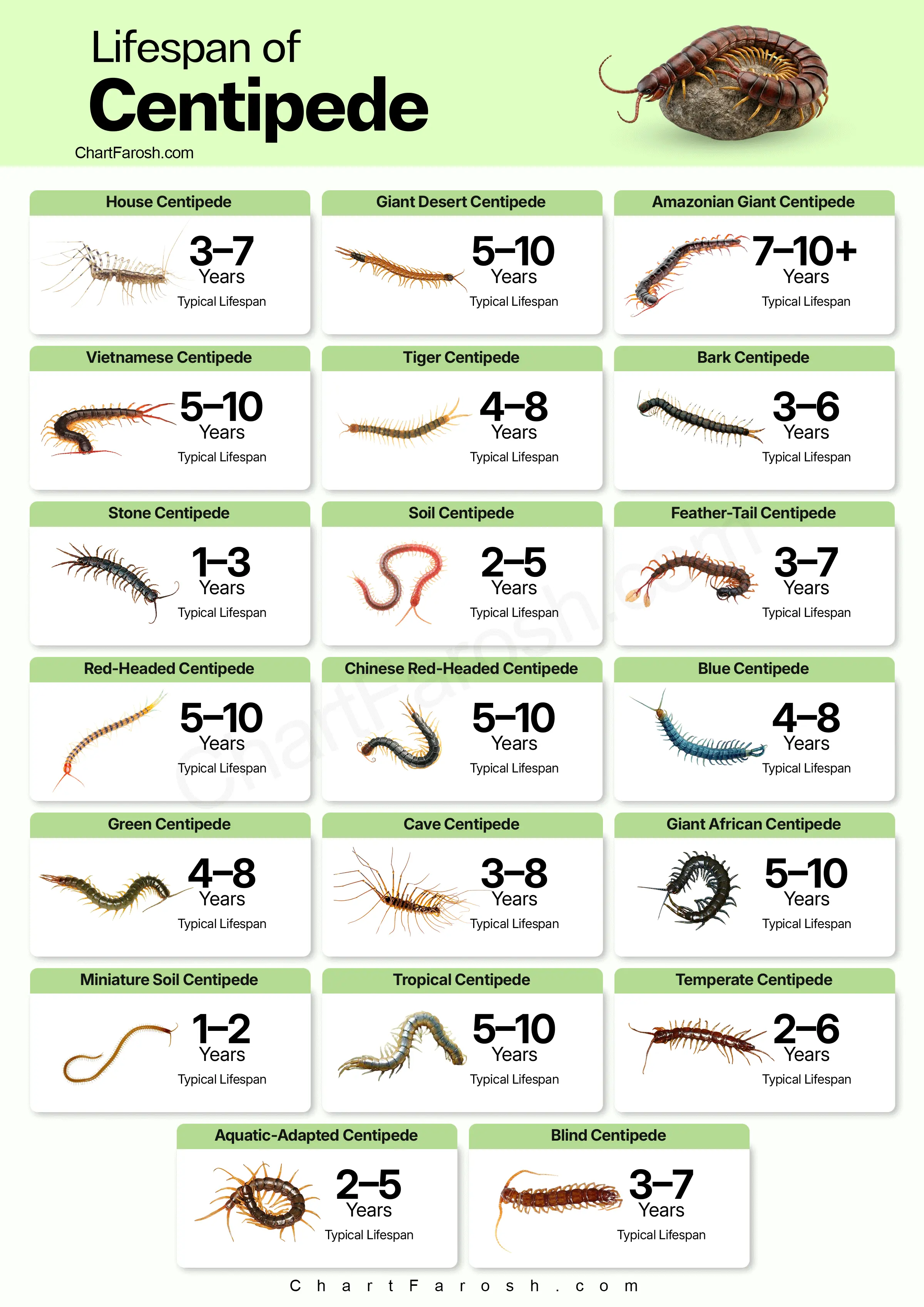
Table of Contents
Centipede Lifespan chart
Here are the key facts on centipedes at a glance.
| Feature | Details |
| Group | Centipedes (class Chilopoda, arthropods) |
| Typical lifespan | 3 to 7 years |
| Longest-lived | Amazonian giant centipede, 7 to 10+ years |
| Shortest-lived | Miniature soil centipede, 1 to 2 years |
| Legs | One pair per body segment |
| Diet | Insects, spiders, worms (large ones eat small animals) |
| Venomous? | Yes, but most bites are mild |
| Found | Damp, dark places |
Centipede Lifespan by Type
A centipede’s life span is long for an arthropod. Most live 3 to 7 years. Some giant species pass 10. The chart below shows common centipedes and how long they live.
| Centipede Type | Typical Lifespan |
| House Centipede | 3-7 years |
| Giant Desert Centipede | 5-10 years |
| Amazonian Giant Centipede | 7-10+ years |
| Vietnamese Centipede | 5-10 years |
| Tiger Centipede | 4-8 years |
| Bark Centipede | 3-6 years |
| Stone Centipede | 1-3 years |
| Soil Centipede | 2-5 years |
| Feather-Tail Centipede | 3-7 years |
| Red-Headed Centipede | 5-10 years |
| Chinese Red-Headed Centipede | 5-10 years |
| Blue Centipede | 4-8 years |
| Green Centipede | 4-8 years |
| Cave Centipede | 3-8 years |
| Giant African Centipede | 5-10 years |
| Miniature Soil Centipede | 1-2 years |
| Tropical Centipede | 5-10 years |
| Temperate Centipede | 2-6 years |
| Aquatic-Adapted Centipede | 2-5 years |
| Blind Centipede | 3-7 years |
These numbers stand out among small creatures. Most insects live weeks or months. A centipede can outlive them by years.
How Long Do Centipedes Live?
Most centipedes live 3 to 7 years. That is a long time for a bug-sized animal. The giant tropical kinds live even longer, often 5 to 10 years.
The Amazonian giant centipede tops the list. It can live 7 to 10 years or more. Its large size and slow growth go hand in hand with its long life.
The smallest centipedes live the shortest. The miniature soil centipede lasts 1 to 2 years. Even so, that beats the few weeks most insects get.
Why Do Centipedes Live So Long?
Centipedes grow slowly. They take years to reach full size. Slow growth often goes with a long life.
They keep molting their whole lives. Each molt lets a centipede repair and renew its body. This helps it last far longer than a short-lived insect.
Centipedes are also skilled hunters. They catch prey and dodge threats with speed and venom. A predator that survives well tends to live longer.
The Centipede Life Cycle
A centipede passes through three broad stages. Egg, juvenile, and adult. The path from egg to adult can take years.
| Stage | How Long | What Happens |
| Egg | Weeks to months | Laid in soil; many mothers guard them |
| Juvenile | Months to years | Adds legs and segments with each molt |
| Adult | Several years | Hunts, breeds, and keeps molting |
Eggs and Maternal Care
Many centipedes lay eggs in damp soil. The mother often curls around them to guard the clutch. She keeps the eggs clean and safe until they hatch.
Growing Legs Over Time
Some centipedes hatch with fewer legs than adults. They add more legs and segments with each molt. Over time they reach the full leg count for their kind.
Are Centipedes Insects?
Centipedes are not insects. They are arthropods in a group called myriapods. Insects have six legs, while a centipede has far more.
| Feature | Centipede | Millipede |
| Legs per segment | One pair | Two pairs |
| Speed | Fast hunter | Slow crawler |
| Diet | Other animals | Dead plants |
| Defense | Venom bite | Curls up, bad smell |
People also mix up centipedes and millipedes. A centipede has one pair of legs per segment and hunts other animals. A millipede has two pairs per segment and eats dead plants.
Types of Centipedes and Their Lifespans
Centipedes come in many forms. Their life spans line up with size and habitat. Here are the main groups.
House Centipedes
The house centipede is the one you meet indoors. It is fast, with long legs and a flat body. It lives 3 to 7 years and hunts other household pests.
Giant Tropical Centipedes
Giant centipedes live in warm, wet regions. The Amazonian, Vietnamese, and Chinese red-headed centipedes belong here. These large hunters live 5 to 10 years or more.
Soil and Stone Centipedes
Soil and stone centipedes stay hidden in the ground. They are smaller and live in leaf litter or under rocks. Their life spans run from 1 to 6 years.
Which Centipede Lives the Longest?
The Amazonian giant centipede holds the record. It can live 7 to 10 years or more. Its size and slow growth give it the longest run.
Several others reach 5 to 10 years. The Vietnamese, red-headed, and giant African centipedes all last that long. Warm, stable homes help these species live their full span.
Smaller, cold-climate centipedes live shorter lives. They face harsher seasons and more predators. Most settle in the 1 to 6 year range.
What Do Centipedes Eat?
Centipedes are hunters, not scavengers. They eat insects, spiders, and worms. A house centipede clears your home of roaches, silverfish, and flies.
The big species take larger prey. Giant centipedes catch lizards, frogs, and even small mice. Some climb to hunt, and a few have been seen catching bats.
They use venom to subdue a meal. The front legs work like fangs and inject it. The centipede then holds the prey while it feeds.
Are Centipede Bites Dangerous?
Centipedes carry venom, but most bites are mild. A house centipede rarely breaks human skin. If it does, the sting feels like a small pinch.
Big tropical centipedes pack a stronger bite. Their venom can cause sharp pain, swelling, and redness. The pain fades within hours for most people.
Serious harm is rare but possible. Some people react badly and need care, much like a bad bee sting. Wash a bite, use a cold pack, and watch for a strong reaction.
Where Do Centipedes Live?
Centipedes need damp, dark spots. Outdoors they hide in soil, leaf litter, and under rocks or logs. Moisture keeps their bodies from drying out.
Indoors they head for the wet rooms. Basements, bathrooms, and crawl spaces draw them in. A leaky pipe or damp corner is a perfect home.
They hunt at night and rest by day. You often spot one only when it darts across a floor. By daylight it is tucked away out of sight.
How to Keep Centipedes Out of Your House
Centipedes come inside for moisture and food. Cut both and they leave. Start with the damp.
Fix leaks and run a dehumidifier in basements. Dry air makes a home far less inviting. Clear clutter where they like to hide.
Reduce other bugs as well. Centipedes follow their prey, so fewer insects means fewer centipedes. Seal cracks around doors, windows, and pipes to block the way in.
Frequently Asked Questions
How long do centipedes live?
Most centipedes live 3 to 7 years. Giant tropical species can live 10 years or more. The smallest live 1 to 2 years.
Are centipedes insects?
No. Centipedes are arthropods called myriapods. Insects have six legs, while a centipede has many more.
Which centipede lives the longest?
The Amazonian giant centipede. It can live 7 to 10 years or more, the longest of any common centipede.
Are centipedes dangerous to people?
Most are not. A house centipede bite is mild and rare. Large tropical centipedes give a painful bite, but serious harm is uncommon.
What do centipedes eat?
Centipedes hunt insects, spiders, and worms. Larger species also catch lizards, frogs, and small mice. They use venom to subdue prey.
What is the difference between a centipede and a millipede?
A centipede has one pair of legs per segment and hunts. A millipede has two pairs per segment and eats dead plants.
How do I keep centipedes out of my house?
Cut indoor moisture with leak repairs and a dehumidifier. Reduce other bugs and seal cracks around doors, windows, and pipes.