Types of Mosquitoes
I used to think a mosquito was just a mosquito. Then I spent a humid week getting bitten in broad daylight, which did not match the bug I blamed for keeping me awake at night. It turned out I was dealing with two different flying insects on two different schedules.
That small puzzle led me to a bigger one. Public health agencies call the mosquito the deadliest animal on Earth, and the danger depends entirely on which kind bites you. One species spreads malaria, another spreads dengue, and a few spread nothing at all.
More than 3,500 mosquito species live worldwide. The chart below covers the 15 that people meet and search for most, with their colors, the diseases they carry, when they bite, and where they breed.
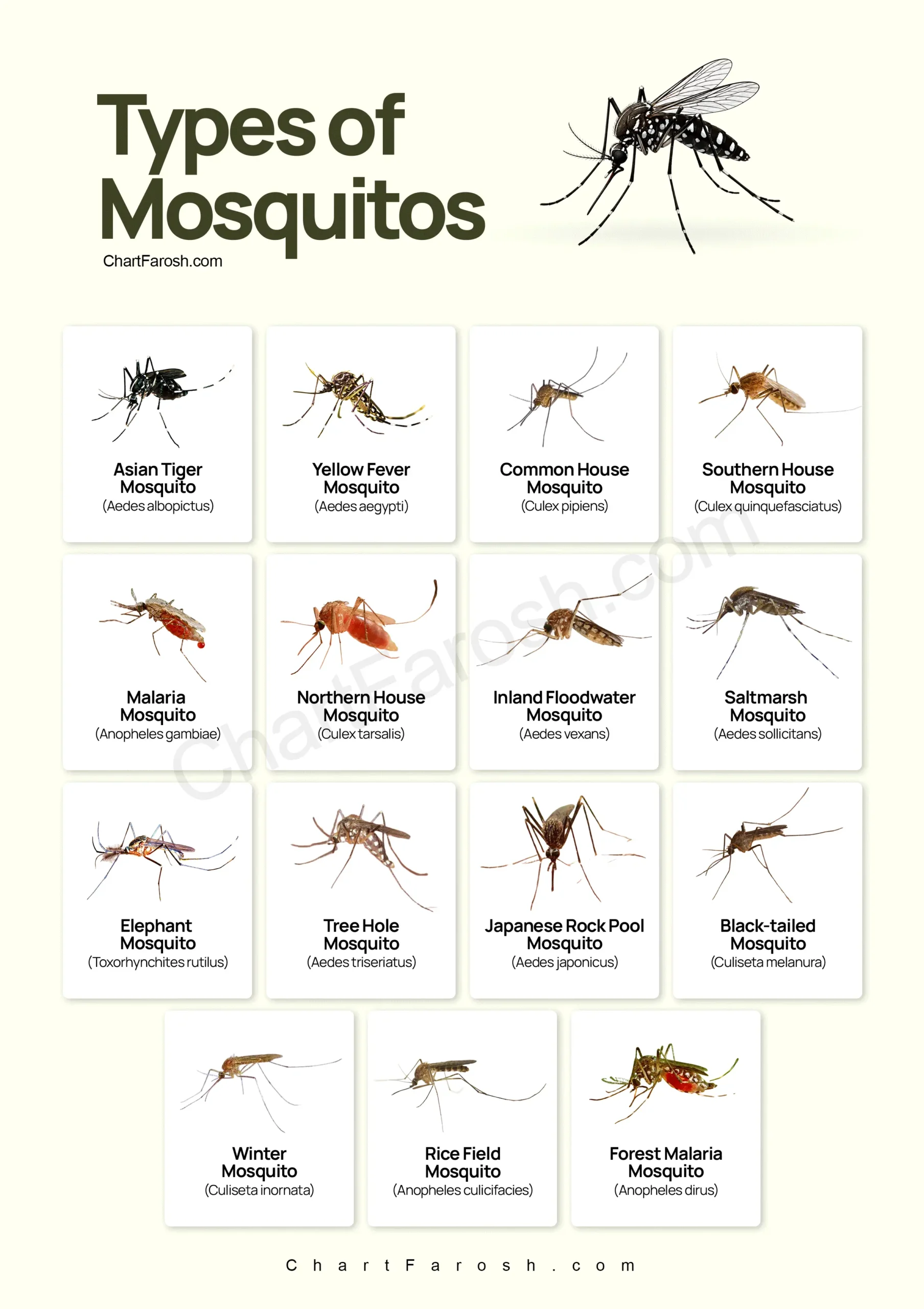
Table of Contents
Mosquito types and their names
Mosquitoes are true flies in the order Diptera, which makes them relatives of the common house fly. They share one trait that shapes everything else: only the females bite. A female needs a blood meal to make eggs, while males feed on nectar and harm no one.
The table lists 15 well-known species. Most disease risk traces back to three groups, named Aedes, Anopheles, and Culex. The colors, bite times, and breeding sites in the chart are the fastest way to sort one from another.
| Common name | Scientific name | Color / markings | Diseases spread | Active time | Habitat |
| Asian tiger mosquito | Aedes albopictus | Black with white stripes | Dengue, Zika, chikungunya | Day | Urban areas, gardens |
| Yellow fever mosquito | Aedes aegypti | Dark, white leg bands | Yellow fever, dengue, Zika, chikungunya | Day | Near homes, containers |
| Common (northern) house mosquito | Culex pipiens | Light brown to gray | West Nile, St. Louis encephalitis | Night | Stagnant standing water |
| Southern house mosquito | Culex quinquefasciatus | Brown, pale bands | Lymphatic filariasis, West Nile | Night | Drains, polluted water |
| African malaria mosquito | Anopheles gambiae | Spotted wings | Malaria | Night | Clean, still water |
| Western encephalitis mosquito | Culex tarsalis | Black, white leg bands | West Nile, Western equine and St. Louis encephalitis | Evening to night | Marshes, irrigated fields |
| Inland floodwater mosquito | Aedes vexans | Brown, pale scales | Dog heartworm; minor virus risk | Evening | Flooded grassland |
| Eastern saltmarsh mosquito | Aedes sollicitans | Dark, white bands | Eastern equine encephalitis, dog heartworm | Evening | Coastal marshes |
| Elephant mosquito | Toxorhynchites rutilus | Metallic blue-green | None; does not bite people | Day | Tree holes, containers |
| Eastern tree hole mosquito | Aedes triseriatus | Dark brown | La Crosse encephalitis | Day | Tree holes |
| Asian rock pool mosquito | Aedes japonicus | Dark, bronze scales | West Nile (potential) | Day | Rock pools, containers |
| Black-tailed mosquito | Culiseta melanura | Dark body | Eastern equine encephalitis (in birds) | Night | Swamps |
| Winter mosquito | Culiseta inornata | Large, gray-brown | Rarely spreads disease | Cool evenings | Cold wetlands |
| Rice field mosquito | Anopheles culicifacies | Pale spotted wings | Malaria | Night | Rice paddies |
| Forest malaria mosquito | Anopheles dirus | Dark brown | Severe malaria | Night | Tropical forests |
Disease links describe where a species is a known or suspected vector. Risk varies by region, and many bites pass on nothing at all.
The three mosquito groups that matter most
Most disease-carrying mosquitoes fall into three groups. Telling them apart helps you judge the risk and pick the right time to take cover. The table sets Aedes, Anopheles, and Culex side by side.
| Trait | Aedes | Anopheles | Culex |
| Main diseases | Dengue, Zika, yellow fever, chikungunya | Malaria | West Nile, encephalitis, filariasis |
| Active time | Daytime | Dusk to dawn | Night |
| Resting posture | Body parallel to surface | Body tilted, tail up | Body parallel, hunched |
| Breeding site | Small clean-water containers | Clean, still natural water | Stagnant, polluted water |
| Key markings | Black with white stripes | Spotted wings | Plain brown body |
Most dangerous mosquitoes
A small number of species cause nearly all the harm. The Anopheles mosquitoes carry malaria, a parasite that still kills hundreds of thousands of people a year. The World Health Organization recorded about 597,000 malaria deaths in 2023, and most of the victims were young children in sub-Saharan Africa.
Aedes aegypti, the yellow fever mosquito, is the other major threat. It spreads dengue, Zika, yellow fever, and chikungunya, and it lives close to people in tropical cities. Its relative the Asian tiger mosquito carries many of the same viruses and has spread far beyond Asia. Both bite in daylight, which catches people off guard.
Dengue alone now sickens tens of millions of people a year, and its range keeps growing as cities warm and spread. In the United States the bigger worry is West Nile virus, which Culex mosquitoes pass from birds to people. Most West Nile infections cause no symptoms, but a small share turn into serious illness, so the warnings still matter.
Mosquitoes that do not spread disease
Not every mosquito is a threat. The elephant mosquito (Toxorhynchites) is the giant of the family and never bites people, since the adults feed on nectar. Its larvae act as beneficial insects, because they hunt and eat the larvae of biting species.
The winter mosquito and a few others rarely pass illness to humans. They still bite and annoy, but they sit far down the list of health concerns. Knowing which mosquitoes are harmless saves a lot of needless worry.
Mosquitoes also feed plenty of other animals. Dragonflies, spiders, bats, and birds all eat them in large numbers, which keeps populations in check.
Day biters and night biters
Timing is one of the easiest clues to a mosquito’s identity. Aedes species, including the tiger and yellow fever mosquitoes, feed in daylight and often aim for the ankles. Anopheles and Culex species feed from dusk through the night, which is why bed nets work so well against malaria.
This split matters for protection. Daytime cover guards against dengue and Zika, while evening cover guards against malaria and West Nile. A repellent that lasts into the night handles both.
Mosquitoes by region
Africa carries the heaviest burden. Anopheles gambiae breeds in clean, sunlit pools across the continent and drives most of the world’s malaria. Control there leans on bed nets, indoor spraying, and draining standing water.
Asia faces malaria too, from rice-field and forest species like Anopheles culicifacies and Anopheles dirus. The Americas and Europe deal more with Aedes and Culex, which spread dengue, West Nile, and several forms of encephalitis. Warmer weather has pushed the tiger mosquito into new parts of both regions.
How mosquitoes breed and grow
Every mosquito starts in water. A female lays her eggs on or near standing water, and within days they hatch into wriggling larvae. The larvae feed and molt, turn into comma-shaped pupae, and emerge as flying adults, often in under two weeks in warm weather.
This is why standing water sits at the heart of mosquito control. A bottle cap of water can raise a brood, and a clogged gutter can raise thousands. Tipping out containers once a week breaks the cycle before the next generation takes flight.
How to identify a mosquito and avoid bites
A few simple checks help you read a mosquito and lower your risk.
- Wings: spotted wings suggest an Anopheles malaria mosquito.
- Markings: bold white stripes or leg bands point to an Aedes species.
- Posture: a body tilted tail-up at rest is a sign of Anopheles.
- Timing: note whether it bites by day or after dark.
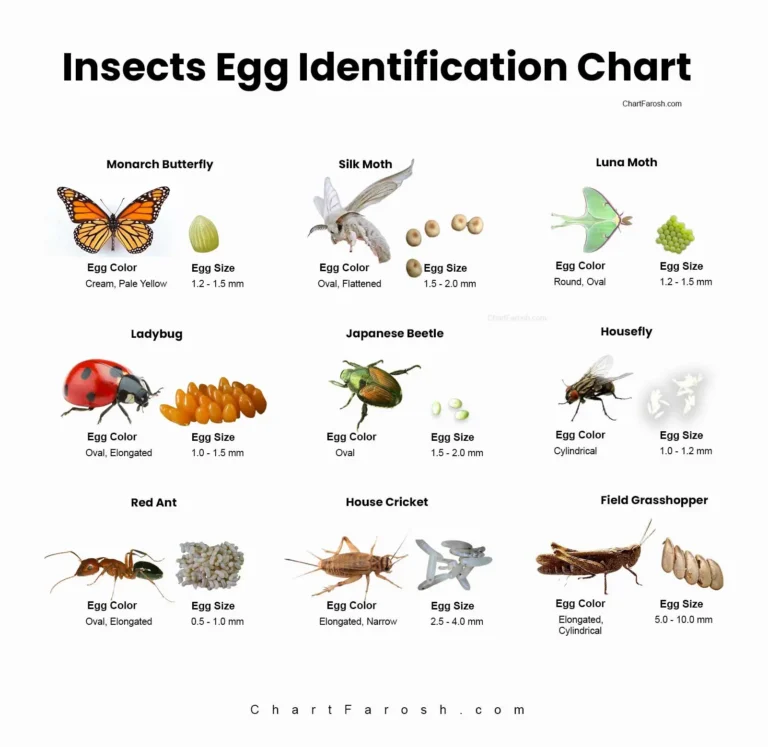
- Water: empty the containers, gutters, and old tires where larvae grow, which you can match in an insect egg identification reference.
- Cover: use screens, nets, and repellent during the active hours for your area.
FAQs
How many types of mosquitoes are there?
More than 3,500 species live worldwide. Only a few groups matter for human disease, led by Aedes, Anopheles, and Culex.
Which mosquito spreads malaria?
Anopheles mosquitoes spread the malaria parasite, with Anopheles gambiae the main vector in Africa. The WHO recorded about 597,000 malaria deaths in 2023.
Do all mosquitoes bite?
No. Only females bite, because they need a blood meal to produce eggs. Males feed on nectar.
Which mosquito is the most dangerous?
The Anopheles malaria mosquitoes cause the most deaths. Aedes aegypti spreads dengue, Zika, yellow fever, and chikungunya to billions of people at risk.
Are there mosquitoes that do not spread disease?
Yes. The elephant mosquito (Toxorhynchites) does not bite people, and its larvae eat the larvae of biting mosquitoes.
What time of day do mosquitoes bite?
It depends on the species. Aedes bite by day, while Anopheles and Culex mostly bite from dusk through the night.
How do I tell mosquito types apart?
Look at the markings, the resting posture, and the bite time. Spotted wings point to Anopheles, and bold white stripes point to Aedes.