Horse Fly Lifespan: How Long They Live and Their Full Life Cycle
A horse fly chased me across a lake dock last August. It would not quit. When it finally landed and bit, it felt like a hot pin. I learned later that the female does all the biting, and she lives only a month or two.
The horse fly lifespan is short as an adult but long as a whole. Most adult horse flies live 30 to 60 days. The full life cycle, from egg to death, runs 1 to 2 years. Most of that time is spent as a larva in mud or water.
Below you will find a full chart of horse fly life spans by species. After the chart, I walk through each life stage and what the adults do. You will also see why their bites hurt and how to keep them away.
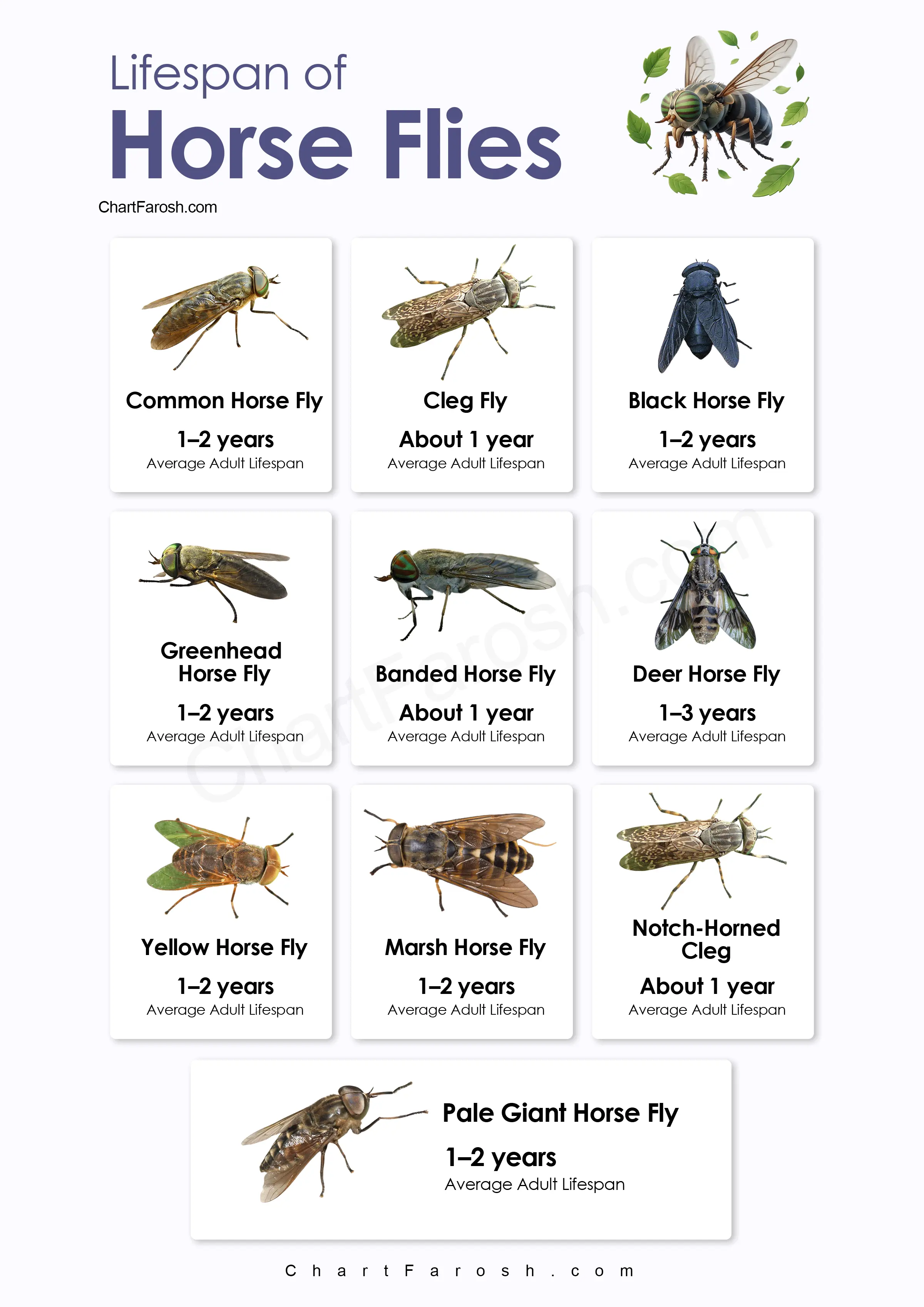
Table of Contents
Horse Fly Lifespan by Species
A horse fly’s life span splits into two numbers. The adult stage is short. The full life cycle is long. The chart below shows both for ten common species.
| Horse Fly Type | Scientific Name | Adult Lifespan | Total Life Cycle | Notes |
| Common Horse Fly | Tabanus bromius | 30-60 days | 1-2 years | Common livestock pest |
| Cleg Fly | Haematopota pluvialis | 1-2 months | About 1 year | Known for painful bites |
| Black Horse Fly | Tabanus atratus | 1-2 months | 1-2 years | One of the largest horse flies |
| Greenhead Horse Fly | Tabanus nigrovittatus | 1-2 months | 1-2 years | Common in coastal marshes |
| Banded Horse Fly | Tabanus lineola | 30-60 days | About 1 year | Often attacks cattle |
| Deer Fly | Chrysops spp. | 1-2 months | 1-3 years | Closely related to horse flies |
| Yellow Horse Fly | Atylotus spp. | 1-2 months | 1-2 years | Found near wetlands |
| Marsh Horse Fly | Tabanus sudeticus | 1-2 months | 1-2 years | Large European species |
| Notch-Horned Cleg | Haematopota italica | 1-2 months | About 1 year | Active in warm weather |
| Pale Giant Horse Fly | Tabanus bovinus | 1-2 months | 1-2 years | Among the largest horse flies |
Adult horse flies live 30 to 60 days. The whole cycle, from egg to adult, runs 1 to 2 years. Most of that time passes out of sight, underground or in water.
How Long Do Horse Flies Live as Adults?
An adult horse fly lives 30 to 60 days. That is its whole life above ground. In those weeks it mates, feeds, and lays the next batch of eggs.
Only the female bites. She needs a blood meal to grow her eggs. She cuts the skin and laps the blood that pools up.
Males never bite at all. They feed on nectar and pollen from flowers. Their main task is to find and mate with females.
| Feature | Female | Male |
| Bites people or animals? | Yes | No |
| Main food | Blood and nectar | Nectar only |
| Main role | Feeds on blood to grow eggs | Mates with females |
The Horse Fly Life Cycle
The horse fly moves through four stages. Egg, larva, pupa, and adult. The larva stage takes up most of the year or more.
| Stage | How Long | What Happens |
| Egg | Less than a week | Laid in clusters on plants near water |
| Larva | Months to over a year | Lives in mud or water; the longest stage |
| Pupa | 1 to 3 weeks | Rests in drier soil before changing |
| Adult | 30 to 60 days | Mates and feeds; females bite for blood |
Females lay eggs in clusters on plants near water. The larvae hatch and drop into mud or shallow water. They hunt small prey there and live for months.
When ready, the larva moves to drier soil and forms a pupa. A few weeks later the adult breaks free. The new fly has only weeks to live, so it gets to work fast.
Horse Fly Species and Their Lifespans
There are many horse fly species, and their life spans line up closely. Most adults live 1 to 2 months. The full cycle runs about 1 to 2 years for the group.
The common horse fly, Tabanus bromius, is a known livestock pest across Europe. The black horse fly, Tabanus atratus, and the pale giant, Tabanus bovinus, are among the largest. Their size makes a bite feel even worse.
The greenhead, Tabanus nigrovittatus, swarms coastal marshes in summer. Cleg flies, in the genus Haematopota, bite quietly and catch you off guard. The deer fly, in the genus Chrysops, is a smaller cousin with patterned wings.
Why Horse Fly Bites Hurt
A horse fly bite stings far more than a mosquito’s. The reason sits in the mouth. The female does not pierce like a needle.
Her mouthparts work like tiny blades. They slice the skin open so blood can pool. Then she laps it up while her saliva keeps the blood flowing.
That cut, plus the saliva, is what causes the sharp pain and swelling. Many people get itching and a raised welt for days. Keep the bite clean to avoid infection.
How to Keep Horse Flies Away
Horse flies are strong, stubborn fliers. You cannot swat your way out of a swarm. A few steps cut down the bites.
Wear light colors and cover your skin. Horse flies track dark, moving shapes. Long sleeves and pale clothing make you a harder target.
Use a repellent with DEET or picaridin. Sit near a fan when you can, since horse flies struggle in moving air. For horses, fly sheets, masks, and traps lower the daily bite count.
Stay away from open water and marshes on hot, still afternoons. That is when horse flies hunt most. In a breeze or indoors, they leave you alone.
Frequently Asked Questions
How long do horse flies live?
An adult horse fly lives 30 to 60 days. The full life cycle, from egg to adult, takes 1 to 2 years. Most of that time is spent as a larva.
Do all horse flies bite?
No. Only female horse flies bite. They need blood to grow their eggs. Males feed on nectar and never bite.
Why do horse fly bites hurt so much?
The female cuts the skin with blade-like mouthparts instead of piercing it. The open cut and her saliva cause sharp pain and swelling.
Where do horse flies lay their eggs?
Females lay eggs on plants near water. The larvae drop into mud or shallow water, where they live and feed for months.
How do I get rid of horse flies?
Wear light clothing, use DEET or picaridin, and sit near a fan. Traps and fly sheets help around horses and livestock.