Gnat Lifespan Chart
Last August I left a half-open bag of potting soil on my balcony for a week. When I came back, a small cloud of tiny flies hung over it. I figured they would be gone in a day. Gnats are tiny. How long could they last?
Longer than I thought. The adult I was swatting might live only a week. But the gnat as a whole, from egg to grub to adult, can run for a month. A few kinds keep going for close to a year. The short-lived adult is just the last act.
That gap is the whole story of gnat lifespan. Most of a gnat’s life happens out of sight, in soil, drains, or water. The flying adult you notice has one job left and not much time to do it.
Below you will find 20 common gnat types. For each one I give how long the adult lives, how long the full life cycle takes, and whether it bites. Start with the master chart, then jump to the group that matches the gnat bugging you.
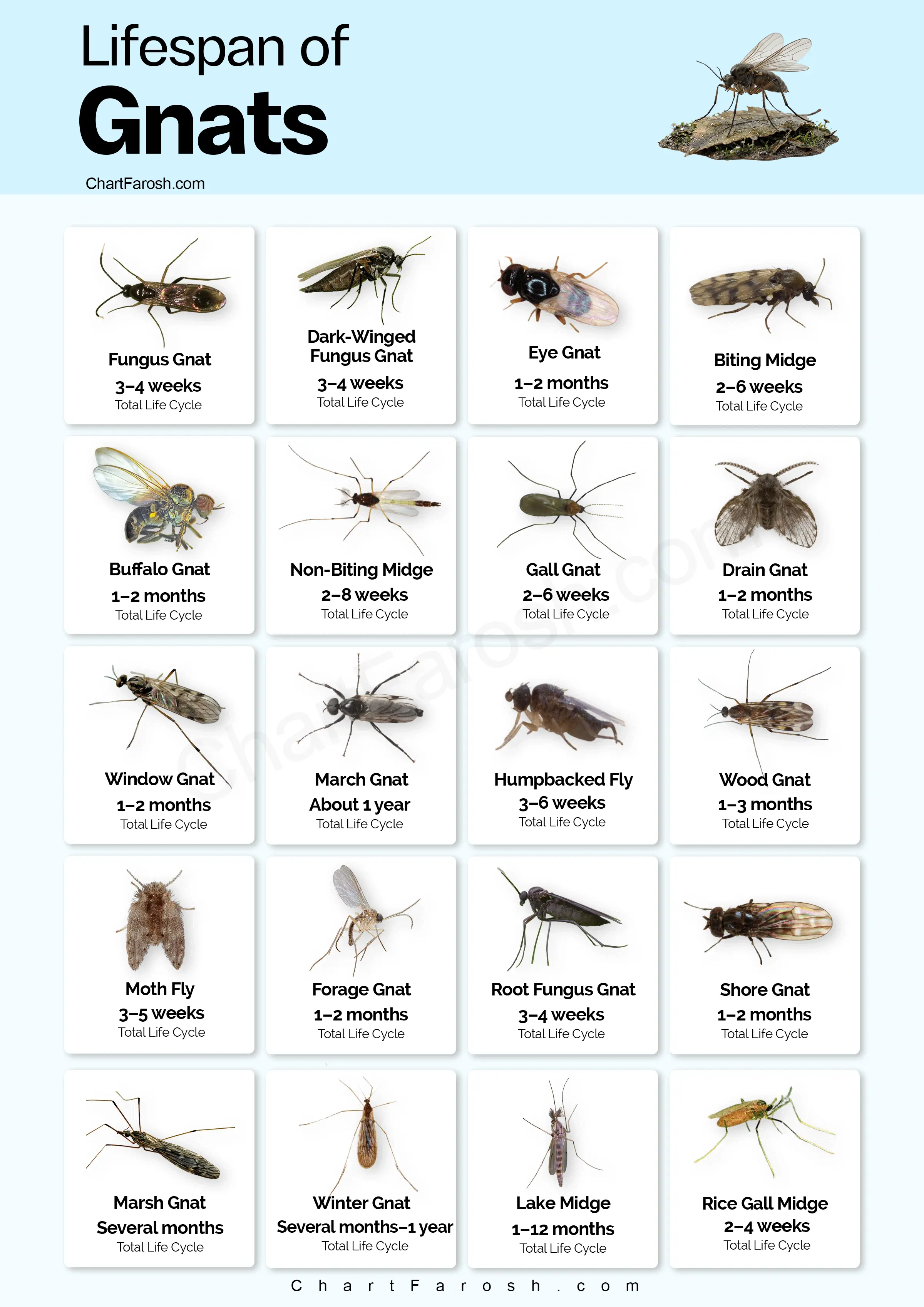
Table of Contents
Gnat Lifespan Chart: All 20 Types at a Glance
Adult lifespan and full life cycle are two different numbers. The adult is the winged stage you see. The full cycle counts the egg, the larva, and the pupa too. Read both columns together.
| Gnat Type | Scientific Name | Adult Lifespan | Full Life Cycle | Bites Humans? |
| Fungus Gnat | Sciaridae spp. | 7–10 days | 3–4 weeks | No |
| Dark-Winged Fungus Gnat | Bradysia spp. | 5–8 days | 3–4 weeks | No |
| Root Fungus Gnat | Lycoriella spp. | 5–10 days | 3–4 weeks | No |
| Forage Gnat | Cordyla spp. | 1–2 weeks | 1–2 months | No |
| Drain Gnat | Psychoda spp. | 1–3 weeks | 1–2 months | No |
| Window Gnat | Sylvicola spp. | 1–2 weeks | 1–2 months | No |
| Humpbacked Fly | Phoridae spp. | 1–2 weeks | 3–6 weeks | No |
| Black Scavenger Gnat | Scatopse spp. | 2–5 days | 3–4 weeks | No |
| Biting Midge | Culicoides spp. | 10–20 days | 2–6 weeks | Yes |
| Buffalo Gnat | Simulium spp. | 2–3 weeks | 1–2 months | Yes |
| Eye Gnat | Liohippelates spp. | 2–4 weeks | 1–2 months | No |
| Non-Biting Midge | Chironomidae spp. | 3–7 days | 2–8 weeks | No |
| Lake Midge | Chironomus plumosus | 3–5 days | 1–12 months | No |
| Phantom Midge | Chaoborus spp. | 5–10 days | 2 months–1 year | No |
| Shore Gnat | Scatella spp. | 1–3 weeks | 1–2 months | No |
| Marsh Gnat | Limoniidae spp. | 1–2 weeks | Several months | No |
| March Gnat | Bibio spp. | 5–10 days | About 1 year | No |
| Winter Gnat | Trichocera spp. | 1–3 weeks | Several months–1 year | No |
| Gall Gnat | Cecidomyiidae spp. | 1–5 days | 2–6 weeks | No |
| Rice Gall Midge | Orseolia oryzae | 1–3 days | 2–4 weeks | No |
Fungus Gnats and Houseplant Gnats
Fungus gnats are the ones most people meet indoors. They breed in damp potting soil and feed on fungus and fine roots. The adults are weak fliers and live about a week. The larvae do the real harm to seedlings, which matters more to a grower than the short adult life.
Fungus Gnat is the catch-all name for the family Sciaridae. Two of the others below sit inside that same family. Bradysia is the dark-winged fungus gnat, the common houseplant pest you find hovering with aphids on stressed plants. Lycoriella, the root fungus gnat, is a known mushroom-farm pest. Cordyla belongs to a separate fungus gnat family, Mycetophilidae.
Across this group the adult lives 5 to 10 days. The full cycle runs 3 to 4 weeks in a warm room, faster when it is hot.
| Gnat Type | Scientific Name | Adult Lifespan | Full Life Cycle |
| Fungus Gnat | Sciaridae spp. | 7–10 days | 3–4 weeks |
| Dark-Winged Fungus Gnat | Bradysia spp. | 5–8 days | 3–4 weeks |
| Root Fungus Gnat | Lycoriella spp. | 5–10 days | 3–4 weeks |
| Forage Gnat | Cordyla spp. | 1–2 weeks | 1–2 months |
Drain and Indoor Moisture Gnats
This group lives where water sits. Drains, sink traps, damp walls, and wet compost. You see the adults resting near a bathroom sink or a window.
The Drain Gnat, Psychoda, also goes by drain fly, moth fly, and sewer gnat. Same insect, many names. You can read University of Florida’s drain fly profile for the full life cycle. The Window Gnat, Sylvicola, is the fuzzy gnat you find on glass indoors, sometimes called the wood gnat. Humpbacked flies, the phorid scuttle flies, dart in quick jerky runs. The Black Scavenger Gnat, Scatopse, breeds in decaying matter and dung.
Adults here last from a couple of days to about two weeks. Fix the moisture and the breeding stops.
| Gnat Type | Scientific Name | Adult Lifespan | Full Life Cycle |
| Drain Gnat | Psychoda spp. | 1–3 weeks | 1–2 months |
| Window Gnat | Sylvicola spp. | 1–2 weeks | 1–2 months |
| Humpbacked Fly | Phoridae spp. | 1–2 weeks | 3–6 weeks |
| Black Scavenger Gnat | Scatopse spp. | 2–5 days | 3–4 weeks |
Biting Gnats
A few gnats bite. These are the ones that ruin a summer evening. The bite is the female feeding before she lays eggs.
Biting midges, Culicoides, are the no-see-ums. Tiny, and the bite stings out of proportion to the size. Buffalo gnats, Simulium, are the black flies that swarm near running water. Eye gnats, Liohippelates, do not bite but crowd around the eyes and nose for moisture. Not every small flyer is a pest either; some midges are beneficial insects that prey on aphids.
Biting does not make these gnats live longer. The adults still run two to four weeks at most. The full cycle stretches to a month or two.
| Gnat Type | Scientific Name | Adult Lifespan | Full Life Cycle |
| Biting Midge | Culicoides spp. | 10–20 days | 2–6 weeks |
| Buffalo Gnat | Simulium spp. | 2–3 weeks | 1–2 months |
| Eye Gnat | Liohippelates spp. | 2–4 weeks | 1–2 months |
Midges and Water-Born Gnats
Many gnats start life underwater. They hatch from lakes, ponds, and slow streams in huge numbers, then live only days as adults.
Non-biting midges, Chironomidae, look like mosquitoes but cannot bite, and the adults do not even feed. They are easy to mix up with other small flyers, so the flying insect identification guide helps. The Lake Midge, Chironomus plumosus, is one large, well-known species inside that same family. Phantom midges, Chaoborus, have see-through larvae called glassworms that hunt other larvae; Britannica’s phantom midge entry covers them well. Shore gnats and marsh gnats round out the wetland group.
The adult life here is the shortest on the list, often 3 to 7 days. The larval stage carries the year.
| Gnat Type | Scientific Name | Adult Lifespan | Full Life Cycle |
| Non-Biting Midge | Chironomidae spp. | 3–7 days | 2–8 weeks |
| Lake Midge | Chironomus plumosus | 3–5 days | 1–12 months |
| Phantom Midge | Chaoborus spp. | 5–10 days | 2 months–1 year |
| Shore Gnat | Scatella spp. | 1–3 weeks | 1–2 months |
| Marsh Gnat | Limoniidae spp. | 1–2 weeks | Several months |
Seasonal and Gall-Forming Gnats
The last group breaks the short-life rule. Some of these run a full year as a single generation.
March gnats, Bibio, appear in spring as one yearly brood. Winter gnats, Trichocera, fly in cold months and can dance in midair on a mild winter day. Gall gnats, the family Cecidomyiidae, make plants form galls where the larvae feed. The Rice Gall Midge, Orseolia oryzae, is a serious crop pest in Asia.
Adults still live one to three weeks. The full cycle is what stretches, from a few weeks in the gall gnats to about a year in the March gnat.
| Gnat Type | Scientific Name | Adult Lifespan | Full Life Cycle |
| March Gnat | Bibio spp. | 5–10 days | About 1 year |
| Winter Gnat | Trichocera spp. | 1–3 weeks | Several months–1 year |
| Gall Gnat | Cecidomyiidae spp. | 1–5 days | 2–6 weeks |
| Rice Gall Midge | Orseolia oryzae | 1–3 days | 2–4 weeks |
Shortest and Longest Gnat Lifespans Compared
A gnat can die as an adult in days yet exist as an insect for months. The adult and the full cycle pull in different directions. Here are the extremes side by side.
| Gnat Type | Adult Lifespan | Full Life Cycle | Note |
| Rice Gall Midge | 1–3 days | 2–4 weeks | Shortest adult life |
| Gall Gnat | 1–5 days | 2–6 weeks | Adult dies within days |
| Non-Biting Midge | 3–7 days | 2–8 weeks | Adults never feed |
| Eye Gnat | 2–4 weeks | 1–2 months | Long adult life for a gnat |
| Winter Gnat | 1–3 weeks | Several months–1 year | Active through the cold |
| March Gnat | 5–10 days | About 1 year | One brood a year |
FAQs
How long do gnats live?
Most adult gnats live one to two weeks, and some last only a few days. The full life cycle, from egg to adult, usually takes three to four weeks. A few kinds, like the March gnat, run close to a year.
What is the shortest-living gnat?
The Rice Gall Midge has one of the shortest adult lives, around one to three days. Gall gnats and lake midges are close behind, with adults gone in under a week.
Which gnats live the longest?
The March gnat has the longest full cycle, close to a year, though most of that is spent as a larva. Winter gnats also persist for several months because they stay active in the cold.
Do gnats die on their own?
Yes. Adult gnats die within days to a couple of weeks once they have mated. The catch is that they breed fast, so new adults keep replacing the old ones until you remove the damp soil, drain film, or standing water they hatch from.
Do gnats bite?
Most do not. Biting midges and buffalo gnats bite, while fungus gnats, drain gnats, and non-biting midges do not. Biting has no effect on how long the gnat lives.
Why do I still see gnats in winter?
Winter gnats are built for cold and fly on mild winter days. Indoors, fungus gnats breed year round in heated rooms with damp houseplants.
How do I get rid of gnats fast?
Find the source first. Let potting soil dry out, clean the film inside drains, and remove standing water. To tell one small fly from another, see the fly identification chart and the bug identification chart, or browse more guides on the Animals Chart hub.