Stink Bug Lifespan: How Long Do Stink Bugs Live by Species
I found a stink bug clinging to my window frame one cold October morning. I flicked it outside, and three more showed up by noon. They were hunting for a warm place to wait out winter. That habit is the reason these bugs end up in your home.
The stink bug lifespan runs longer than most people guess. Many adults live 6 to 12 months. The brown marmorated stink bug, the one in most homes, lasts the better part of a year. A few species live only 2 to 4 months.
Below you will find a clear chart of stink bug life spans by species. After the chart, I cover the life cycle and what each stage looks like. You will also learn why they invade homes and how to keep them out.
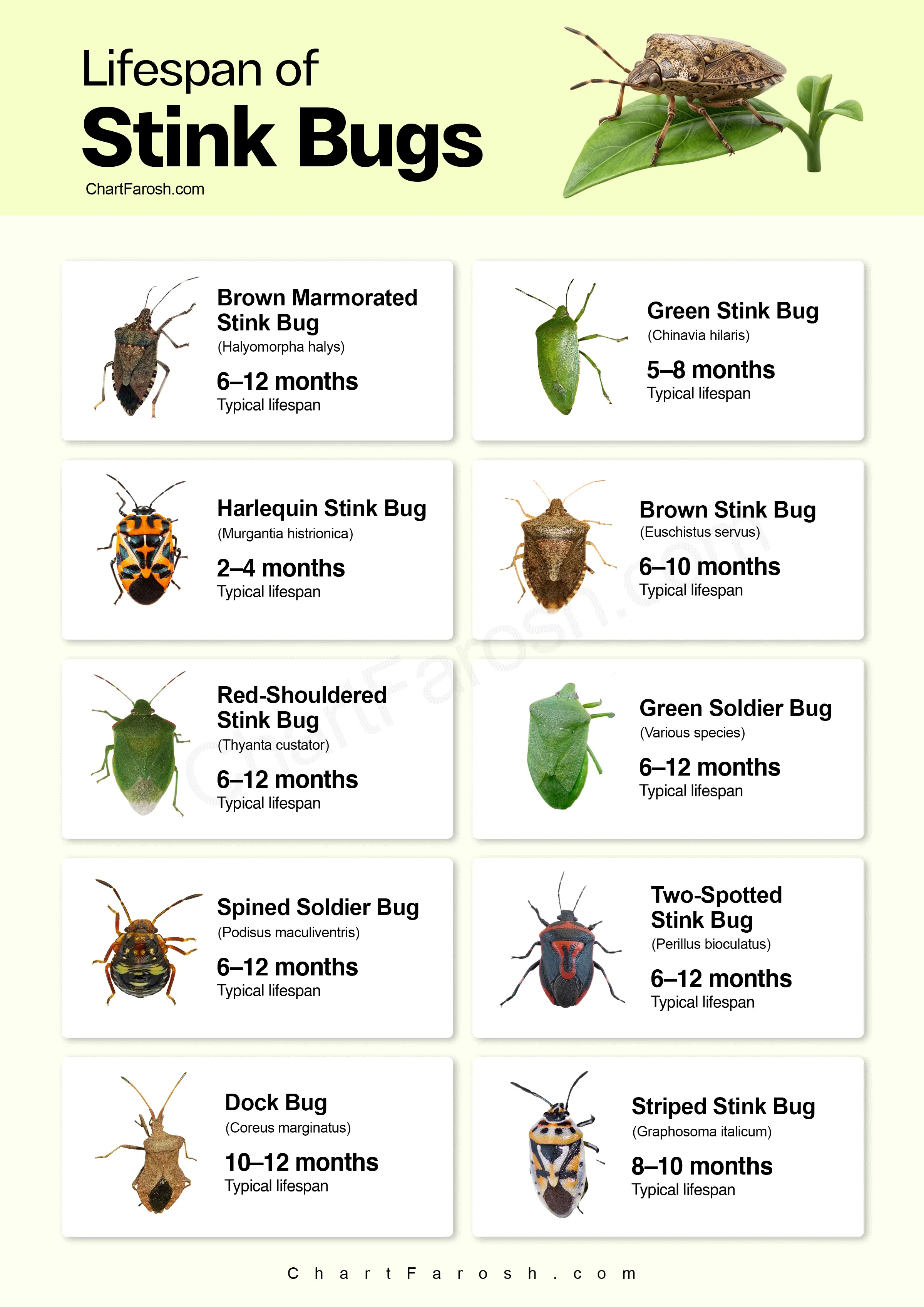
Table of Contents
Stink Bug Lifespan chart
Here are the key facts on stink bugs at a glance.
| Feature | Details |
| Common name | Stink bug (shield bug) |
| Main family | Pentatomidae (most species) |
| Typical adult lifespan | 6 to 12 months |
| Shortest-lived | Harlequin bug, 2 to 4 months |
| Life stages | Egg, nymph, adult |
| Most common indoors | Brown marmorated stink bug |
| Diet | Plant juices, fruit, seeds (some eat insects) |
| Bite or sting? | No |
Stink Bug Lifespan by Species
A stink bug’s life span depends on its species and the season. Most adults live 6 to 12 months. A few live only a few months. The chart below shows ten common kinds.
| Species | Scientific Name | Typical Lifespan |
| Brown Marmorated Stink Bug | Halyomorpha halys | 6-12 months |
| Green Stink Bug | Chinavia hilaris | 5-8 months |
| Harlequin Bug | Murgantia histrionica | 2-4 months |
| Brown Stink Bug | Euschistus servus | 6-10 months |
| Red-Shouldered Stink Bug | Thyanta custator | 6-12 months |
| Green Soldier Bug | Various species | 6-12 months |
| Spined Soldier Bug | Podisus maculiventris | 6-12 months |
| Two-Spotted Stink Bug | Perillus bioculatus | 6-12 months |
| Dock Bug | Coreus marginatus | 10-12 months |
| Striped Stink Bug | Graphosoma italicum | 8-10 months |
The brown marmorated stink bug is the one most people find indoors. It lives the better part of a year. Overwintering through the cold months stretches its life.
How Long Do Stink Bugs Live?
Most stink bugs live 6 to 12 months as adults. That is long for a bug this size. The reason is winter.
Stink bugs survive the cold by going dormant. They hide in walls, attics, and bark, then wait out the season. This rest period adds months to their lives.
Warm-weather species live shorter lives. The harlequin bug lasts only 2 to 4 months. It breeds fast in summer and does not overwinter as an adult the way the others do.
What Affects a Stink Bug’s Lifespan?
A few things decide how long a stink bug lives. Temperature is the biggest one. A mild winter helps more bugs survive to spring.
Food supply matters too. A bug with steady plant food grows strong and lasts longer. A poor season cuts the life span short.
Predators and species set the rest. Birds, spiders, and wasps take many bugs early. And some kinds live longer than others by nature.
The Stink Bug Life Cycle
A stink bug grows through three main stages. Egg, nymph, and adult. The whole path takes a few months in warm weather.
| Stage | How Long | What Happens |
| Egg | 4 to 7 days | Laid in tight clusters under leaves |
| Nymph | 4 to 6 weeks | Molts five times as it grows |
| Adult | 6 to 12 months | Mates, feeds, and overwinters in cold areas |
From Egg to Nymph
Eggs sit in neat clusters under leaves. They hatch in 4 to 7 days. The young nymphs stay close together at first, then spread out to feed.
Becoming an Adult
A nymph molts five times over 4 to 6 weeks. With each molt it grows larger and darker. After the last molt it has wings and can fly.
Stink Bug Species and Their Lifespans
There are many stink bug species, and not all are pests. Some protect your garden by eating other insects. The life span chart above includes both kinds.
Pest Stink Bugs
The brown marmorated, green, and brown stink bugs feed on crops. The harlequin bug targets cabbage-family plants. These species cost farmers and gardeners real money.
Beneficial Stink Bugs
The spined soldier bug and two-spotted stink bug are hunters. They eat caterpillars and beetle larvae. Leaving them in the garden helps control other pests.
| Type | Role | Examples |
| Pest stink bugs | Damage fruit, crops, and gardens | Brown marmorated, green, harlequin |
| Predatory stink bugs | Hunt and eat pest insects | Spined soldier bug, two-spotted |
What Do Stink Bugs Eat?
Most stink bugs are plant feeders. They use a sharp, straw-like mouth to pierce plants and drink the juices. Fruit, seeds, leaves, and stems all feed them.
The brown marmorated stink bug eats from more than 100 kinds of plants. It loves apples, peaches, beans, and corn. That wide diet is why it spreads so well.
A few stink bugs eat other insects instead. The soldier bugs hunt soft-bodied pests. These predators help your plants instead of harming them.
Where Do Stink Bugs Live?
Stink bugs live wherever plants grow. You find them in gardens, orchards, fields, and weedy edges. Warm, leafy spots with food draw them in.
In fall, their range shifts toward people. They move to sunny outside walls and slip into homes. Walls, attics, and sheds become winter shelter.
Come spring, they head back outdoors. They return to gardens and crops to feed and breed. The cycle repeats each year.
When Are Stink Bugs Most Active?
Stink bugs follow the seasons. They wake in spring and feed through summer. Warm weather is their busy time.
Fall brings the home invasion. As nights cool, they search for shelter and gather on walls. This is when most people notice them indoors.
Winter is quiet. The bugs go dormant in hidden spots and stop moving. They wait there until spring warmth pulls them out.
Why Stink Bugs Come Into Your House
Stink bugs do not want to live with you. They want to survive winter. Your warm walls make a fine hiding spot.
In fall, they gather on sunny outside walls. Then they slip through cracks, vents, and gaps around windows. Once inside, they go still and wait for spring.
They do not breed indoors. They do not bite or chew your food. They are a nuisance, not a danger, though the numbers climb fast.
Do Stink Bugs Bite or Sting?
Stink bugs do not bite or sting people. Their mouth is built for plants, not skin. They cannot pierce you the way a horse fly or mosquito does.
On rare days, a stink bug may poke at bare skin. It feels like a light pinch and leaves no real mark. There is no venom and no lasting harm.
The worst they do is smell. Handle one and it may release its odor on your hand. That is the only real downside of a close encounter.
Why Stink Bugs Smell
The stink bug earns its name with a built-in defense. Glands on its body hold a foul-smelling liquid. When the bug feels threatened, it releases the scent.
Crushing one spreads that smell across your hand or floor. The odor lingers for a while. This is why you should not squash them indoors.
The smell warns off birds and other hunters. To us it is unpleasant. To a predator it is a clear sign to leave the bug alone.
Are Stink Bugs Dangerous to Pets?
Stink bugs are not poisonous to dogs or cats. A pet that eats one is not in serious danger. Most shake it off within a day.
The defense liquid can still upset a pet. A dog that bites a stink bug may drool, gag, or vomit. The taste and smell are the problem, not poison.
Watch your pet, but do not panic. Offer water and let the stomach settle. Call a vet only if the signs last or get worse.
Stink Bug Damage to Plants
Stink bugs feed by stabbing plants and drinking the sap. This leaves dimples, scars, and brown spots. On fruit it causes a lumpy look called cat-facing.
The brown marmorated stink bug is a major farm pest. It hits apples, peaches, soybeans, and corn. Heavy feeding can ruin a harvest.
Garden plants take damage too. Tomatoes, peppers, and beans show pitting and discolored patches. Early control keeps the damage low.
How to Keep Stink Bugs Out
The best plan is to block their way in. Seal cracks around windows, doors, and pipes. Add screens to vents and fix torn ones.
Cut the light that draws them at night. Close blinds and turn off porch lights when you can. Bright windows pull them toward the house.
Trim plants and weeds near the walls. A clear gap gives them fewer spots to gather. Less cover near the house means fewer bugs at the door.
How to Get Rid of Stink Bugs Already Inside
Some bugs always make it inside. Removing them the right way keeps the smell down. Speed and a gentle touch help.
A vacuum is the easiest tool. Suck up the bugs, then empty the canister outside at once. A bag vacuum may hold the odor, so use one you can clean.
A jar of soapy water works too. Knock the bug into it and the soap traps it fast. Skip crushing, since that spreads the smell across the surface.
Frequently Asked Questions
How long do stink bugs live?
Most stink bugs live 6 to 12 months. Some warm-weather species live only 2 to 4 months. Overwintering through winter stretches their adult life.
Do stink bugs reproduce inside the house?
No. Stink bugs come indoors only to survive winter. They do not breed inside, and they leave again in spring.
Why do stink bugs smell so bad?
Stink bugs hold a foul liquid in body glands. They release it when threatened, and crushing one spreads the smell. Vacuum them instead.
Are all stink bugs pests?
No. Some, like the spined soldier bug, hunt other pest insects. These predatory stink bugs help protect your garden.
Do stink bugs bite people?
No. Stink bugs have a plant-feeding mouth and cannot bite you. The worst they do is release a bad smell when handled.
What attracts stink bugs to my house?
Warmth and light draw them in fall. Sunny walls, bright windows, and small gaps near doors and vents pull them toward your home.
How do I keep stink bugs out of my house?
Seal cracks, screen vents, and fix gaps around windows and doors. Cut outdoor lights at night and vacuum up any that get inside.