Types of Cockroaches
My old apartment had a roach problem. Not the small kind. I would flick on the kitchen light at midnight and watch a dozen tan bodies scatter under the stove.
Those were German cockroaches. I learned the name fast, because you cannot beat a pest you cannot name.
Here is the part that surprised me. There are around 4,600 types of cockroaches in the world, and almost none want anything to do with your home. Only about 30 live near people. Just a handful are real pests.
The rest live outdoors, far from people, in forests and damp leaf litter. Some are bright green. Some hiss. One is the size of your palm.
Below is an identification chart for 16 types of cockroaches, from the kitchen invaders to the giant tropical species people keep as pets. You will see how big each one gets, what color it is, and the feature that gives it away.
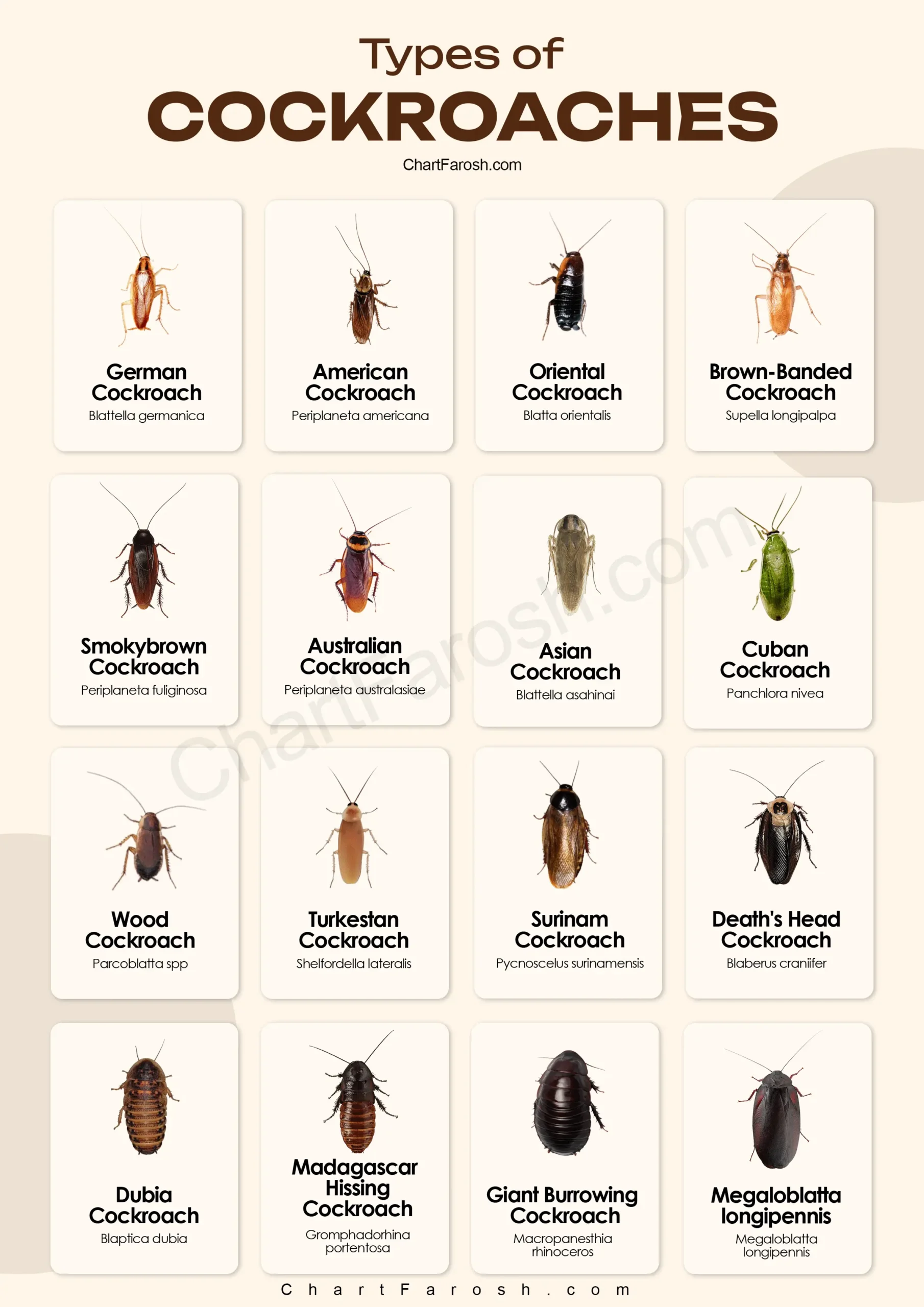
Table of Contents
Types of Cockroaches Chart
This chart compares 16 cockroaches by size, color and habitat. Scientific names are in italics. Use it to put a name to a roach, then read on for the groups that matter most.
| Species | Scientific Name | Size | Color | Distinct Features | Typical Habitat |
| German Cockroach | Blattella germanica | 1.1–1.6 cm | Tan, light brown | Two dark stripes behind the head | Kitchens, restaurants |
| American Cockroach | Periplaneta americana | 3–5 cm | Reddish-brown | Largest common house roach | Sewers, basements |
| Oriental Cockroach | Blatta orientalis | 2–3 cm | Dark brown, black | Slow-moving, shiny body | Damp, cool areas |
| Brown-Banded Cockroach | Supella longipalpa | 1–1.4 cm | Light brown | Pale bands across the wings | Furniture, ceilings |
| Smokybrown Cockroach | Periplaneta fuliginosa | 3–4 cm | Dark mahogany | Strong flyer | Humid outdoor areas |
| Australian Cockroach | Periplaneta australasiae | 3–3.5 cm | Brown, yellow edging | Looks like the American roach | Warm climates |
| Asian Cockroach | Blattella asahinai | 1.3–1.6 cm | Light brown | Flies toward lights at night | Gardens, lawns |
| Cuban Cockroach | Panchlora nivea | 2–2.5 cm | Bright green | Rare green coloring | Tropical vegetation |
| Wood Cockroach | Parcoblatta spp. | 2–3 cm | Chestnut brown | Outdoor, not a home pest | Woodpiles, forests |
| Turkestan Cockroach | Shelfordella lateralis | 2–3 cm | Reddish-brown | Common in dry regions | Outdoors, cracks |
| Surinam Cockroach | Pycnoscelus surinamensis | 1.8–2.5 cm | Dark brown | Burrows; all-female populations | Soil, greenhouses |
| Death’s Head Cockroach | Blaberus craniifer | 5–6.5 cm | Dark brown | Skull-like marking on back | Tropical habitats |
| Dubia Cockroach | Blaptica dubia | 4–5 cm | Dark brown | Popular feeder insect | Tropical environments |
| Madagascar Hissing Cockroach | Gromphadorhina portentosa | 5–8 cm | Dark brown | Hisses out loud when disturbed | Madagascar forests |
| Giant Burrowing Cockroach | Macropanesthia rhinoceros | Up to 8 cm | Black-brown | Heaviest cockroach; wingless | Australia |
| Giant Winged Cockroach | Megaloblatta longipennis | Up to 10 cm | Reddish-brown | Longest roach, huge wingspan | Central & South America |
Notice the spread. The pest species are small to medium and stick close to people. The giants live in the tropics and mostly leave us alone.
Cockroaches That Invade Homes
Only a few roaches are true house pests. The German cockroach is the worst. It is small, breeds fast, and lives indoors year round near food and warmth. Two dark stripes behind the head give it away.
The American cockroach is the big reddish one found in sewers and basements, despite the name. The oriental cockroach is dark and shiny, moves slowly, and likes damp corners. The brown-banded cockroach is small with pale bands and hides higher up, in furniture and near ceilings.
Others drift in from outside. Smokybrown and Australian roaches are strong flyers from warm, humid yards. The Turkestan cockroach is spreading through dry regions and is now common in the southern United States. To match a roach you have found, our bug identification chart can help.
Outdoor and Harmless Cockroaches
Most roaches are not pests at all. Wood cockroaches live in woodpiles and forests and only wander indoors by accident. They cannot survive long in a house.
The Cuban cockroach is a pale, bright green tropical species that flies to lights but does not infest homes. The Surinam cockroach burrows in soil and greenhouses, and its populations are all female, reproducing without males. The Asian cockroach looks like the German one but lives outdoors in lawns and flies toward light at dusk.
Giant and Pet Cockroaches
Some of the most famous roaches are kept on purpose. The Madagascar hissing cockroach is wingless, palm-sized, and forces air through its body to hiss. People keep it as a calm, easy pet.
The dubia cockroach and the death’s head cockroach, named for the skull shape on its back, are bred as feeder insects for reptiles. The giants are wild, though. Australia’s giant burrowing cockroach is the heaviest of all, wingless and up to 8 cm, and it is now considered vulnerable. The South American Megaloblatta longipennis is the longest, with one of the widest wingspans of any insect.
How Many Cockroaches Are Actually Pests?
Very few. Out of roughly 4,600 known cockroach species, only about 30 live alongside humans. Fewer than 10 are serious indoor pests, and four cause most of the trouble: the German, American, oriental and brown-banded cockroaches.
The pest species matter for health. They can spread bacteria and trigger asthma and allergies, especially in children. The rest of the roach world are recyclers that break down dead plants in forests and soil. For more on these insects, see the Britannica cockroach entry.
FAQs
How many types of cockroaches are there?
About 4,600 species worldwide. Only around 30 live near people, and just a handful are true household pests.
What is the most common cockroach in homes?
The German cockroach. It is small, breeds quickly, and lives indoors all year. It is the hardest roach to clear once it settles.
What is the largest cockroach?
Megaloblatta longipennis is the longest, reaching about 10 cm with a huge wingspan. Australia’s giant burrowing cockroach is the heaviest, at up to 35 grams.
Are any cockroaches kept as pets?
Yes. The Madagascar hissing cockroach is a popular pet. Dubia and death’s head roaches are bred as feeder insects for reptiles.
Which cockroaches can fly?
Smokybrown, Australian, Asian, and Cuban cockroaches are all strong flyers. The German and oriental cockroaches barely fly at all.
How do I tell cockroach species apart?
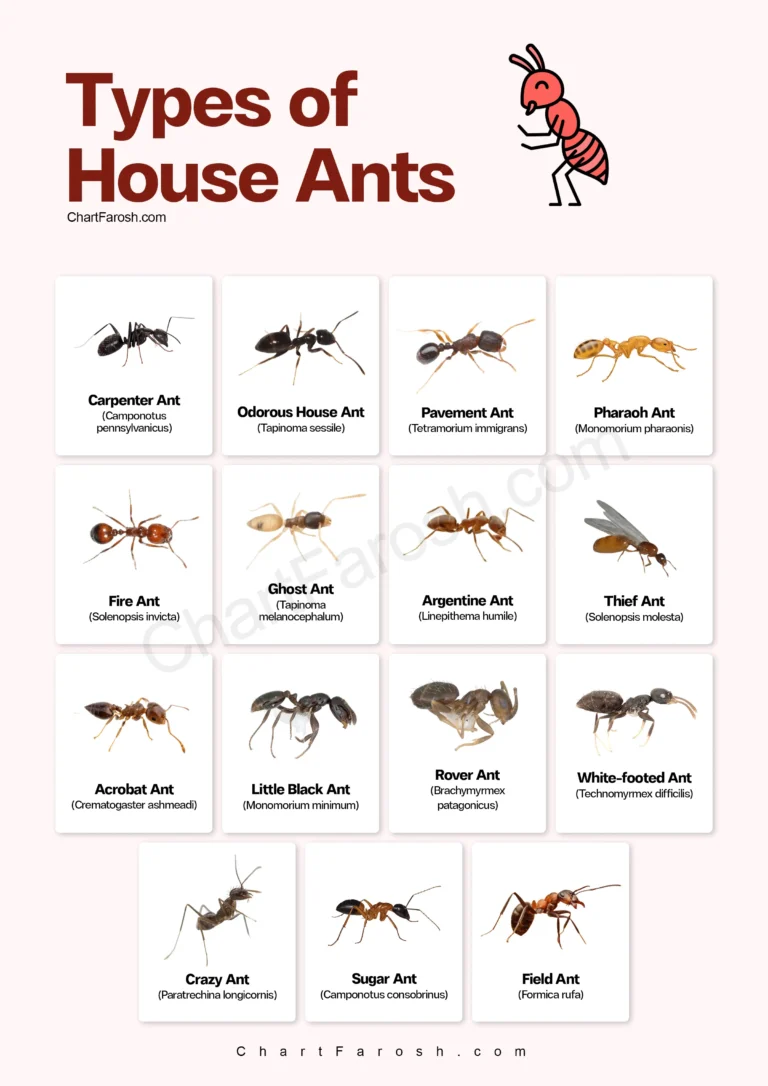
Check the roach’s size and color, plus any markings behind the head. Our bug identification chart helps, and for other insects see our types of ants guide and types of bees guide.