Types of Gorillas List with Pictures
I’ll never forget the first time I saw a gorilla in the wild, it was on a trip to a small reserve in Central Africa. I’d always been fascinated by gorillas, but seeing one up close changed everything.
The quiet intelligence in its eyes, the way it moved with such power yet grace, made me realize these creatures are more than just “big apes.”
I wanted to learn everything about them, the different types, where they live, and what makes each one unique.
That curiosity led me down a rabbit hole of research, trips, and conversations with wildlife experts.
If you’ve ever wondered how diverse gorillas are, or why some are rarer than others, you’re in the right place.
By the end of this blog, you’ll know all the main types of gorillas, where they can be found, and what makes each type truly special. It’s a mix of science, observation, and a little jungle magic.
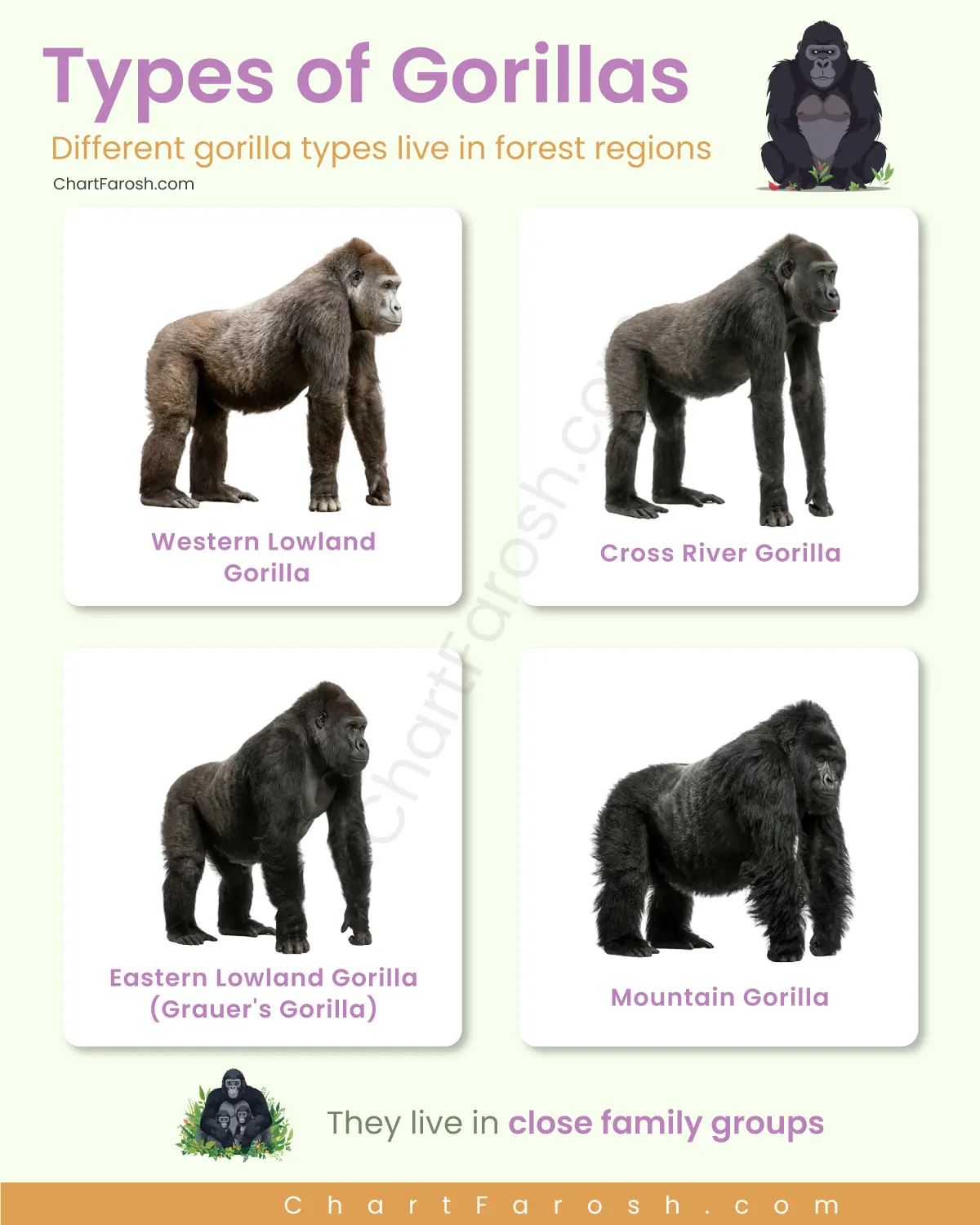
Table of Contents
Types of Gorillas
Gorillas are divided into two main species, Eastern and Western gorillas, but within these species, there are subgroups with unique traits and habitats.
Understanding the types of gorillas helps conservationists protect them and gives wildlife enthusiasts a clearer picture of these incredible apes.
Western gorillas are mostly found in dense forests and are known for their slightly smaller size and darker fur.
Eastern gorillas, including mountain gorillas, tend to be larger, with a more robust frame adapted to higher altitudes. Each type of gorilla has its own social structure, feeding habits, and behaviors.
For anyone interested in gorillas, it’s fascinating to see how these differences evolved in response to their environment.
By studying the types of gorillas, we also get a window into the health of their ecosystems, which are under threat from deforestation and poaching.
| Gorilla Type | Scientific Name | Region | Key Feature | Conservation Status |
| Western Lowland Gorilla | Gorilla gorilla gorilla | Central Africa (Cameroon, Congo, Gabon) | Smaller size, brown-grey coat | Critically Endangered ⚠️ |
| Cross River Gorilla | Gorilla gorilla diehli | Nigeria & Cameroon border | Smallest western gorilla population | Critically Endangered ⚠️ |
| Eastern Lowland Gorilla (Grauer’s Gorilla) | Gorilla beringei graueri | Eastern Democratic Republic of Congo | Largest subspecies, robust | Critically Endangered ⚠️ |
| Mountain Gorilla | Gorilla beringei beringei | Rwanda, Uganda, DR Congo | Thick fur, adapted to cold | Endangered ⚠️ |
Rarest Gorilla Species in the World
Some gorilla species are extremely rare, with numbers so low that seeing one in the wild is almost a miracle.
The Grauer’s gorilla and Cross River gorilla are two of the rarest, with populations in the low hundreds. Their habitats are limited to specific forested regions, often in remote, mountainous areas.
These gorillas face intense pressure from habitat loss, hunting, and human conflict, which makes conservation efforts crucial.
Protecting rare gorilla species isn’t just about saving an animal, it’s about preserving an entire ecosystem that supports countless other species.
Observing these gorillas also gives scientists insight into genetic diversity, social behaviors, and survival strategies.
Each sighting, photograph, or study adds valuable data, helping ensure that these rare gorillas remain a part of our planet for generations to come.
Largest Gorilla Species
The largest gorilla species are truly impressive, not only in size but also in the presence and authority they command within their groups.
Adult males, commonly known as silverbacks, can weigh up to 450 pounds and stand around 6 feet tall when upright.
This massive size is not just for show, it has evolved over thousands of years to help them survive, defend their families, and navigate challenging environments.
Silverbacks use their strength to protect the group from predators and rival males, while also leading their family in search of food and water across wide territories.
Their muscular build and powerful limbs make them excellent climbers and foragers, able to break apart tough vegetation and access resources other animals cannot.
Observing a large gorilla in the wild is a reminder of nature’s incredible design, combining strength, intelligence, and social complexity in a single magnificent animal.
- Eastern gorillas are the largest gorilla species.
- Mountain gorillas have more muscular build than lowland gorillas.
- Adult males can grow up to 6 feet tall.
- Larger gorillas exhibit more dominance behaviors within their groups.
- Size is also linked to their diet.
Eastern vs Western Gorillas: Key Differences
Eastern and Western gorillas are the two main species, and their differences go beyond geography. Eastern gorillas tend to have longer arms, larger bodies, and darker faces.
Mountain gorillas, a subgroup of Eastern gorillas, have thicker fur to survive cold highlands. Western gorillas are slightly smaller, with rounder heads and shorter arms.
Behaviorally, Western gorillas are often more social, forming larger family groups, while Eastern gorillas may have smaller, more tightly-knit units.
Studying these differences helps researchers track conservation needs, monitor populations, and understand the evolution of gorilla species over time.
By knowing how to distinguish Eastern vs Western gorillas, wildlife lovers can better appreciate the diversity and resilience of these incredible apes in the wild.
Mountain Gorilla vs Lowland Gorilla
Mountain gorillas and lowland gorillas are both Eastern gorillas, but their habitats and lifestyles differ significantly.
Mountain gorillas live in the high-altitude forests of Rwanda, Uganda, and the Democratic Republic of Congo, where thick fur keeps them warm.
Lowland gorillas prefer lower altitudes, inhabiting tropical and swamp forests where vegetation is denser.
Mountain gorillas tend to have smaller groups but are closely bonded, whereas lowland gorillas often roam wider areas for food.
These differences impact their diet, behaviors, and vulnerability to human threats.
Both types are under conservation programs, yet mountain gorillas have seen some population recovery due to focused efforts, while lowland gorillas still face severe habitat fragmentation.
Observing these differences helps us understand how the environment shapes species and why targeted conservation matters.
Types of Gorillas in the Rainforest
The rainforest is home to some of the most iconic and fascinating gorilla populations on the planet.
These dense, humid forests provide the perfect environment for gorillas to thrive, offering abundant food, shelter, and protection.
Rainforest gorillas are primarily herbivorous, feeding on a variety of leaves, fruits, shoots, stems, and occasionally bamboo, depending on the season and availability.
They are skilled foragers, moving through the forest floor and low branches in search of the most nutritious vegetation.
To rest and sleep, gorillas build nests either on the ground or in trees, often constructing new ones each night from leaves and branches.
The thick canopy overhead not only provides protection from predators and harsh weather but also helps maintain the balance of the ecosystem by supporting other wildlife, regulating temperature, and conserving water.
Observing gorillas in the rainforest highlights the incredible complexity and interdependence of forest life, showing how these majestic animals are deeply connected to their environment.
- Western lowland gorillas thrive in Central African rainforests.
- Grauer’s gorillas inhabit the eastern Congo rainforests.
- Cross River gorillas are found in a small rainforest region along the Nigeria-Cameroon border.
- Rainforest gorillas often live in groups of 5–30 individuals.
- Their diets are highly varied depending on seasonal availability.
Types of Gorillas in Congo
Congo is a gorilla hotspot, home to several subspecies.
Eastern lowland gorillas, or Grauer’s gorillas, dominate the eastern regions, while western lowland gorillas inhabit the western forests.
These gorillas play a crucial ecological role, dispersing seeds and maintaining forest health. Political instability and logging have made conservation in Congo challenging, yet dedicated efforts by researchers and local communities have had some success.
Understanding the types of gorillas in Congo also highlights the importance of habitat protection, anti-poaching measures, and global awareness campaigns
Each encounter, whether through research or eco-tourism, contributes to the survival of these majestic primates and the preservation of their forests.
Types of Gorillas In Africa
Africa is the natural home to all gorilla species, and across the continent, each species has adapted to thrive in its own unique environment.
From the misty, cool mountains of Rwanda and Uganda to the dense, humid lowland forests of West and Central Africa, gorillas have found ways to survive and flourish in a variety of habitats.
Mountain gorillas have thick, dark fur to protect them from chilly high-altitude climates, while lowland gorillas are more agile and suited to navigating swampy forests and dense vegetation.
Across Africa, gorillas play an essential role in maintaining the health of their ecosystems, spreading seeds, controlling plant growth, and supporting biodiversity.
Observing these majestic animals in their natural habitats offers a glimpse into their social behaviors, intelligence, and resilience.
Every region of Africa that hosts gorillas tells a story of adaptation, survival, and the delicate balance between wildlife and environment.
- Western gorillas inhabit lowland forests of West Africa.
- Eastern gorillas are found in Central Africa and high-altitude forests.
- Mountain gorillas live in Rwanda, Uganda, and Congo’s Virunga mountains.
- Lowland gorillas are spread across Cameroon, Gabon, and the Congo basin.
- Cross River gorillas are extremely limited, found along the Nigeria-Cameroon border.
FAQs
What is the difference between a gorilla and an ape?
Gorillas are apes, meaning they belong to the same group as chimpanzees and orangutans. The term “ape” is broader, while “gorilla” refers to a specific genus within that group.
How many types of gorillas exist?
There are two main species: Eastern and Western gorillas, with subgroups including mountain, lowland, Grauer’s, and Cross River gorillas.
Are gorillas endangered?
Yes, all gorilla species are considered endangered or critically endangered due to habitat loss, poaching, and disease.
Can gorillas live outside Africa?
Gorillas can live in zoos and sanctuaries outside Africa, but their natural habitat is limited to African forests and mountains.
How can we help protect gorillas?
Supporting conservation programs, eco-tourism initiatives, and anti-poaching efforts are the most effective ways to protect gorillas and their habitats.