Types of House Bugs Chart with Pictures
The first apartment I ever rented had a fruit fly problem I could not solve. I wiped the counters every night. I took out the trash. They kept coming back, a little cloud of them over the sink every morning.
It took me two weeks to find the cause. A single potato had rolled behind the cabinet and started to rot. I threw it out. The flies were gone in a day.
That stuck with me. Most house bugs are not random. Each one is after something specific. Moisture. Food scraps. Paper. Wood. Your blood. Find what it wants and you usually find the bug.
Over the years I have met most of them. The bed bug that hitchhikes home in luggage. The roach that owns the kitchen at 2 a.m. The silverfish in the bathroom. The tiny carpet beetle chewing holes in a wool sweater.
Below are the fifteen bugs you are most likely to find indoors, what each one is, where it hides, and the real problem it causes. A few are harmless. One is even on your side.
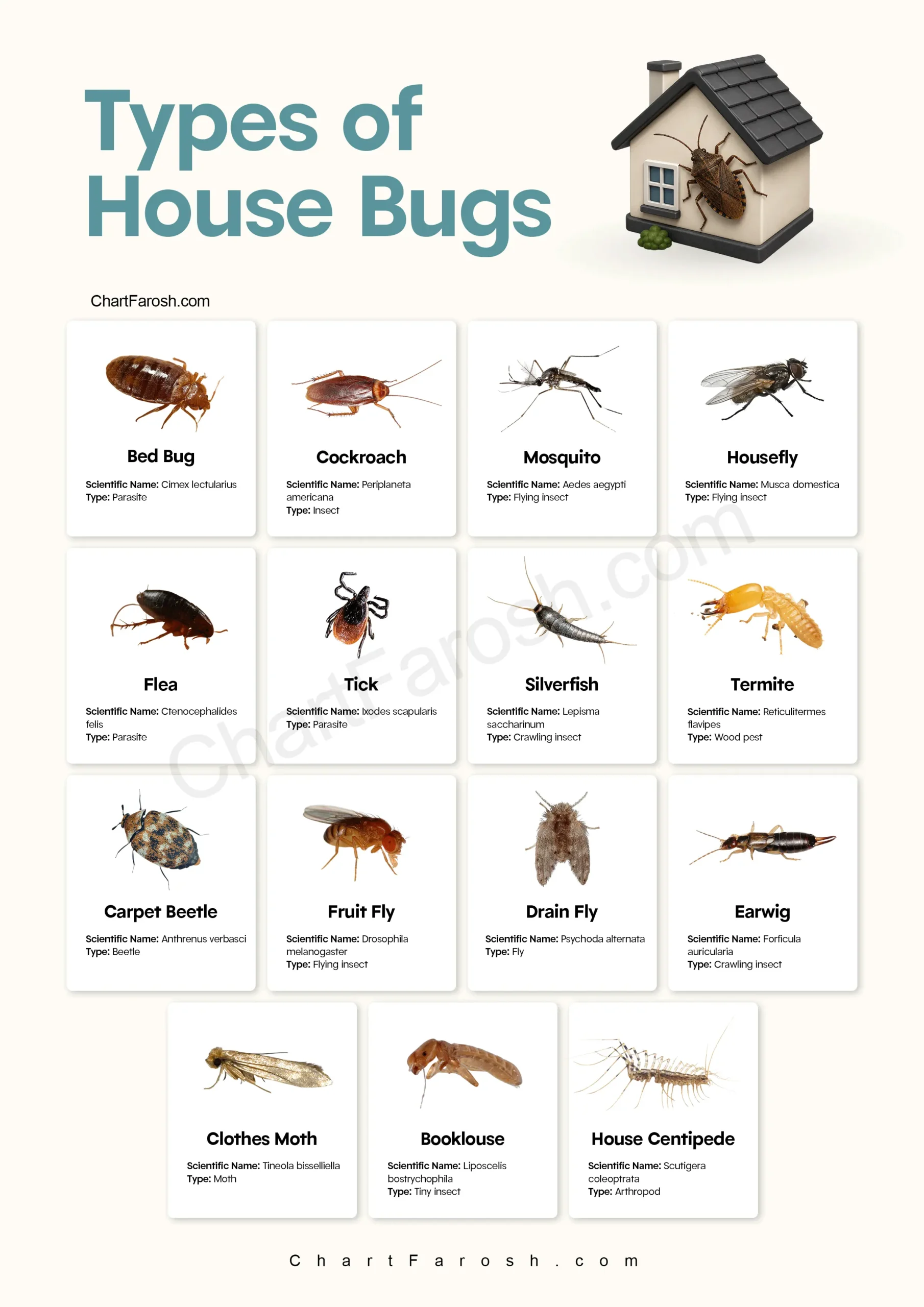
Table of Contents
House bug identification chart
Fifteen bugs turn up indoors more than any others. Some bite. Some eat your food. Some chew through cloth, paper, or wood. A few just startle you on the bathroom floor at night. The chart below sorts them by name, type, favorite hiding spot, and the main problem each one causes.
| # | House Bug | Scientific Name | Type | Common Place in House | Main Problem |
| 1 | Bed Bug | Cimex lectularius | Parasite | Beds, mattresses | Bites and itching |
| 2 | Cockroach | Periplaneta americana | Insect | Drains, basements, kitchens | Germs and contamination |
| 3 | Mosquito | Aedes aegypti | Flying insect | Near water, bedrooms | Bites and disease spread |
| 4 | Housefly | Musca domestica | Flying insect | Trash, food areas | Spreads bacteria |
| 5 | Flea | Ctenocephalides felis | Parasite | Pet bedding, carpets | Itchy bites |
| 6 | Tick | Ixodes scapularis | Parasite | Pets, clothing | Disease transmission |
| 7 | Silverfish | Lepisma saccharinum | Crawling insect | Bathrooms, books | Damages paper and clothes |
| 8 | Termite | Reticulitermes flavipes | Wood pest | Wooden walls, furniture | Structural damage |
| 9 | Carpet Beetle | Anthrenus verbasci | Beetle | Carpets, closets | Fabric damage |
| 10 | Fruit Fly | Drosophila melanogaster | Flying insect | Fruit, kitchen | Fast infestations |
| 11 | Drain Fly | Psychoda alternata | Fly | Bathroom drains | Drain infestations |
| 12 | Earwig | Forficula auricularia | Crawling insect | Damp corners | Nuisance pest |
| 13 | Clothes Moth | Tineola bisselliella | Moth | Closets | Damages clothing |
| 14 | Booklouse | Liposcelis bostrychophila | Tiny insect | Damp books, storage | Mold-related pest |
| 15 | House Centipede | Scutigera coleoptrata | Arthropod | Basements, bathrooms | Harmless, eats other pests |
Scan the last column and the bugs fall into clear camps. Some bite or carry disease. Some contaminate food. Some destroy materials. The rest are nuisances that point to damp or clutter.
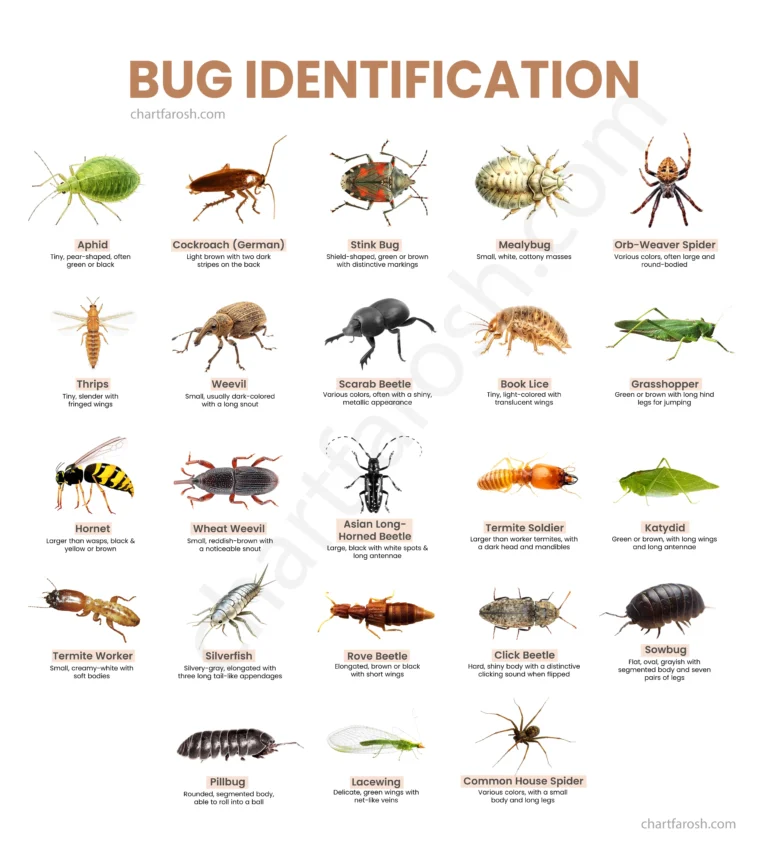
Sorting a bug into the right camp tells you how worried to be and what to do next. To match a bug to a photo, the bug identification chart sets each one beside a clear image.
Bugs that bite: parasites and disease carriers
Four house bugs feed on blood or spread illness. These are the ones worth taking seriously.
The bed bug (Cimex lectularius) is a small flat brown insect that hides in mattress seams and bed frames and feeds at night. Its bites itch and can trigger an allergic reaction, but bed bugs are not known to spread disease. They are hard to remove and multiply fast, so early action matters. The U.S. Environmental Protection Agency keeps a plain guide to safe control.
The flea (Ctenocephalides felis), the cat flea, is the one most people meet. It lives in pet bedding and carpet and bites ankles and feet, leaving small itchy red bumps. It can carry tapeworm and, rarely, other pathogens.
The tick (Ixodes scapularis), the blacklegged or deer tick, does not live in your house. It rides in on pets and clothing. That matters because this tick can pass on Lyme disease, so check pets and skin after time outdoors.
The mosquito is, by human toll, the deadliest animal on Earth, through the diseases it carries. The species named here, Aedes aegypti, spreads dengue and Zika in warm regions. Across much of the temperate world the common indoor biter is a Culex mosquito instead. Either way the fix is the same. Remove standing water, since that is where the larvae grow.
| Bug | Bites? | Spreads Disease? | Where It Hides | Risk |
| Bed Bug | Yes | No known disease | Mattress seams, frames | Hard to remove |
| Flea | Yes | Tapeworm, rare others | Pet bedding, carpet | Low to moderate |
| Tick | Yes | Lyme and others | Carried in on pets | Moderate to high |
| Mosquito | Yes | Dengue, Zika, malaria | Near standing water | Region-dependent |
Bugs that contaminate food and surfaces
Four bugs are after your food and leave germs behind.
The cockroach is the one everyone dreads. The species named here is the American cockroach (Periplaneta americana), a large reddish bug that lives in drains, basements, and sewers and wanders up into kitchens.
The smaller German cockroach (Blattella germanica) is the one that actually infests most kitchens and breeds fast indoors. Both carry bacteria, foul food, and can worsen asthma and allergies, which is why health departments treat them as public health pests.
The housefly (Musca domestica) breeds in trash and waste, then lands on your food. It can move bacteria from one to the other on its feet.
The fruit fly (Drosophila melanogaster) swarms over ripe and rotting fruit. It breeds in days, so a small problem turns into a cloud fast. The cure is finding and tossing the fermenting food it feeds on.
The drain fly (Psychoda alternata), a small fuzzy moth fly, breeds in the slime inside drains. Clean the drain and the flies stop.
Bugs that damage fabric, paper, and wood
Five bugs do no harm to you but quietly destroy your belongings.
The silverfish (Lepisma saccharinum) is a wingless, teardrop-shaped insect that eats starch, paper, and glue. It likes damp bathrooms and old books.
The carpet beetle (Anthrenus verbasci) is tiny and round. Its larvae, not the adults, chew holes in wool, silk, and other natural fibers in carpets and closets.
The clothes moth (Tineola bisselliella) does the same to clothing. The adult moth does not eat at all. Its larvae feed on wool and other animal fibers, usually in dark, undisturbed wardrobes.
The booklouse (Liposcelis bostrychophila) is a near-microscopic insect that feeds on mold and mildew on damp paper and stored food. It does little direct damage and mostly signals that an area is too humid.
The termite (Reticulitermes flavipes), the eastern subterranean termite, is the serious one. It eats wood from the inside out and can cause real structural damage before anyone notices. If you suspect termites, act quickly, and the termite identification chart shows what the early signs look like.
| Bug | What It Damages | Sign to Look For |
| Silverfish | Paper, books, starchy fabric | Yellow stains and tiny holes |
| Carpet Beetle | Wool, silk, carpets | Shed larval skins, bare patches |
| Clothes Moth | Wool clothing, blankets | Silken tubes, irregular holes |
| Booklouse | Damp paper, stored food | Tiny moving specks |
| Termite | Structural wood | Mud tubes, hollow-sounding wood |
Damp-loving nuisance bugs
A few bugs are mostly harmless and show up where it is damp.
The earwig (Forficula auricularia) is the brown insect with pincers on its tail. The pincers look alarming but rarely break skin. It hides in damp corners and under objects and does little more than startle you.
The booklouse, covered above, belongs here too, since damp is exactly what draws it.
The house centipede (Scutigera coleoptrata) is the fast one with too many legs that bolts across the bathroom floor. Here is the surprise. It is not an insect at all but a centipede, and it is on your side. It hunts and eats cockroaches, bed bugs, silverfish, and other pests. It carries no disease and damages nothing. If you can stand the look of it, it is one of the most useful beneficial insects in the house, even though it is not technically an insect.
Where house bugs hide in your home
Bugs pick rooms by what they need. Damp draws some. Food draws others. Match the room to the likely bug and you know where to look first.
| Area of the Home | Bugs You’ll Likely Find | What Draws Them |
| Kitchen | Cockroach, housefly, fruit fly | Food, crumbs, grease |
| Bathroom and basement | Silverfish, drain fly, earwig, centipede | Damp and standing water |
| Bedroom | Bed bug, mosquito | You, while you sleep |
| Closets and storage | Carpet beetle, clothes moth, booklouse | Natural fibers, paper, mold |
| Walls and wood | Termite | Untreated structural timber |
How to keep bugs out of the house
You will never seal a home completely, but a few habits cut the numbers sharply.
Take away food and water. Wipe counters, store food in sealed containers, empty the trash, and fix dripping taps. Most kitchen and bathroom bugs leave when the buffet closes.
Cut the damp. Run a fan or dehumidifier in bathrooms and basements. Silverfish, booklice, drain flies, and centipedes all need moisture to stay.
Seal the gaps. Caulk around pipes, windows, and baseboards, fix torn screens, and repair leaks under sinks where roaches and silverfish gather.
Deal with clutter. Boxes, paper piles, and unworn clothes are shelter and food. Store fabric in sealed bins and check stored wool now and then. Knowing which other pests share the space helps, so an ant identification chart or a sweep for related crawling pests can point you at the source.
FAQs
What is the most common bug found in houses?
It depends on climate and home, but cockroaches, ants, flies, and bed bugs are among the most common. In kitchens, the German cockroach and the housefly top the list. In bedrooms, bed bugs and mosquitoes are the usual biters.
Which house bugs bite humans?
Bed bugs, fleas, ticks, and mosquitoes all bite and feed on blood. Bed bug and flea bites itch but rarely cause more. Ticks and mosquitoes matter more because they can pass on disease.
Are house centipedes dangerous?
No. The house centipede is a harmless predator that eats other pests like cockroaches and bed bugs. Its bite is rare and no worse than a bee sting. Many people leave it alone for the free pest control.
Do bed bugs spread disease?
Bed bugs are not known to transmit disease to people. The main problems are itchy bites, allergic reactions, and the stress of an infestation. They are still worth removing quickly because they multiply fast.
What attracts bugs into the house?
Food, water, warmth, and shelter. Crumbs and grease pull in roaches and flies. Damp draws silverfish and centipedes. Clutter and natural fibers feed carpet beetles and clothes moths. Cut those off and most bugs lose interest.
How do I tell a harmful bug from a harmless one?
Look at what it does, not just how it looks. Biters and disease carriers like ticks and mosquitoes need real caution. Material pests like termites and clothes moths damage your home. Many others are only a nuisance. For help telling species apart, see the bug identification chart, and browse the wider Animals Chart collection for more guides.