Types of Whales
I was on a small boat off the coast, and suddenly a massive shape appeared just a few meters away, its blowhole releasing a huge spray of water into the air.
The sheer size and grace of it left me speechless. I wanted to learn everything I could about these magnificent creatures, from the tiniest dolphins often classified with them to the massive blue whales that are the largest animals to have ever lived.
I started exploring types of whales with pictures to understand their diversity, reading about their habitats, and even creating my own mental printable list of whales.
Each species has its own unique characteristics, from their feeding habits to their social structures, and learning their names made me feel like I was getting to know them personally.
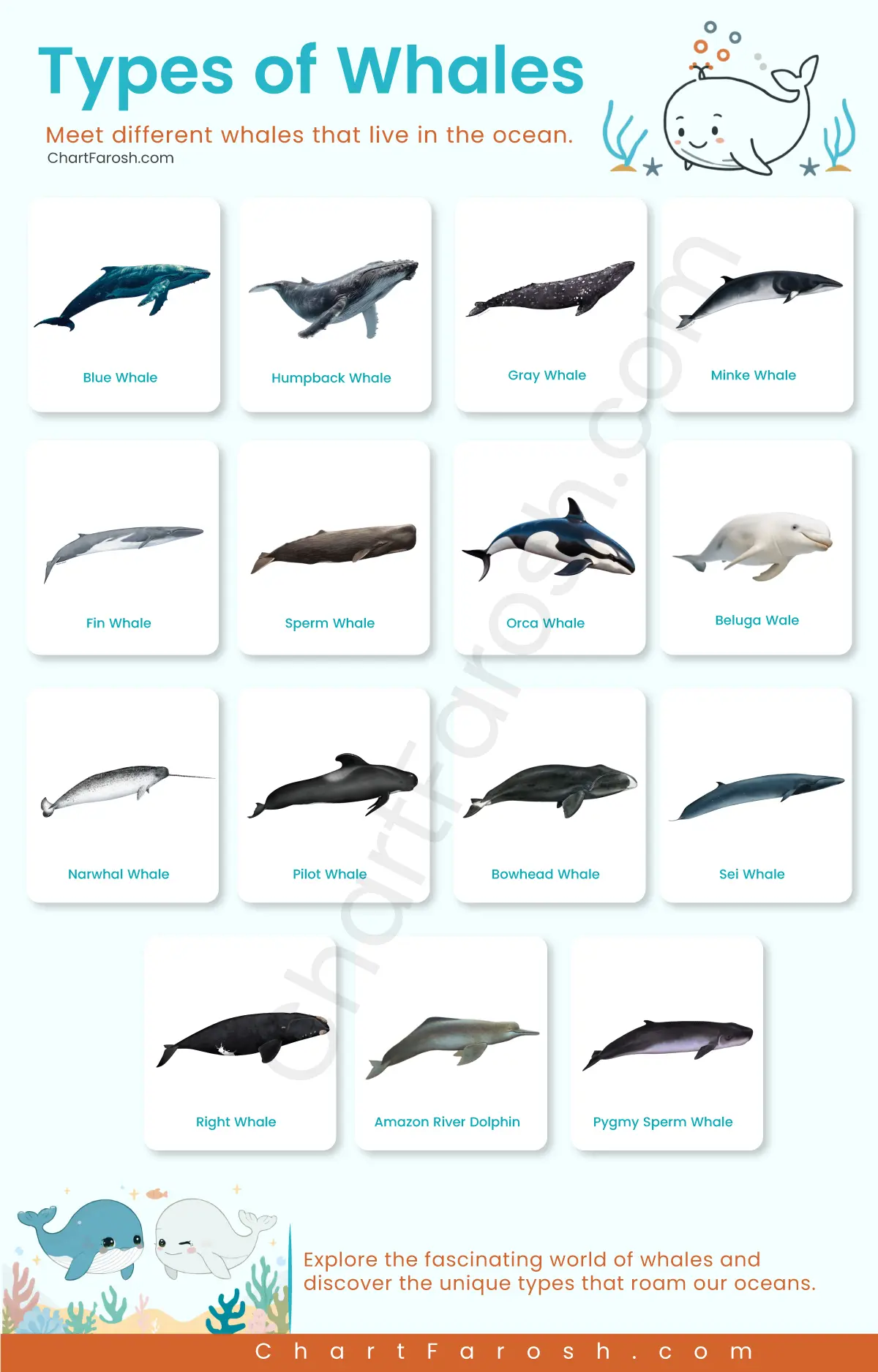
Table of Contents
Types of Whales
Whales are a diverse group of marine mammals that vary greatly in size, shape, and behavior. Understanding the different types of whales and their names is key to appreciating their complexity.
Some whales, like the humpback, are known for their acrobatic leaps and haunting songs, while others, like the sperm whale, dive to incredible depths in search of squid.
Types of whales species include both baleen whales, which filter feed on tiny creatures like krill, and toothed whales, which hunt larger prey.
Exploring types of whales with pictures helps visualize these differences and makes it easier to identify species in the wild or even in aquariums. For enthusiasts, compiling a list of whales breeds or a printable list of whales can serve as a fun reference.
Each whale species has evolved unique adaptations to survive in diverse environments, from tropical waters to icy polar seas.
Observing their social interactions, feeding habits, and communication provides endless fascination. With at least 90 recognized species, the world of whales is vast, and learning about them opens a window into some of the most incredible creatures on Earth.
| Category / Heading | Species Examples | Key Features | Habitat |
| Baleen Whales | Blue, Humpback, Gray, Minke, Fin | Filter-feeders, large size | Oceans worldwide |
| Toothed Whales | Sperm, Orca, Beluga, Narwhal, Pilot | Teeth, hunt prey | Global & polar regions |
| Blue Whale: Ocean Giant | Blue Whale | Longest, heaviest, filter krill | All oceans |
| Humpback Whale Acrobatics | Humpback | Breaching, singing | Oceans worldwide |
| Gray Whale Migration | Gray Whale | Coastal migration | Pacific Ocean |
| Orcas & Killer Whales | Orca | Apex predator, social pods | All oceans |
| Sperm Whale Deep Dives | Sperm Whale | Deep divers, squid hunters | Deep oceans |
| Beluga & Arctic Whales | Beluga, Bowhead | White or light-colored, vocal | Arctic regions |
| Narwhal: The Unicorn Whale | Narwhal | Long spiral tusk | Arctic waters |
| Minke & Small Baleen Whales | Minke, Sei, Right | Smaller baleen species | Worldwide oceans |
| River & Pygmy Whales | Amazon River Dolphin, Pygmy Sperm | Small, freshwater / elusive | Rivers & deep oceans |
Types of Whales by Size
Whales are famous for their staggering range in size. Some species are barely a few meters long, while others like the blue whale can reach over 30 meters, making them the largest animals ever to exist.
Knowing types of whales biggest to smallest is not just a matter of curiosity, it helps in understanding their feeding habits, migration patterns, and even their vulnerability to threats.
Larger whales tend to consume enormous amounts of krill and small fish, while smaller whales often feed on squid or smaller prey.
Seeing the size differences in a types of whales chart makes it easier to grasp just how varied these animals are and gives context to their incredible adaptations.
| Whale Species | Average Length | Average Weight | Distinctive Features |
| Blue Whale | 30 m | 150,000 kg | Largest animal ever, baleen plates |
| Fin Whale | 27 m | 80,000 kg | Sleek body, fast swimmer |
| Humpback Whale | 16 m | 36,000 kg | Long pectoral fins, known for singing |
| Beluga Whale | 4 m | 1,500 kg | White color, social & vocal |
Common Whale Breeds
Some whales are more commonly seen by humans due to their habitats, migration routes, or population size.
Popular whales like the humpback or orca are familiar from documentaries, whale-watching tours, and research studies.
Understanding common whale breeds helps enthusiasts and scientists identify behaviors, feeding styles, and social structures more effectively.
Observing these whales in the wild offers insight into their intelligence and complex interactions.
Many of these species also play key roles in their ecosystems, from controlling fish populations to shaping the ocean environment through their movements.
| Whale Species | Habitat | Average Population | Key Behavior |
| Humpback Whale | Global, mostly oceans | 80,000 | Known for singing and breaching |
| Orca (Killer Whale) | Global, coastal & open seas | 50,000 | Social pods, apex predator |
| Minke Whale | Temperate & polar waters | 500,000 | Fast swimmer, elusive |
| Gray Whale | North Pacific | 26,000 | Long migration, benthic feeding |
Rare Whales
While some whales are common and well-studied, others are extremely rare and elusive. These species may inhabit remote regions, have low population numbers, or be rarely spotted due to their secretive behaviors.
Studying rare whales helps researchers understand biodiversity and the impacts of environmental changes.
Some rare species are critically endangered, requiring focused conservation efforts. Observing them even in photographs or with a types of whales chart emphasizes the fragility of ocean ecosystems and the need to protect these remarkable animals.
| Whale Species | Habitat | Approximate Population | Distinctive Traits |
| North Pacific Right Whale | North Pacific | 350 | Critically endangered, slow moving |
| Sei Whale | Temperate & polar waters | 80,000 | Sleek body, fast swimmer |
| Narwhal | Arctic waters | 80,000 | Long tusk, social pods |
| Omura’s Whale | Indian & Pacific Oceans | Unknown | Rarely seen, small baleen whale |
Types of Whales in Alaska
Alaska is one of the best regions for observing whales in their natural habitats. The nutrient-rich waters attract both baleen and toothed whales, making it a hotspot for marine wildlife. From humpbacks performing spectacular breaches to orcas hunting in pods, the diversity is remarkable.
Studying types of whales in Alaska provides insight into migration patterns, feeding strategies, and how these animals thrive in cold environments.
Many of these species also travel long distances, highlighting the importance of conservation across multiple regions.
| Name | Feature |
| Humpback Whale | Baleen whale; migrates in summer; very common |
| Gray Whale | Baleen whale; migrates to Baja California for breeding |
| Minke Whale | Small baleen whale; coastal & offshore |
| Blue Whale | Largest whale; rare visitor in Alaskan waters |
| Orca / Killer Whale | Toothed whale; resident & transient pods |
| Sperm Whale | Toothed whale; deep-water species |
| Beluga Whale | Arctic toothed whale; found in northern estuaries |
| Harbour Porpoise | Small toothed whale; shy, coastal species |
Types of Whales in Canada
Canada’s coastal waters, particularly around British Columbia and the Atlantic provinces, host a variety of whale species. From belugas navigating icy estuaries to humpbacks feeding in deep bays, the region offers unique opportunities to observe whales up close.
Researchers often focus on types of whales species in Canada to monitor populations, migration routes, and environmental impacts.
Understanding these whales helps protect their habitats and ensures that the region remains a thriving ecosystem for marine life.
| Name | Feature |
| Humpback Whale | Baleen whale; common along BC & Atlantic coasts |
| Minke Whale | Small baleen whale; Atlantic & Pacific waters |
| Blue Whale | Largest baleen whale; mainly Atlantic; endangered |
| Fin Whale | Second largest whale; Atlantic & Pacific |
| North Atlantic Right Whale | Critically endangered; Atlantic Canada only |
| Gray Whale | Rare; Pacific coast only |
| Orca / Killer Whale | Toothed whale; resident & transient pods |
| Beluga Whale | Arctic & subarctic waters; social species |
| Narwhal | Arctic Canada; tusked whale |
| Sperm Whale | Deep Atlantic waters |
| Harbour Porpoise | Coastal small whale; Atlantic & Pacific |
Types of Whales in Australia
Australia’s warm waters and extensive coastlines support both resident and migratory whale populations. Species such as humpbacks, southern right whales, and minke whales pass through or remain near the coast throughout the year.
Observing types of whales in Australia shows how these animals adapt to different ocean conditions, from tropical waters to cooler southern currents.
Tracking their movements also helps scientists understand breeding habits, calf survival rates, and the impacts of climate change on marine mammals.
| Name | Feature |
| Humpback Whale | Baleen whale; migrates along east & west coasts |
| Southern Right Whale | Baleen whale; coastal breeding in southern Australia |
| Blue Whale | Largest whale; rare offshore visitor |
| Minke Whale | Small baleen whale; coastal & offshore |
| Orca / Killer Whale | Toothed whale; coastal & offshore pods |
| Sperm Whale | Toothed whale; deep offshore waters |
| Pygmy Sperm Whale | Rare deep-water toothed whale |
| Dolphins | Small toothed whales; commonly seen near coasts |
FAQs
Which whale species are most commonly seen?
Humpback whales, orcas, and minke whales are among the most commonly seen species, often spotted on whale-watching tours in regions like Alaska, Australia, and Canada.
Where do whales live?
Whales live in oceans worldwide, from tropical seas to polar waters, with different species adapted to specific regions and climates.
Are whales endangered?
Some species, like the North Pacific right whale and blue whale, are endangered or vulnerable due to hunting, habitat loss, and climate changes.
What do different types of whales eat?
Baleen whales mainly feed on krill, plankton, and small fish, while toothed whales eat squid, fish, and sometimes marine mammals.
How long do whales live?
Whale lifespans vary by species, generally ranging from 20 to 90 years, with some species like bowhead whales living over 200 years.
Do whales migrate?
Yes, many whales migrate long distances annually, moving between feeding grounds in colder waters and breeding grounds in warmer seas.
Can whales live in freshwater?
Most whales are marine and cannot live in freshwater.