Meat Cholesterol Chart (With Serving Sizes)
A few years ago, my dad got the “watch your cholesterol” talk from his doctor. The first thing he did was swear off eggs and steak like they were the enemy.
The truth is more complicated than that. And more interesting.
Not all meat is equal on cholesterol. The numbers rarely match what you would guess. A skinless chicken breast and a sirloin steak are about the same. Shrimp is the real shock. People treat it as the healthy pick, but it is one of the highest-cholesterol foods on the plate.
So I pulled the real numbers together. The chart below covers beef, pork, poultry, lamb, and seafood. Every value is for a 3-ounce cooked serving, so you compare like with like.
After the chart, I break down which meats run high and which run low. And what that cholesterol number does and does not mean for dinner.
One quick note first. This is general nutrition information, not medical advice. If you have high cholesterol or heart disease, ask your doctor or a dietitian what matters for you.
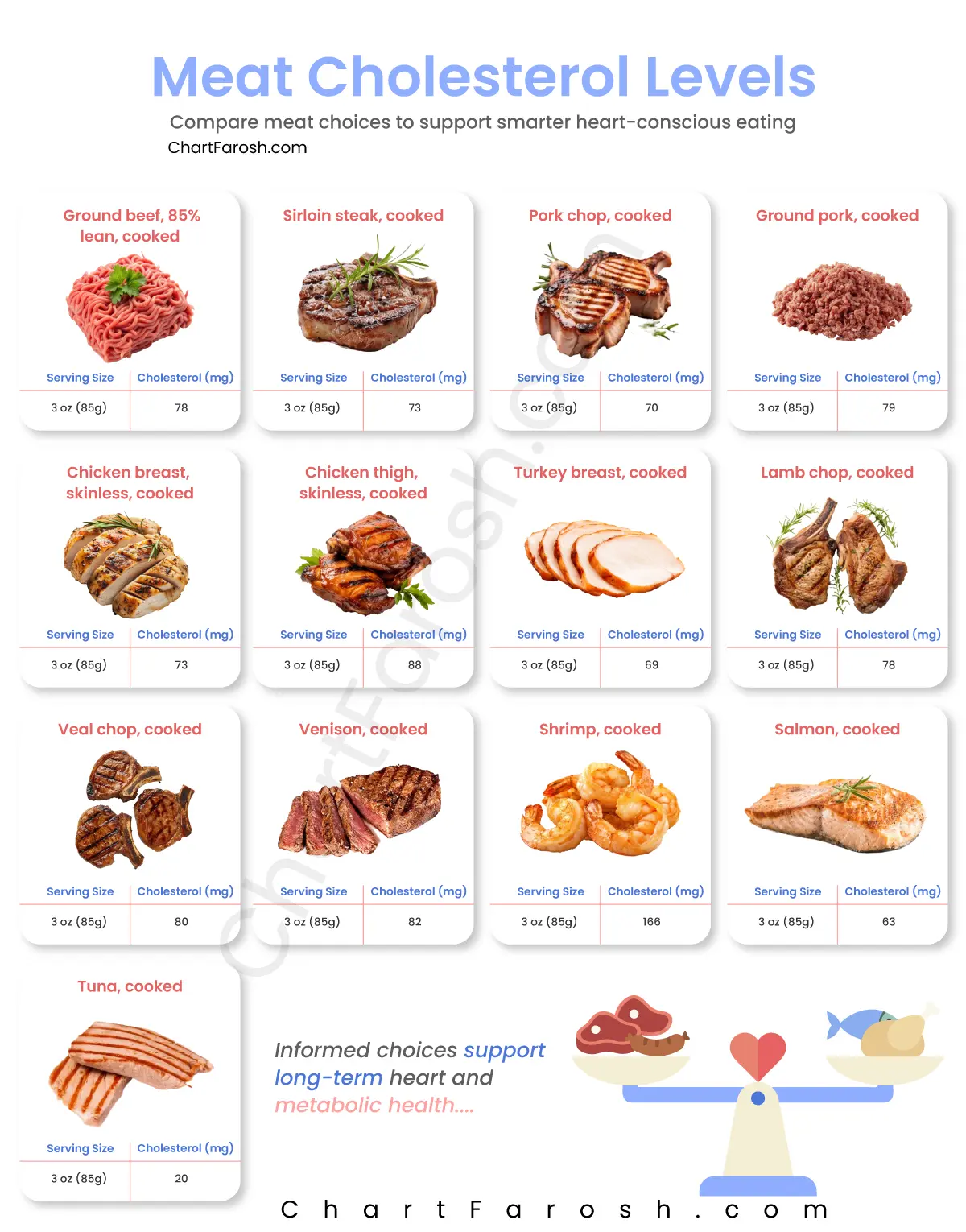
Table of Contents
Meat Cholesterol Chart (Per 3 oz Cooked Serving)
Here is the full breakdown. Every value is for a cooked 3-ounce serving, about 85 grams. That is the size of a deck of cards. The numbers are close estimates. They shift with the cut, the fat trim, and how you cook it.
| Meat type | Cut / food | Serving size | Cholesterol (mg) |
| Beef | Ground beef, 85% lean, cooked | 3 oz (85 g) | 78 |
| Beef | Sirloin steak, cooked | 3 oz (85 g) | 73 |
| Pork | Pork chop, cooked | 3 oz (85 g) | 70 |
| Pork | Ground pork, cooked | 3 oz (85 g) | 79 |
| Poultry | Chicken breast, skinless, cooked | 3 oz (85 g) | 73 |
| Poultry | Chicken thigh, skinless, cooked | 3 oz (85 g) | 88 |
| Poultry | Turkey breast, cooked | 3 oz (85 g) | 69 |
| Lamb | Lamb chop, cooked | 3 oz (85 g) | 78 |
| Veal | Veal chop, cooked | 3 oz (85 g) | 80 |
| Game meat | Venison, cooked | 3 oz (85 g) | 82 |
| Seafood | Shrimp, cooked | 3 oz (85 g) | 166 |
| Seafood | Salmon, cooked | 3 oz (85 g) | 63 |
| Seafood | Tuna, cooked | 3 oz (85 g) | 20 |
Values are based on USDA FoodData Central averages and rounded to the nearest milligram. Organ meats like liver and kidney are far higher and are covered below.
High Cholesterol Meats
The big surprise is seafood, not red meat.
Shrimp tops the list at about 166 mg per serving. That is more than double most cuts of beef or pork. Squid, crab, and lobster sit just as high. So if you track cholesterol, shellfish is the food to watch. Not the steak you felt guilty about.
On land, the heavyweights are organ meats. They are not on the chart above. But liver, kidney, and similar cuts run several times higher than muscle meat. One serving of beef liver can pass 300 mg on its own.
After that, the gaps between normal cuts are small. Chicken thigh (88 mg), veal (80 mg), and venison (82 mg) sit above beef and pork. But that is a 10 to 20 mg spread, not a wide gap. For the full shellfish picture, see the Seafood Cholesterol Chart.
Low Cholesterol Meats
Fish is where the low numbers live.
Tuna is the lowest on the whole chart, at about 20 mg per serving. Salmon comes in around 63 mg. That beats every cut of beef, pork, and poultry here. Salmon also brings omega-3 fats that are good for your heart.
Turkey breast (69 mg) is the leanest poultry, just ahead of pork chop (70 mg). So the order for low-cholesterol meat runs like this. Tuna first. Then salmon. Then turkey breast and lean pork.
The pattern is simple. Lean cuts and white fish sit at the bottom. Shellfish and organ meats sit at the top. If you care more about protein, the Meat Protein Chart ranks these same cuts by grams of protein.
Poultry Cholesterol Guide
Chicken and turkey have a name as the safe meats. That mostly holds up, with two catches.
Skinless turkey breast (69 mg) and skinless chicken breast (73 mg) are among the lowest choices. Chicken thigh jumps to 88 mg. That is the highest number in the poultry group, because dark meat carries more fat.
Two things change the math. The skin adds fat, though not much cholesterol. And dark meat runs higher than white meat. So skinless white meat is the leanest pick. Chicken thigh with the skin on is the richest. How you cook it matters too, and the Meat Cooking Temperature Chart covers that.
Beef, Pork & Lamb Cholesterol Levels
Here is the part that surprises people. Red meat is not the cholesterol monster it is made out to be. At least not on the cholesterol number alone.
Sirloin steak (73 mg) matches a skinless chicken breast. Pork chop (70 mg) is lower than chicken. Ground beef at 85% lean (78 mg), lamb chop (78 mg), and ground pork (79 mg) sit within a few milligrams of each other.
But for red meat, the cholesterol number is not the whole story. Fatty cuts and processed meats like bacon and sausage carry more saturated fat. And saturated fat raises your blood LDL more than the cholesterol in food does. So a lean sirloin and a fatty rib-eye can match on cholesterol and still act differently in your body.
Recommended Daily Cholesterol Intake
The science here has shifted. It is worth getting right.
For decades, the advice was a hard cap. You aimed for under 300 mg of dietary cholesterol a day. The limit dropped to 200 mg with heart disease or high LDL. The most recent U.S. dietary guidelines dropped that number. The research showed something surprising. For most people, the cholesterol you eat affects blood cholesterol less than saturated and trans fats do.
That does not make cholesterol a free-for-all. The advice now is to keep it low inside a healthy diet. The American Heart Association still says to watch it. That goes double for people with diabetes, heart disease, or a strong family history. The CDC has a plain-language overview of how it fits together.
Here is a simple way to read the chart. One 3-ounce serving of most meats uses a quarter to a third of that old 300 mg mark. A serving of shrimp uses more than half. That is a useful sense of scale, even with the hard limit gone.
Tips to Reduce Dietary Cholesterol
If you want to bring your numbers down, the single meat choice matters less than the overall pattern. A few things that move the needle:
- Swap some red and processed meat for fish twice a week. Fatty fish like salmon is best.
- Choose lean cuts and skinless poultry. Trim the visible fat.
- Mind the cooking method. Grilling, baking, and roasting beat deep-frying. Frying adds fat the meat never had.
- Go easy on processed meats. Bacon, sausage, and deli meats bring saturated fat and sodium with them.
- Build the rest of the plate around fibre. Oats, beans, vegetables, and fruit help carry cholesterol out of the body.
- Watch your saturated fat. For most people it matters more than dietary cholesterol.
None of this means giving up meat. It is about which meat, how often, and what sits next to it on the plate. The Food Cholesterol Chart covers the rest of the diet.
FAQs
Which meat has the highest cholesterol?
Shrimp is highest among common choices, at about 166 mg per 3-ounce serving. Organ meats like liver go even higher, often above 300 mg.
Which meat has the lowest cholesterol?
Tuna is the lowest, at about 20 mg per serving. Salmon is next at about 63 mg.
Is chicken lower in cholesterol than beef?
No. Skinless chicken breast and sirloin steak both sit around 73 mg. Chicken thigh is higher than several cuts of beef and pork.
Does shrimp really have more cholesterol than steak?
Yes, more than double. But shrimp is low in saturated fat. For most people it raises blood cholesterol less than the number suggests.
How much cholesterol should I eat per day?
The old guideline was about 300 mg a day. Recent guidelines dropped the hard limit. They still advise keeping dietary cholesterol low, especially with heart disease or high LDL.
Does cooking change the cholesterol in meat?
The cholesterol stays about the same. Frying adds fat, and draining ground meat removes some. So cooking changes total fat more than cholesterol.
Can I eat red meat if I have high cholesterol?
In moderation, usually yes, especially lean cuts. The bigger levers are eating less saturated and processed fat and more fibre. Check with your doctor about your own case.