
Bug Lifespan Chart
A mayfly and a queen termite are both insects, but one outlives the other by a factor of millions. The mayfly gets minutes as a flying adult. A termite queen can lay eggs for fifty years. Once I learned that, I stopped thinking of a bug’s lifespan as a single number.
Most of the bugs around us spend their longest, slowest stretch out of sight, as eggs, larvae, or nymphs. The biting, buzzing, fluttering adult is usually the short final act. That is why this chart needs two columns: how long the adult lives, and how long the whole life cycle takes.
This chart lists the average lifespan of 20 common bugs and insects, what makes some last for years and others for a day, and the record-holders at both ends. Use it for school projects, pest planning, or plain curiosity.
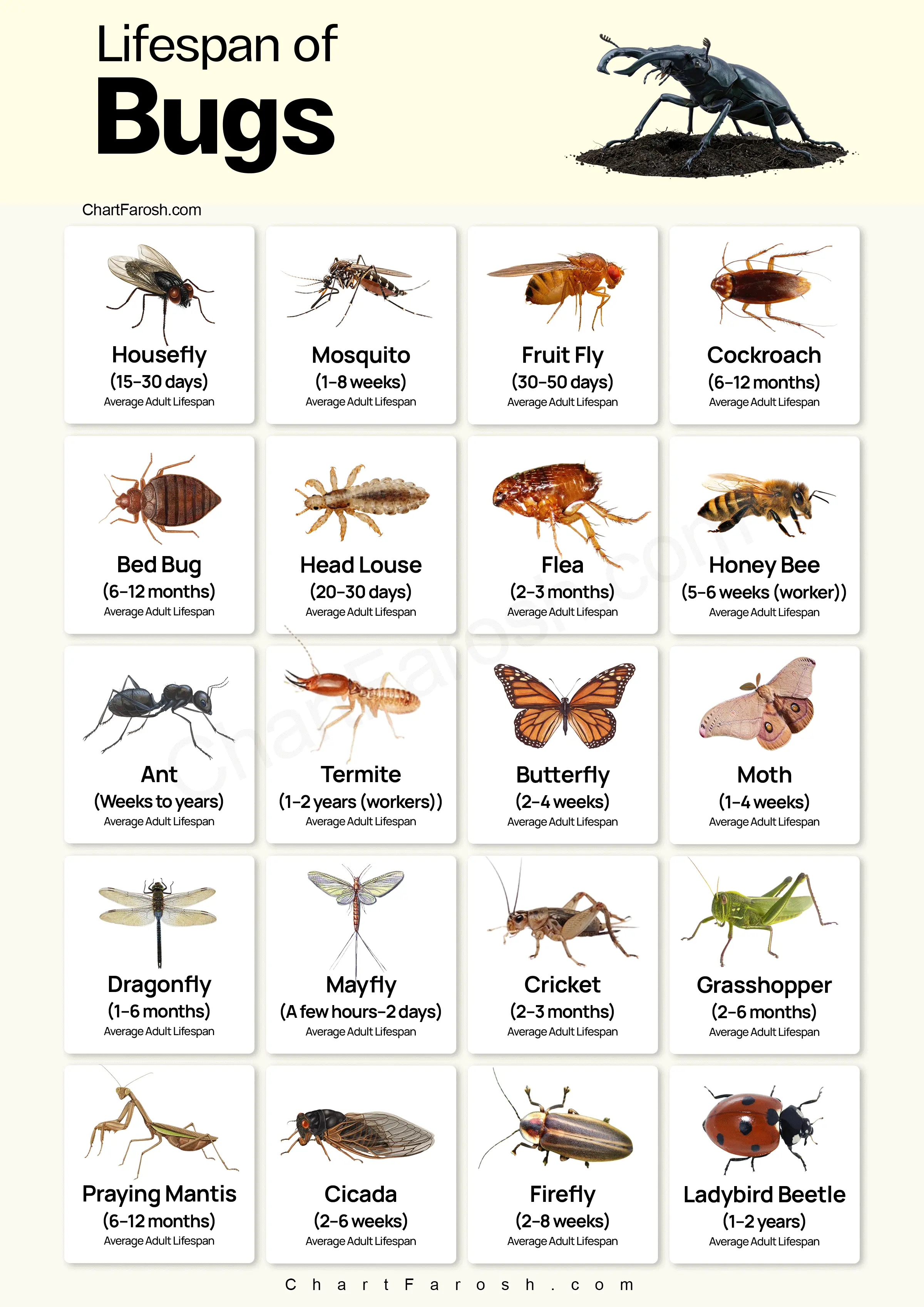
Table of Contents
Bug & Insect Lifespan Chart
Lifespans here range from a few hours to several decades. The first number is the average adult lifespan, and the second is the total life cycle, counting the egg, larva or nymph, and pupa stages. For social insects like bees, ants, and termites, the queen lives far longer than the workers, so both are noted.
The two columns often pull apart. A cicada lives only weeks as an adult but spends years underground first. If you are trying to work out which crawling visitor you have before checking its lifespan, our insect egg identification chart and bug guides can help you name it.
| Bug / Insect Type | Scientific Name (Example) | Average Adult Lifespan | Total Life Cycle |
| Housefly | Musca domestica | 15–30 days | 1–2 months |
| Mosquito | Culicidae spp. | 1–8 weeks | 1–2 months |
| Fruit Fly | Drosophila melanogaster | 30–50 days | 1–2 months |
| Cockroach | Periplaneta americana | 6–12 months | 1–2 years |
| Bed Bug | Cimex lectularius | 6–12 months | Up to 1 year |
| Head Louse | Pediculus humanus capitis | 20–30 days | About 1 month |
| Flea | Ctenocephalides felis | 2–3 months | 3–12 months |
| Honey Bee | Apis mellifera | 5–6 weeks (worker) | 6 weeks–5 years (queen) |
| Ant | Formicidae spp. | Weeks to years | Up to 30 years (queen) |
| Termite | Various species | 1–2 years (workers) | Up to 50 years (queen) |
| Butterfly | Various species | 2–4 weeks | 1–12 months |
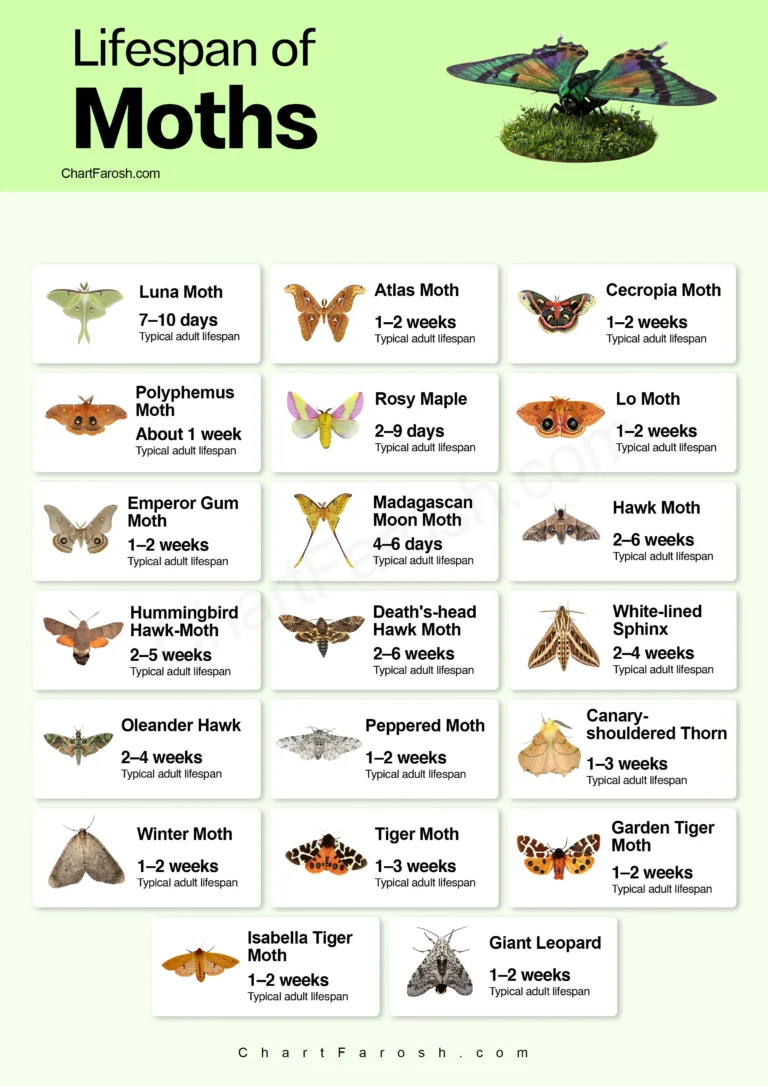
| Moth | Various species | 1–4 weeks | 1–12 months |
| Dragonfly | Various species | 1–6 months | 1–5 years |
| Mayfly | Various species | A few hours–2 days | Up to 1 year |
| Cricket | Gryllidae spp. | 2–3 months | 3–12 months |
| Grasshopper | Various species | 2–6 months | About 1 year |
| Praying Mantis | Various species | 6–12 months | About 1 year |
| Cicada | Cicadidae spp. | 2–6 weeks | 2–17 years |
| Firefly | Lampyridae spp. | 2–8 weeks | 1–2 years |
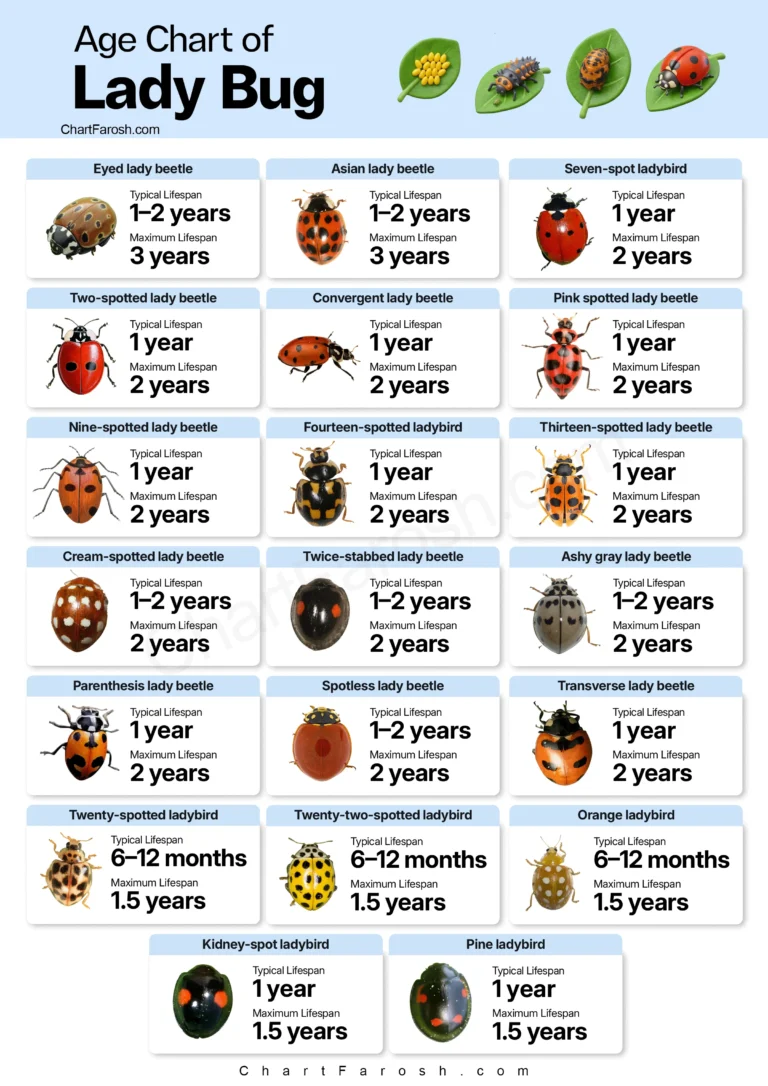
| Ladybird Beetle | Coccinellidae spp. | 1–2 years | 1–2 years |
Which Bugs Live the Longest?
The long-lived insects are nearly all social or slow-developing. Termite queens top the list, laying eggs for 25 to 50 years inside a protected nest. Ant queens can reach about 30 years, and honey bee queens live two to five.
Among solo insects, the ladybird beetle holds up well at one to two years, and the cicada wins on total cycle alone with its long stretch underground.
Which Bugs Have the Shortest Lifespan?
The mayfly sits at the far short end, with adults that live from a few hours to about two days. Head lice last around three to four weeks, and houseflies about a month. The theme repeats across the order: the adult phase is brief, and the growing happens earlier and out of sight.
The Two Ways Bugs Grow Up
Insects reach adulthood by one of two routes, and that route explains most of the gap between the two columns above.
Some go through complete metamorphosis, with four stages: egg, larva, pupa, and adult. Flies, mosquitoes, fleas, bees, ants, butterflies, moths, and beetles all do this. The larva looks nothing like the adult, which is why a caterpillar identification chart looks so unlike the butterfly it becomes. A pupal stage rebuilds the body in between.
Others go through incomplete metamorphosis, with three stages: egg, nymph, and adult. Cockroaches, crickets, grasshoppers, mantises, dragonflies, bed bugs, and cicadas grow this way. The nymph already looks like a small, wingless version of the adult and gets bigger with each molt.
Either way, the early stages do the real living. A periodical cicada nymph feeds on tree roots underground for years. The Library of Congress notes this is among the longest such stretches of any insect, while the winged adult lasts only weeks.
Factors That Affect How Long a Bug Lives
Two insects of the same kind can live very different lengths of time. A few factors explain most of the difference.
- Species and role: a queen bee or termite can outlive a worker of the same colony by years.
- Temperature and season: warm weather speeds insects through their stages, while cold can slow or pause development.
- Food and water: a steady food supply extends adult life, while many adults that cannot feed, like some moths, die within days.
- Predators and pest control: birds, spiders, frogs, and insecticides cut most wild adults short of their potential.
Habitat safety: insects in protected nests or indoors often outlast their exposed relatives. Many of the helpers in our beneficial insects chart live longest where gardens go easy on sprays.
Insect Lifespans at a Glance
Grouped by how long the adult lives, the 20 bugs in this chart sort into four tidy bands. This is the quick version if you only need a rough sense of scale.
| Adult Lifespan Group | Typical Length | Bugs in This Chart |
| Days | Hours to about 2 days | Mayfly |
| Weeks | 1–8 weeks | Housefly, mosquito, fruit fly, butterfly, moth, firefly, head louse, worker honey bee, adult cicada |
| Months | 2–12 months | Flea, cricket, grasshopper, dragonfly, cockroach, bed bug, praying mantis |
| A year or more | 1 year to decades | Ladybird beetle, termite workers, and the queens of ants, bees, and termites |
The pattern is the opposite of what most of us assume. Tiny bugs are not always short-lived, and the ones we notice most, the summer fliers, are often nearly done. For the other end of the lifespan scale, our cat lifespan chart shows how household pets compare.
Record-Holders: The Longest and Shortest Lives
Shortest: the mayfly wins, and it is not close. A female of the species Dolania americana lives for less than five minutes as an adult after its final molt, just long enough to mate and drop her eggs.
Most mayflies manage about a day. Their whole order is named Ephemeroptera, from the Greek for short-lived, even though the nymph spends up to a year on a stream bed first.
Longest: periodical cicadas hold the record for the longest life cycle. They live underground as nymphs for either 13 or 17 years, on prime-numbered clocks, then surface for just four to six weeks as adults, as Britannica describes. For raw adult longevity, the queen termite is the champion, laying eggs for 25 to 50 years, with a few reported past a century.
Are Fireflies and Ladybirds Beetles?
Yes. Two entries in the chart, the firefly and the ladybird, are not flies or true bugs at all. They are beetles, in the order Coleoptera. Fireflies belong to the family Lampyridae and ladybirds to Coccinellidae.
The Xerces Society notes that fireflies pass through the full four-stage beetle life cycle and spend most of it as glowing larvae. For the full beetle picture, our beetle lifespan chart covers 20 types in this same format.
FAQs
How long do bugs live on average?
Most insects finish their whole life cycle in under a year. The adult stage is usually the shortest part, often only days or weeks, while the egg, larva, and nymph stages take the rest.
Which insect has the shortest lifespan?
The mayfly. Females of the species Dolania americana live for less than five minutes as adults, and most mayflies survive only about a day after they get their wings.
Which insect lives the longest?
Queen termites live longest, often 25 to 50 years. Periodical cicadas hold the record for the longest life cycle, spending 13 or 17 years underground before a short adult life.
Why do mayflies live for only a day?
Adult mayflies have no working mouthparts and cannot eat. Their only job is to mate and lay eggs, so they spend their whole short adult life on reproduction.
Are fireflies and ladybirds insects or beetles?
Both. They are insects, and more specifically they are beetles in the order Coleoptera. Despite the name, a firefly is not a fly.
Why do cicadas come out every 13 or 17 years?
Periodical cicadas spend those years underground as nymphs, feeding on tree roots. The prime-numbered cycles are thought to help them avoid predators by emerging all at once on an unpredictable schedule.
What is the difference between adult lifespan and total life cycle?
Adult lifespan is how long the insect lives once it has wings or is fully grown. Total life cycle counts every stage from egg to death, which is usually much longer.
One Comment