Types of Ants in the House
The first sign was a thin line of tiny ants marching across my kitchen counter toward a single drop of jam. I wiped them away, and the next morning they were back on the exact same path. That is when I learned ants do not wander in by accident.
A scout finds food, then lays a scent trail that the rest of the colony follows. The kind of ant on that trail decides how much trouble you are in. Some only chase crumbs, a few damage wood, and one delivers a sting you will not forget.
About a dozen species cause most home invasions. The chart below covers 15 of them, with how each one looks, where it shows up indoors, and the main problem it brings. To go deeper on any single species, the ant identification chart breaks down the finer details.
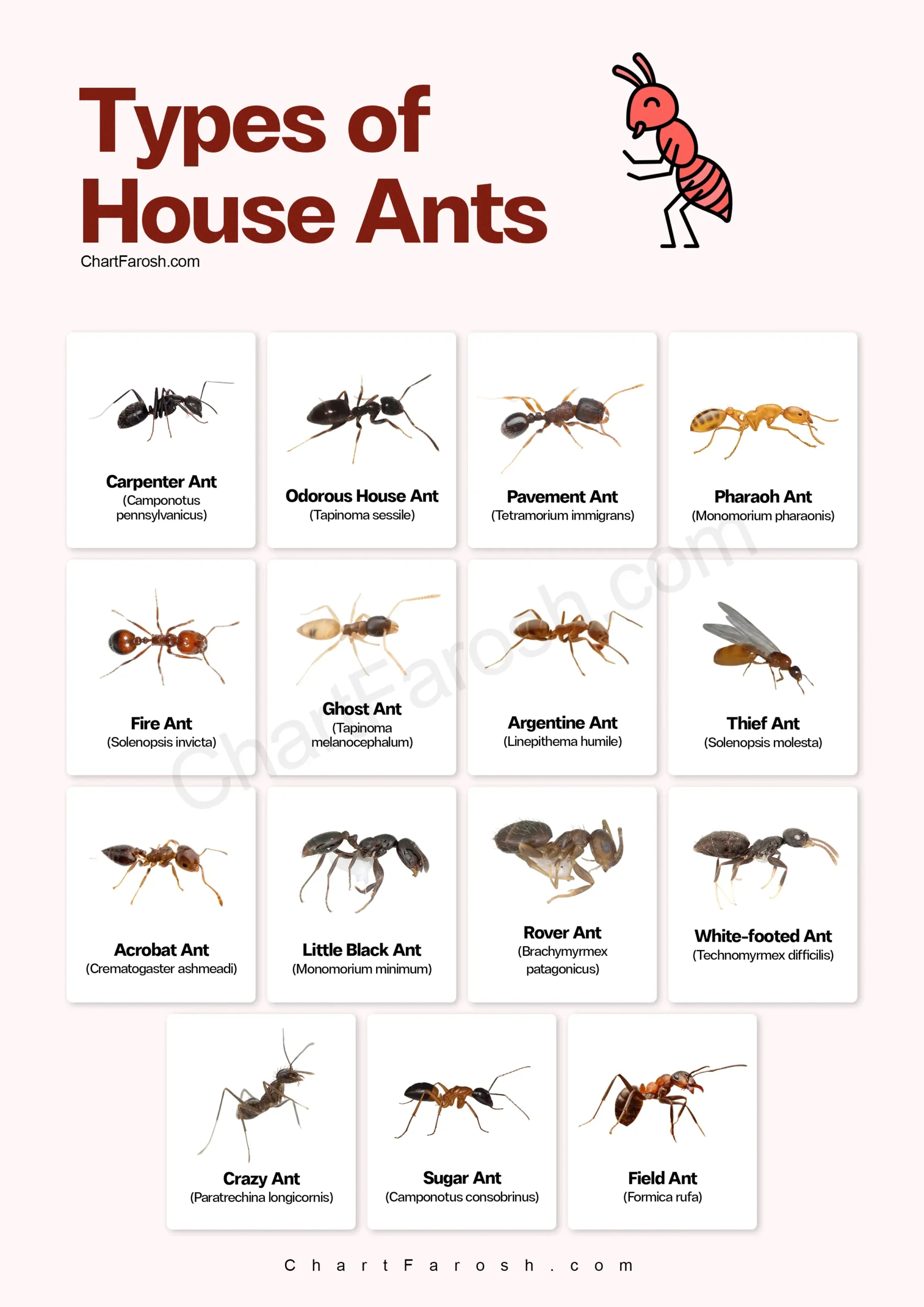
Table of Contents
Ant types and their names
Ants are social insects that live in colonies and send out workers to find food. Indoors, those workers are what you see on the counter or along a baseboard. The species matters, since each one nests in a different place and brings a different headache.
The table lists 15 ants that turn up in homes across North America and beyond. A few names overlap or get used loosely, which the notes below sort out. Match the look and the location to narrow down which ant you have.
| Common name | Scientific name | Appearance | Where indoors | Main problem |
| Carpenter ant | Camponotus pennsylvanicus | Large, black or red-black | Wooden walls, roofs, damp beams | Tunnels through wood |
| Odorous house ant | Tapinoma sessile | Small brown or black; smells of rotten coconut | Kitchens, sinks | Contaminates food |
| Pavement ant | Tetramorium immigrans | Dark brown to black | Cracks, floors, near slabs | Invades food |
| Pharaoh ant | Monomorium pharaonis | Tiny yellow | Warm indoor voids | Can spread bacteria |
| Fire ant | Solenopsis invicta | Reddish-brown | Gardens, near walls and foundations | Painful sting |
| Ghost ant | Tapinoma melanocephalum | Dark head, pale legs and body | Bathrooms, kitchens | Hard to see and control |
| Argentine ant | Linepithema humile | Light to dark brown | Food storage areas | Huge multi-queen colonies |
| Thief ant | Solenopsis molesta | Very tiny yellow | Cabinets, pantries | Steals stored food |
| Acrobat ant | Crematogaster species | Heart-shaped abdomen, often raised | Damp wood, insulation | Nests in wall voids |
| Little black ant | Monomorium minimum | Tiny, shiny black | Kitchens, windowsills | Food nuisance |
| Rover ant | Brachymyrmex patagonicus | Small, dark brown | Bathrooms, walls | Spreads fast indoors |
| White-footed ant | Technomyrmex difficilis | Dark body, pale feet | Ceilings, attics | Difficult to eliminate |
| Longhorn crazy ant | Paratrechina longicornis | Long legs, erratic movement | Electronics, kitchens | Fast-moving infestations |
| Sugar ant | Camponotus consobrinus | Orange and black (Australian species) | Sweet food areas | Drawn to sugar |
| Field ant | Formica species | Red-brown to black | Lawns and foundations | Outdoor nests stray inside |
Sizes and colors vary within a species, and a few of these ants live mostly outdoors and only stray inside. Where a name is used loosely, the text explains it.
Ants that damage your home
Carpenter ants are the ones to take seriously. They do not eat wood, but they tunnel through it to nest, and a large colony can weaken beams over time. They prefer damp or rotting wood, so a carpenter ant trail often points to a moisture problem behind a wall. In spring, mature colonies release winged swarmers that are easy to confuse with other flying insects.
Acrobat ants and white-footed ants also nest in wood, insulation, and wall voids, though they do less structural harm. They flag damp spots more than real danger. Still, any ant nesting inside a wall is worth tracing back to its source.
Ants that get into food
Most kitchen ants are after a meal. Odorous house ants, little black ants, pavement ants, and Argentine ants all follow trails to crumbs, grease, and sweets. Crush an odorous house ant and you get a smell like rotten coconut, which is the quickest way to name it.
The tiny pale ants are pharaoh ants, thief ants, and ghost ants. They slip through the smallest gaps and nest in warm, hidden spots. Pharaoh ants matter most, since they can carry bacteria across surfaces, which is a real concern in kitchens and hospitals. These colonies hide their brood deep in walls, and you can match ant eggs and larvae in an insect egg identification reference.
Ants that sting or bite
Fire ants are the painful exception. A disturbed mound sends up dozens of workers that grip the skin and sting in a ring, leaving itchy welts that can blister. They mostly nest outdoors near walls and foundations, then forage inside through gaps.
For most people a few fire ant stings mean swelling and itching that fade in a day or two. People who are allergic can react badly and may need medical care. Keep children and pets away from active mounds in the yard.
Ant or termite? How to tell
Carpenter ants get confused with termites all the time, and the mix-up is costly. Both swarm, both turn up in wood, and both send winged adults flying in spring. A few body features tell them apart at a glance.
| Feature | Ant | Termite |
| Waist | Narrow, pinched waist | Thick, no waist |
| Antennae | Bent (elbowed) | Straight, beaded |
| Wings (swarmers) | Front wings longer than back | Four wings of equal length |
| Body color | Dark and clearly segmented | Pale, creamy, soft |
| Wood | Carpenter ants tunnel but do not eat it | Termites eat the wood itself |
If you see pale, soft insects and hollowed-out wood, think termite and call a professional. If the insects are dark and the tunneled wood looks clean, think carpenter ant. You can confirm the difference in a termite identification chart.
Hardest ants to get rid of
Some ants shrug off normal control. Argentine ants build huge connected colonies with many queens, so killing one nest does little. Pharaoh ants react to the wrong spray by budding, which splits one colony into several.
Crazy ants and white-footed ants are stubborn for similar reasons. They spread fast, nest in odd places, and ignore many baits. These species usually need patient baiting or professional help rather than a quick fix.
Where house ants come from
Ants come inside for food, water, and shelter, especially when the weather outdoors turns hot, dry, or wet. A dripping pipe or a sweet spill is an open invitation. Outdoors, most ants are useful, since they aerate soil and eat other pests as beneficial insects.
Field ants and the European red wood ant (Formica rufa) live mainly outdoors and only stray inside by accident. The true sugar ant (Camponotus consobrinus) is an Australian species, while sugar ant elsewhere is a loose name for any sweet-loving ant. Knowing the real source helps you stop the trail where it starts.
How to identify and keep ants out
A short routine handles most ant problems before they grow.
- Look: note the size, the color, and whether the waist has one or two bumps.
- Trail: follow the line to find both the entry point and the food source.
- Clean: wipe up crumbs and spills, and fix leaks and standing water.
- Seal: caulk gaps around pipes, windows, and baseboards.
- Bait: use bait that workers carry home, and avoid spraying foragers.
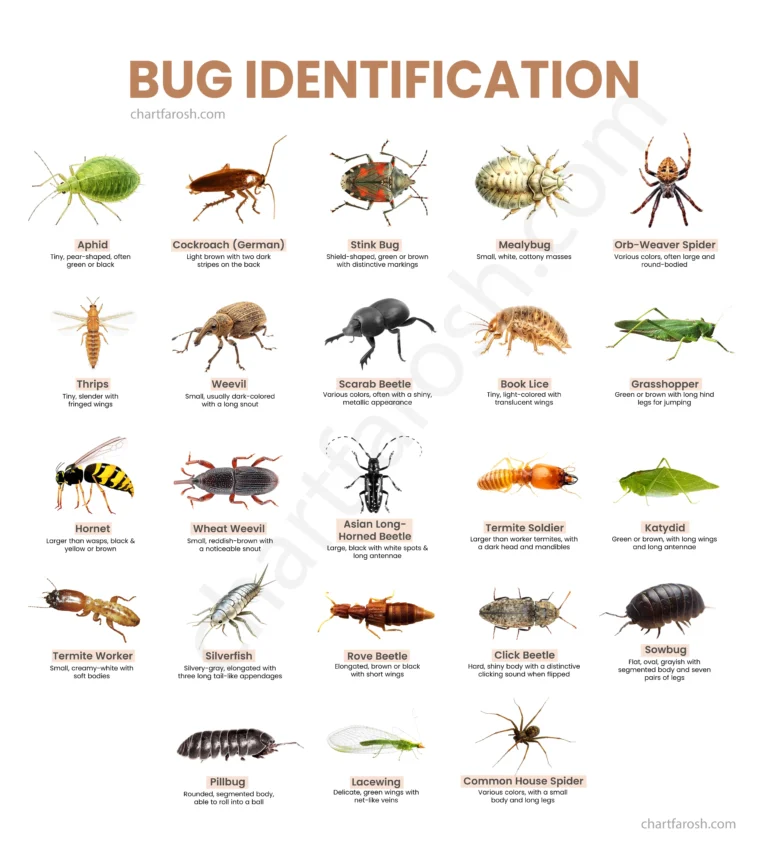
- Watch: other house invaders such as spiders use the same cracks, so a sealed home stays cleaner all round.
FAQs
What are the most common ants found in houses?
Odorous house ants, pavement ants, carpenter ants, Argentine ants, and little black ants are among the most common ants found indoors.
How do I tell a carpenter ant from a termite?
Carpenter ants have a pinched waist, bent antennae, and a dark body. Termites have a thick waist, straight antennae, and a pale body, and they eat wood while carpenter ants only tunnel through it.
Which house ants bite or sting?
Fire ants deliver a painful sting. Most other household ants do not sting and are only a nuisance.
Why do I suddenly have ants in my kitchen?
A scout ant finds food or water, then leaves a scent trail that brings the colony. Crumbs, spills, and standing water draw them in.
Are tiny yellow ants dangerous?
Pharaoh ants and thief ants are tiny and yellow. They do not sting, but pharaoh ants can spread bacteria, which makes them a concern in kitchens and hospitals.
What is a sugar ant?
Sugar ant is a loose name for any small ant drawn to sweets. The true sugar ant (Camponotus consobrinus) is an Australian species.
How do I get rid of house ants for good?
Seal entry points, clean up food and water, and use bait that workers carry back to the nest. Spraying the foragers you see rarely reaches the colony.