Types of Stink Bugs
One October my living room filled with stink bugs. They lined the warm side of the windows by the dozen. I learned fast not to swat them. Crush one and the smell hangs in the air for an hour, sharp and green, like cilantro gone wrong.
Those were brown marmorated stink bugs. Invaders from Asia that pour into houses every fall.
That was my crash course. I had thought a stink bug was one bug with one bad smell. It is a whole family. Some wreck crops. Some are bright orange warnings. A couple are on your side, hunting the pests that eat your garden. And one common look-alike is not a stink bug at all.
There are thousands of kinds worldwide. Below are ten you are likely to meet. What each looks like, where it lives, and whether it helps you or harms your plants.
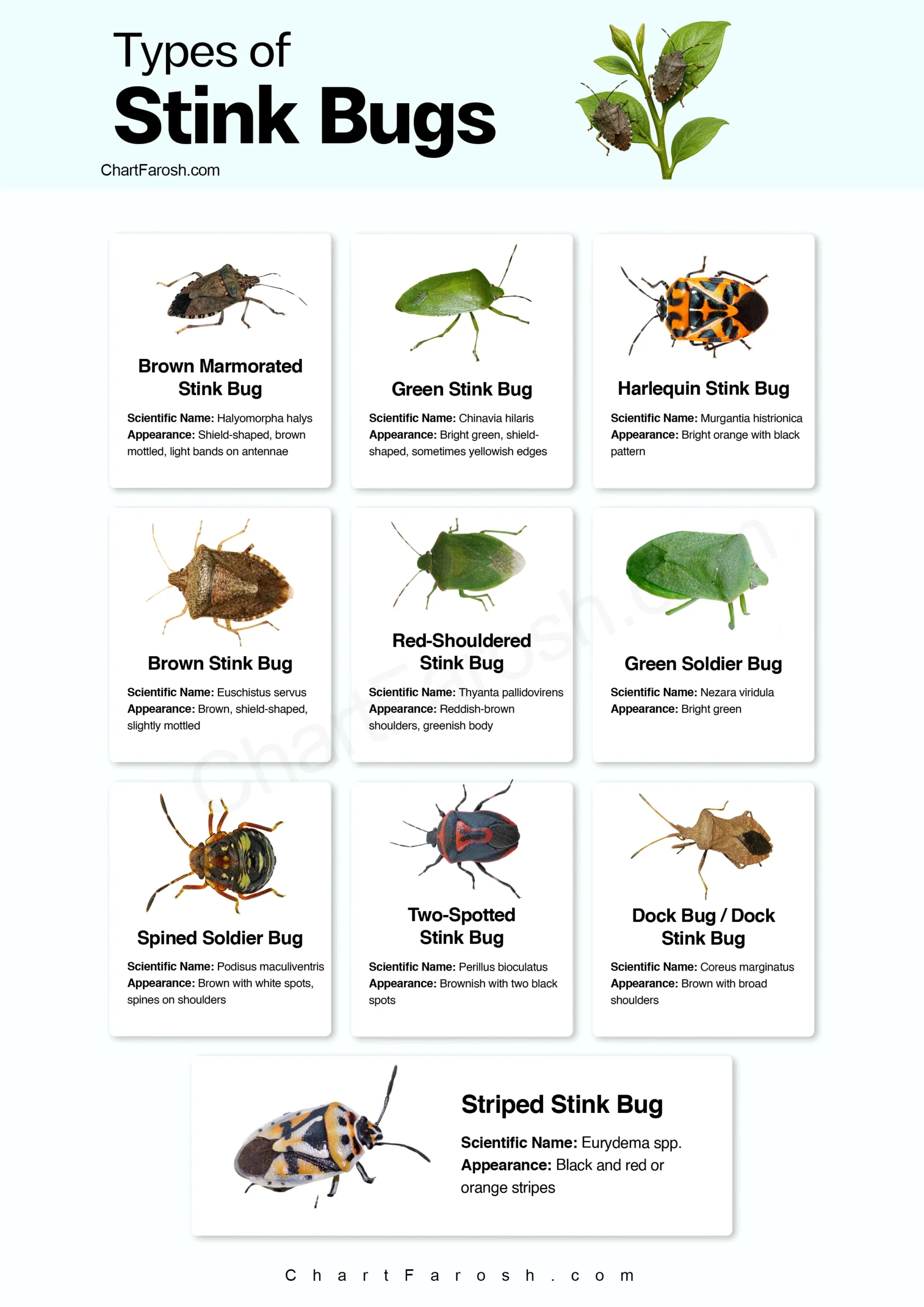
Table of Contents
Stink bug identification chart
Stink bugs make up a large family of shield-shaped insects, the Pentatomidae. The ten below are the ones people see and ask about most.
The chart sorts each by name, scientific name, look, home, and what it does. Read the last column with care. Some are pests, some are helpers, and one is not a true stink bug at all.
| Common Name | Scientific Name | Appearance | Habitat | Notes / Behavior |
| Brown Marmorated Stink Bug | Halyomorpha halys | Shield-shaped, brown mottled, pale antenna bands | Orchards, gardens, homes | Invasive pest; enters houses in fall |
| Green Stink Bug | Chinavia hilaris | Bright green, yellow edges | Trees, crops, gardens | Native; feeds on fruit and veg |
| Harlequin Bug | Murgantia histrionica | Bright orange with black pattern | Crops, gardens | Pest of cabbage and crucifers |
| Brown Stink Bug | Euschistus servus | Brown, shield-shaped, mottled | Fields, gardens, forests | Pest of soybeans and corn |
| Red-Shouldered Stink Bug | Thyanta pallidovirens | Greenish with reddish shoulders | Crops and gardens | Feeds on fruits and seeds |
| Southern Green Stink Bug | Nezara viridula | Bright green, shield-shaped | Warm regions worldwide | Major crop pest, not a soldier bug |
| Spined Soldier Bug | Podisus maculiventris | Brown, spined shoulders | Gardens, fields | Beneficial predator of caterpillars |
| Two-Spotted Stink Bug | Perillus bioculatus | Black and orange, two dark spots | Cornfields, gardens | Predator of beetle larvae |
| Dock Bug | Coreus marginatus | Brown, broad rounded shoulders | Weedy areas, fields | Squash bug family, not a true stink bug |
| Striped Shield Bug | Eurydema spp. | Black with red or orange marks | Cruciferous crops | Crucifer pest, common in Europe |
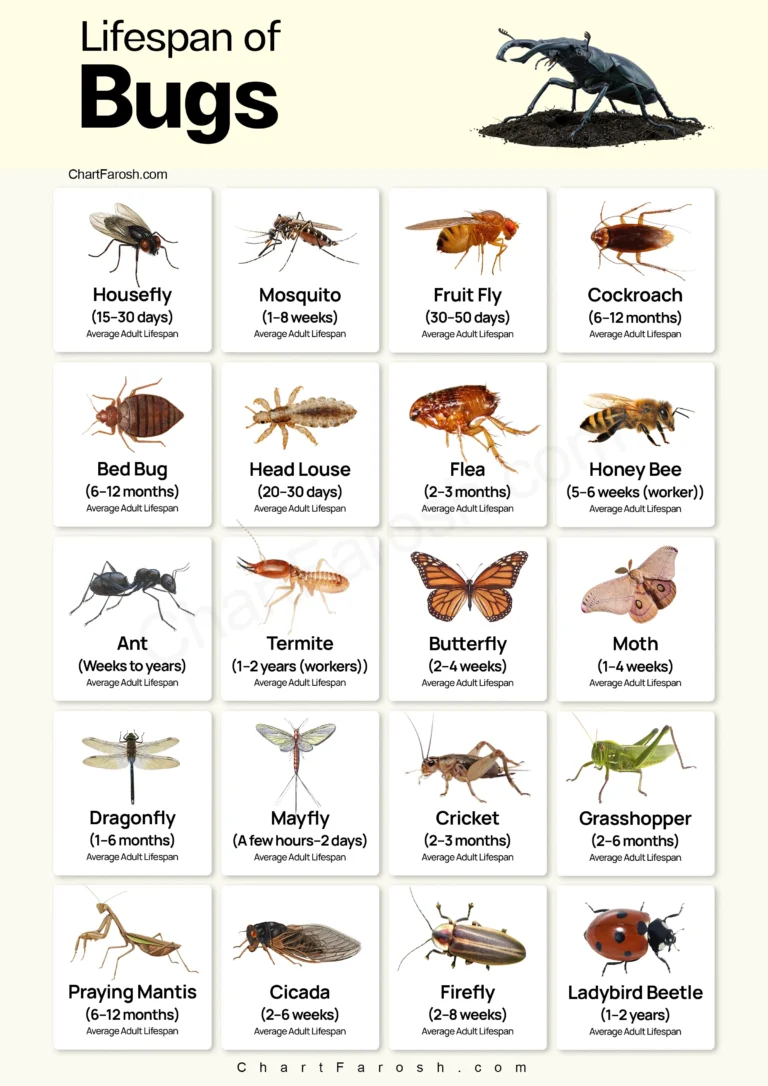
The next sections sort them into three camps. To match a bug to a photo, the bug identification chart sets each one beside a clear image.
What makes a stink bug a stink bug
A true stink bug belongs to the family Pentatomidae. The body is shield-shaped, and a large triangular plate called the scutellum covers much of the back. The smell comes from glands on the underside. They release a sharp, lasting odor when the bug is squeezed or scared.
Most stink bugs feed on plants. They pierce leaves, stems, fruit, and seeds with a needle-like beak and suck the sap. A smaller group hunts other insects instead.
These predatory stink bugs, the soldier bugs, are a gardener’s friend. A few insects that look like stink bugs, such as the dock bug, sit in a separate family. As Britannica describes them, the true stink bugs are the pentatomids, named for that pungent defense.
| Group | What They Do | Examples Here |
| Plant-feeding stink bugs | Pierce and suck plants; many are crop pests | Brown marmorated, green, brown, harlequin |
| Predatory soldier bugs (Asopinae) | Hunt caterpillars and beetle larvae; beneficial | Spined soldier bug, two-spotted stink bug |
| Stink bug look-alikes | Related bugs in other families | Dock bug (squash bug family) |
Pest stink bugs that damage plants
Most stink bugs in this list feed on plants, and several are serious crop pests.
The brown marmorated stink bug (Halyomorpha halys) is the famous invader. It came from East Asia and now lives across much of North America and Europe. It is brown and mottled, with pale bands on the antennae. It damages fruit and crops, then crowds into houses to overwinter when the weather turns cold.
The green stink bug (Chinavia hilaris, once called Acrosternum hilare) is a bright green native of North America. It feeds on fruits, vegetables, and seeds.
The southern green stink bug (Nezara viridula) looks much like it but is a separate, worldwide species. It is one of the most damaging stink bugs to beans, soybeans, and other crops. It is not a soldier bug, despite the nickname some give it.
The brown stink bug (Euschistus servus) is a dull brown pest of soybeans and corn. The red-shouldered stink bug (Thyanta pallidovirens) is greenish with reddish shoulders and feeds on fruits and seeds.
Two stink bugs use bright color as a warning. The harlequin bug (Murgantia histrionica) is orange and black and attacks cabbage, broccoli, and other crucifers.
The striped shield bug (Eurydema species) does the same in Europe, in black with red or orange. The boldest of the striped kind is Graphosoma italicum, marked like a tiny red-and-black jersey.
Two of these green species cause the most confusion, so it helps to set them beside the brown invader.
| Feature | Brown Marmorated | Green Stink Bug | Southern Green |
| Color | Brown, mottled | Bright green | Bright green |
| Antenna bands | Pale white bands | Black tips | Reddish bands |
| Origin | Invasive, East Asia | Native to N. America | Cosmopolitan pest |
| Enters homes | Yes, in fall | Rarely | Rarely |
| Main concern | Crops and home nuisance | Fruit and vegetables | Beans and soybeans |
Beneficial stink bugs: the soldier bugs
Not every stink bug is a pest. The predatory ones, called soldier bugs, hunt the insects that damage your plants. They belong to the subfamily Asopinae and carry a thicker beak for stabbing prey. University guides such as the one from Maryland Extension split stink bugs into these plant-feeding and predatory groups.
The spined soldier bug (Podisus maculiventris) is brown with sharp points on its shoulders. It eats caterpillars and beetle larvae, including pests like the Colorado potato beetle and the Mexican bean beetle. Growers welcome it, and it is sold as a natural control.
The two-spotted stink bug (Perillus bioculatus) wears bold black and orange with two dark spots. It also targets beetle larvae and is a known enemy of the Colorado potato beetle.
If you find these in the garden, leave them be. They are among the most useful beneficial insects you can host, and they hunt the caterpillars that chew your leaves.
The dock bug: a stink bug look-alike
The dock bug (Coreus marginatus) often gets called a stink bug, and it does give off a smell when handled. But it is not a true stink bug. It belongs to the squash bug family, the Coreidae, also known as leatherbugs or leaf-footed bugs.
It is a broad, brown bug with rounded shoulders, common across Europe in weedy ground. It feeds on the seeds of docks and sorrels and does no harm to crops or people. The quickest tell is the shape. A dock bug is wider and more angular than the neat shield of a true stink bug.
Stink bugs in the house
Stink bugs are harmless to people. They do not bite or sting, carry no disease, and do not damage the house itself. The trouble is the smell and the sheer numbers.
The brown marmorated stink bug is the main offender. In fall it gathers on sunny walls and slips inside through cracks to overwinter. Come spring, it wakes and wanders the rooms.
Do not crush them indoors. The odor lingers and can stain. Vacuum them up instead, or sweep them into a container and put them outside. To keep them out, seal gaps around windows, doors, vents, and pipes, fix torn screens, and close the cracks they use before the first cold snap. For ongoing problems, university pest guides cover safe control in detail.
FAQs
How many types of stink bugs are there?
Stink bugs make up the family Pentatomidae, with thousands of species worldwide. Most feed on plants, and many are crop pests. A smaller group, the predatory soldier bugs, hunt other insects and help the garden.
Are stink bugs harmful to humans?
No. Stink bugs do not bite or sting people and carry no disease. The worst they do is release a strong odor when crushed or handled, and gather indoors in large numbers in the fall.
Why do stink bugs smell?
They have scent glands on the underside of the body. When a stink bug is squeezed, scared, or crushed, it releases a sharp, lasting odor that wards off predators. People often compare it to cilantro or burnt rubber.
Which stink bug comes into houses?
The brown marmorated stink bug (Halyomorpha halys) is the one that invades homes. It is an invasive species from East Asia that gathers on warm walls in fall and slips inside to overwinter.
Are any stink bugs good for the garden?
Yes. The soldier bugs, such as the spined soldier bug and the two-spotted stink bug, are predators. They eat caterpillars and beetle larvae, including serious crop pests, so they are worth protecting.
How do I get rid of stink bugs without the smell?
Do not crush them indoors, since that releases the odor. Vacuum them up or sweep them into a container and release them outside. Seal cracks around windows and doors to keep more from getting in. For help telling insects apart, see the bug identification chart, and browse the wider Animals Chart collection for more guides.